Analysis shows Japanese lenders provide over a quarter of project finance while supporting overseas operators and projects without full impact assessments.
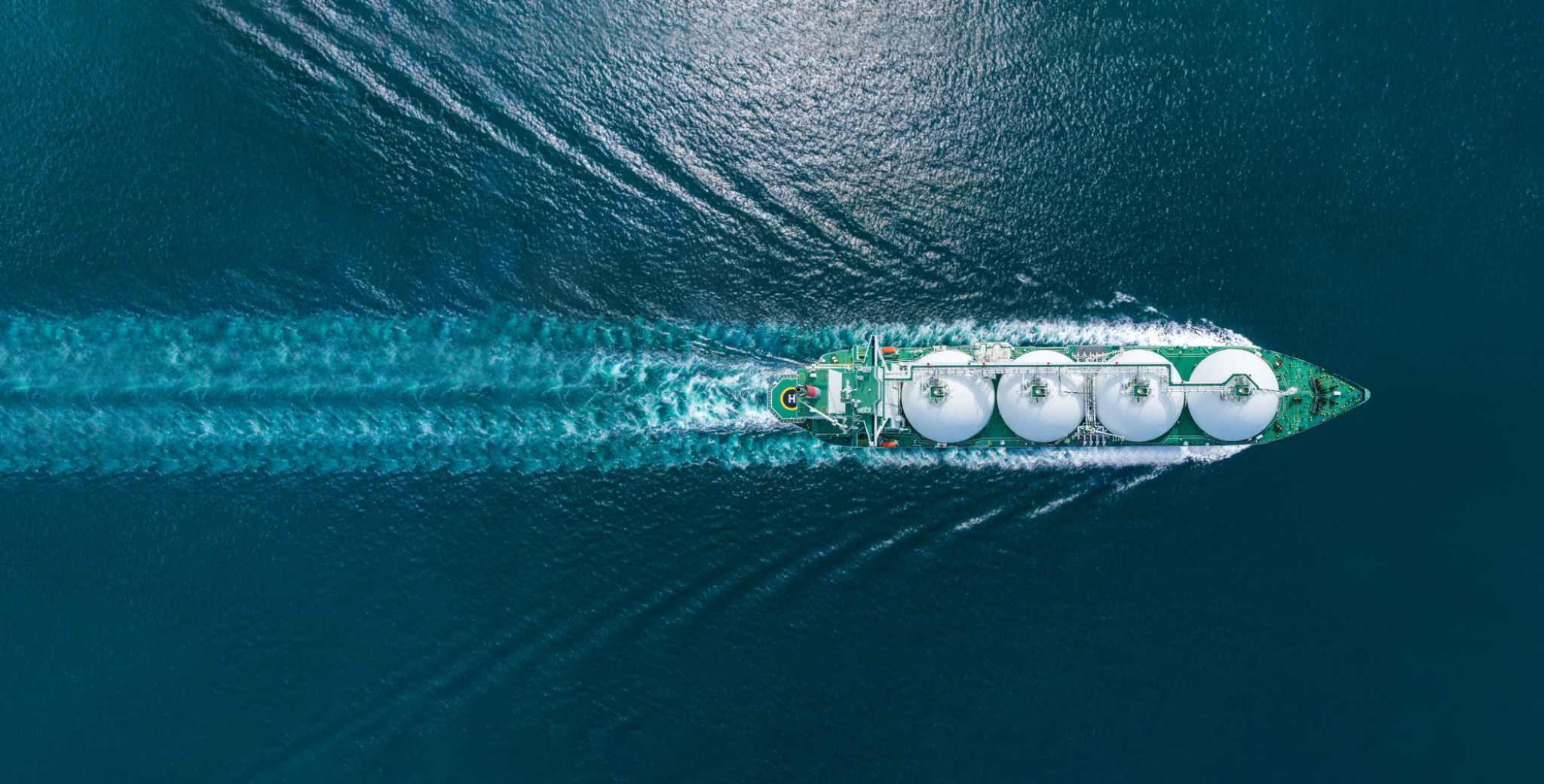
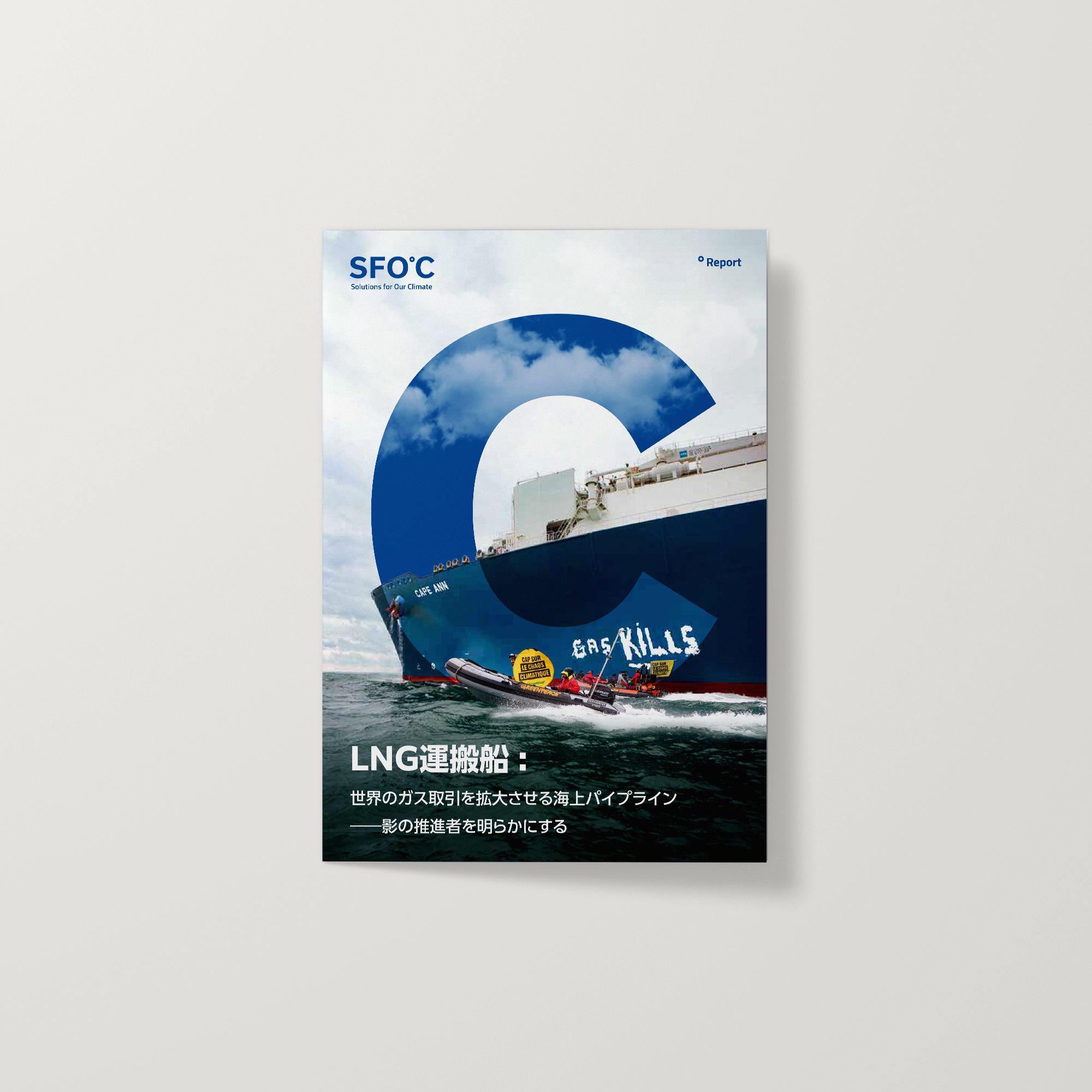
June 24, 2026 (TOKYO) – A new report reveals that Japanese financial institutions are the world’s largest financiers of LNG carriers, accounting for over a quarter of global project-level lending for LNG shipping, despite lacking corresponding environmental due diligence requirements.
The report published by Solutions for Our Climate (SFOC) exposes that five Japanese financial institutions, namely Mitsubishi UFJ Financial Group (MUFG), Sumitomo Mitsui Banking Corporation (SMBC), Sumitomo Mitsui Trust Holdings, Mizuho Financial Group, and Yamaguchi Financial Group, provided approximately 26.9% of all global project-level LNG carrier finance between 2020 and 2025, totaling $1.77 billion. MUFG alone accounts for 12.8%, making it the single largest LNG carrier financier globally, followed by SMBC (8.5%), Sumitomo Mitsui Trust (2.7%), Mizuho (1.8%), and Yamaguchi Financial Group (1.0%).
The data also show a 5.2 percentage-point gap between Japanese banks' share of corporate-level financing provided to LNG shipowners (8.5%, or $761 million across 34 institutions) and the share received by Japanese shipowners (3.3%), indicating that the majority of Japanese lending supports non-Japanese shipowners and operators. This corporate-level financing (lending and underwriting directed at shipowners as companies) is distinct from the project-level finance discussed above, and involves a broader set of financial actors, including regional and smaller institutions alongside the major banks.
Despite this dominant market position, none of the three megabanks — MUFG, SMBC and Mizuho — maintain exclusion policies covering midstream gas infrastructure, including LNG shipping. All three withdrew from the Net-Zero Banking Alliance in March 2025.
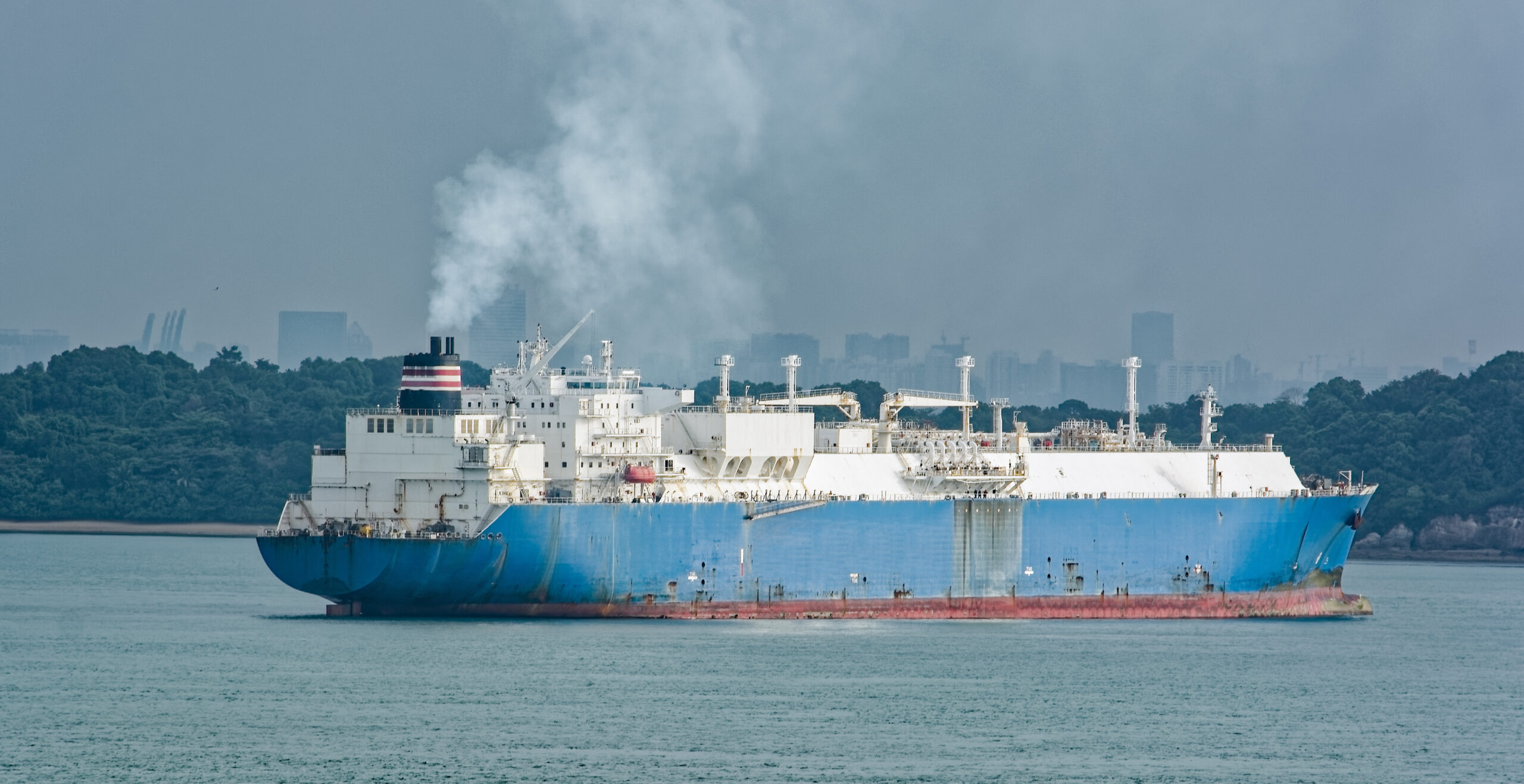
The LNG carriers financed by Japanese institutions operate through ecologically and politically sensitive corridors — including the Coral Triangle, the Gulf of Mexico, the Mozambique Channel, and the Strait of Hormuz — without project-level environmental impact assessments. Japan is the world's 2nd largest LNG carrier–owning nation by fleet value (after Greece), with 169 vessels in service and on order as of mid-2026. Using SFOC's lifecycle emissions methodology, the Japanese-owned fleet alone enables approximately 2,084 MtCO₂e per year — roughly equivalent to one-third of total annual US national emissions.
Given Japan’s outsized role across the LNG supply chain, SFOC urges Japanese financial institutions to close the accountability gap by strengthening environmental and social safeguards ahead of the 2026 AGM season. Key recommendations include:
Require environmental impact assessments (EIAs) for LNG shipping as a condition of project financing, including lifecycle impacts where vessels are integral to projects.
Restrict financing for midstream gas infrastructure, including LNG carriers, that locks in long-term fossil fuel demand.
Align capital allocation with growing LNG carrier oversupply risks, which pose material financial concerns.
Exclude LNG carriers from green and transition finance frameworks until their full climate and ecological impacts are addressed.
Integrate marine biodiversity protection and community rights into due diligence and investment screening.
Lena Vivier-Endo, a Midstream Gas and Private Finance Researcher at Solutions for Our Climate (SFOC), said, “MUFG and SMBC together account for more than one-fifth of global project-level LNG carrier financing, yet LNG carriers remain largely outside dedicated environmental and social due diligence frameworks. This is a significant accountability gap. LNG carriers are not simply transport assets; they are critical infrastructure enabling LNG expansion and operate through some of the world's most ecologically sensitive marine regions. International financial institutions are already beginning to scrutinize these risks. Six financial institutions, including French banks BNP Paribas and Crédit Mutuel, have confirmed they will not finance LNG carriers linked to the Mozambique LNG project."
Vivier-Endo added, "This year, in April, SFOC filed the first OECD NCP complaint challenging the lack of environmental due diligence for LNG carrier financing in Korean public finance. The same international standards should apply to Japan. As Japanese financial institutions and shipowners enter this year's AGM season, we hope they will engage with our findings and take meaningful steps to strengthen safeguards, improve due diligence, and address the accountability gap surrounding LNG carrier expansion.”
ENDS.
Solutions for Our Climate (SFOC) is an independent nonprofit organization that works to accelerate global greenhouse gas emissions reduction and energy transition. SFOC leverages research, litigation, community organizing, and strategic communications to deliver practical climate solutions and build movements for change.
For media inquiries, please reach out to:
Andrea Leung, Head of Communications, andrea.leung@forourclimate.org
Share this insights
![[SFOC] Hidden Methane Emissions, Tangible Economic Costs: Lost Fuel Value and Heatwave-Related Climate Damages from Korea’s Imported Fossil Fuel Supply Chains](https://content.forourclimate.org/images/research/GbNyzaf.jpg)








![[Brief] South Korea’s international public finance continues to block a just energy transition](https://content.sfoc.tapahalab.com/images/research/RC5Kime.jpg)
![[Report] Achieving Net Zero in International Shipping through Korea-US-Japan Green Shipping Corridor](https://content.sfoc.tapahalab.com/images/research/s11Jime.jpg)


![[Report] The Inconsistent 'Coal-Free Pledge' of Korea's National Pension Service](https://content.sfoc.tapahalab.com/images/research/VcDPdme.jpg)


![[Issue Brief] Assessment of Climate Change Policies of Major South Korean Financial Institutions](https://content.sfoc.tapahalab.com/images/research/a4ondme.jpg)
![[토론회] 한국형 녹색분류체계(K-Taxonomy), 무엇이 녹색경제활동인가](https://content.sfoc.tapahalab.com/images/research/bn8jdme.jpg)
![[이슈 브리프] 탄소포집, 이용 및 저장기술(CCUS) 현황과 문제점](https://content.sfoc.tapahalab.com/images/research/SWESdme.jpg)

![[이슈 브리프] 탈석탄 투자 가이드라인](https://content.sfoc.tapahalab.com/images/research/tJRidme.jpg)
![[이슈 브리프] 신설 석탄발전소 가치평가 결과와 시사점](https://content.sfoc.tapahalab.com/images/research/nQCGime.jpg)


