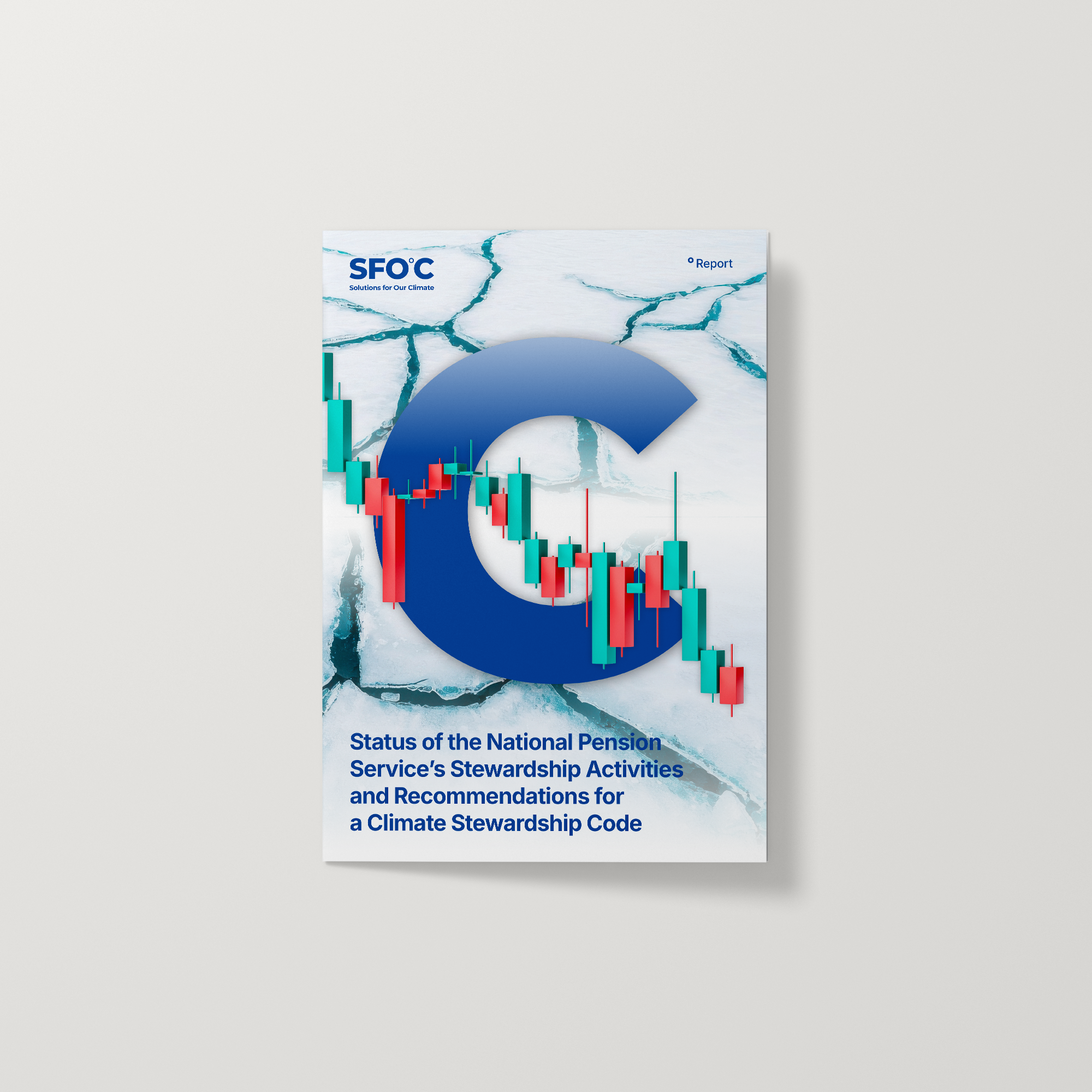
Status of the National Pension Service’s Stewardship Activities and Recommendations for a Climate Stewardship Code

About
The climate crisis has become the single greatest risk factor for financial institutions, for the National Pension Service (NPS), which bears responsibility for the public’s retirement assets, responding to the climate crisis is directly tied to the substantive implementation of its stewardship activities. This report reviews the status of the NPS's stewardship across responsible investment, engagement, alternative investment, and the exercise of voting rights, and proposes institutional reforms for the effective implementation of a climate stewardship code.
Executive summary
Assessment of the Current Status
① Limitations of the ESG integration strategy
The NPS declares 100% responsible investment in its equity portfolio. However, an ESG integration strategy based solely on ESG ratings does not produce an investment portfolio meaningfully distinguishable from market-capitalization rankings.
② Formalistic engagement and inadequate climate response
The average number of dialogues per company is only 1.88, and over the nine years since the Stewardship Code was adopted, there have been only 8 public engagements and 2 shareholder proposals. Climaterelated engagement is declining in both the number of target companies and the number of dialogues, and active measures such as public engagement or shareholder proposals on climate issues are entirely absent.
③ Responsible-investment gap in bonds and alternatives
In bonds, responsible investment has not been properly implemented, while alternative investments are effectively excluded from the scope of responsible investment under the law, resulting in a substantial gap covering roughly 15% of total fund assets.
Key Developments at the 2026 Regular AGMs
① Positive steps
The threshold for advanced disclosure of voting decisions widened from 10% to 5% shareholding ratio. Among the 268 companies that tabled treasury-stock holding/disposal plans, the NPS cast against votes at a substantial number of companies—including SK Hynix, Hyundai Motor, and KT—whose stated acquisition purpose was inconsistent with the plan. The NPS also took the unusual, pre-emptive step of publicly announcing, through an official press release, its opposition to charter amendments aimed at weakening board independence
② A limitation — opposition to LG Chem’s advisory shareholder proposal right
The NPS voted against the creation of an advisory shareholder proposal right at LG Chem—proposed by a foreign institutional investor—citing a "possible restriction on board authority." This stands in contrast to the 65 of the 66 institutional investors that disclosed their votes—all except the NPS—voting in favor, including 8 major global pension funds such as NBIM, CalPERS, and CalSTRS. Because an advisory proposal does not bind the board even if it passes, this cannot be regarded as a valid ground for opposition, and the case illustrates that the NPS remains passive in ESG engagement.
Four Recommendations for an Effective Climate Stewardship Code
① Apply responsible-investment strategies tailored to each asset type
For equities, active engagement focused on sector-specific climate risk should be central; for bonds and alternative investments, exclusion strategies targeting high-emitting businesses should be applied intensively. The current coal phase-out strategy (a 50%-of-revenue threshold, with domestic assets covered only from 2030) is excessively lax relative to international standards and requires review. The NPS should also establish a dedicated climate action plan and undertake impact investment, as CalPERS and NBIM have done.
② Strengthen the execution of engagement
Each engagement stage should be limited to at most six months, and the Guidelines should provide a basis for the Special Committee on Responsible Investment & Governance to decide directly on public engagement or shareholder proposals according to the urgency of the issue. The introduction of advisory shareholder proposal rights and “Say on Climate” should be pursued as a core campaign aimed at climateexposed companies, and stewardship-code implementation should be made a key criterion in selecting external managers.
③ Strengthen climate disclosure and stewardship reporting
The NPS sustainability report currently contains none of the core climate information—such as TCFDbased financed emissions and reduction targets. Drawing on the examples of CalPERS and CalSTRS, the NPS should regularly compile and disclose climate information on its managed assets, and should make its stewardship report more substantive by including the improvements made by companies released from priority management and the engagement records of external managers.
④ Improve governance and strengthen the Committee’s authority
The current structure, in which the Minister of Health and Welfare chairs the National Pension Fund Management Committee, makes it difficult to remain free from the influence of the incumbent government. The Special Committee on Responsible Investment & Governance should be empowered to decide not only the selection of engagement targets but also whether and how engagement is conducted, and the supporting staff and organization of the Stewardship Office should be strengthened.
Related research
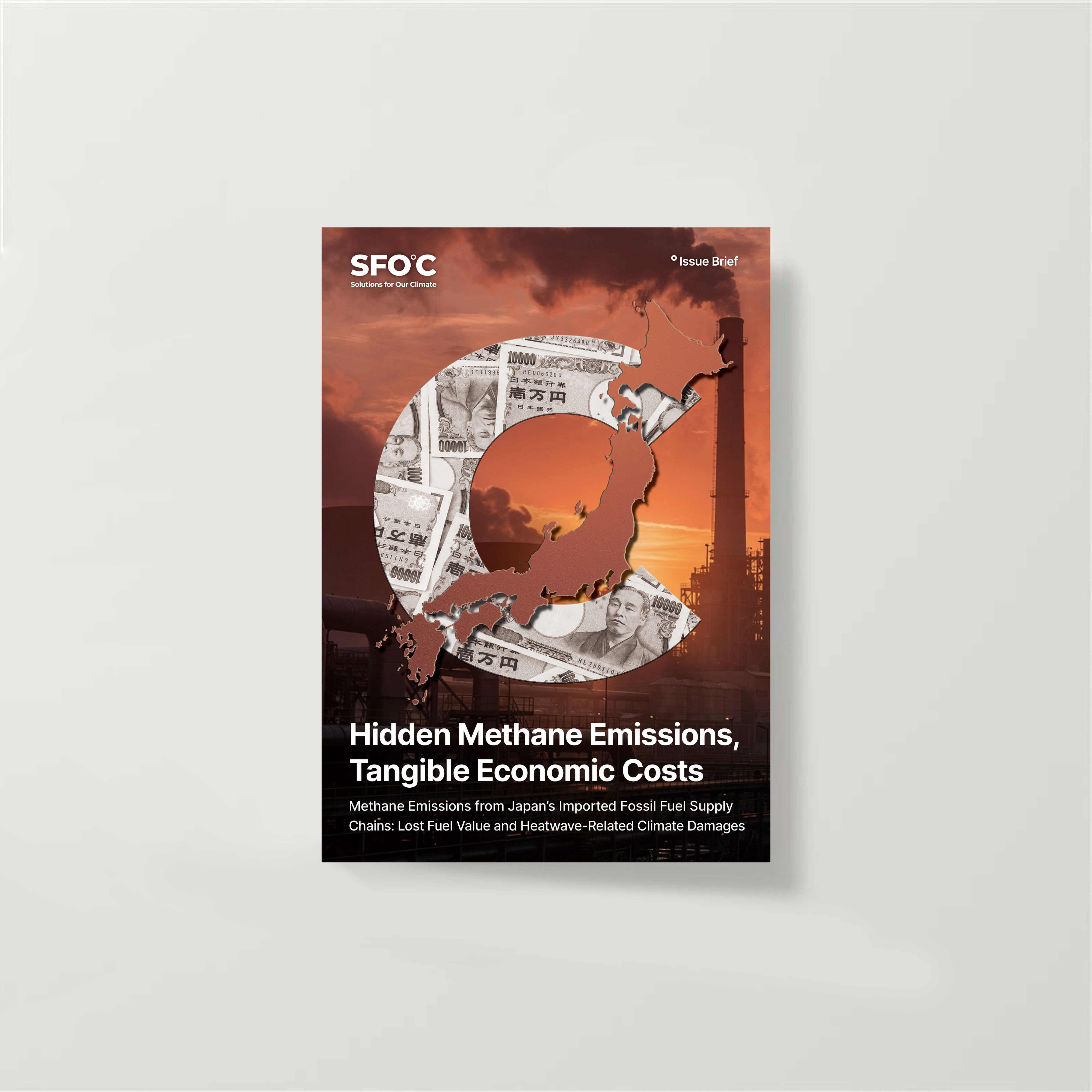
Hidden Methane Emissions, Tangible Economic Costs: Lost Fuel Value and Heatwave-Related Climate Damages from Japan’s Imported Fossil Fuel Supply Chains
2026-08-03
![[SFOC] Hidden Methane Emissions, Tangible Economic Costs: Lost Fuel Value and Heatwave-Related Climate Damages from Korea’s Imported Fossil Fuel Supply Chains](https://content.forourclimate.org/images/research/yUNyzaf.jpg)
[SFOC] Hidden Methane Emissions, Tangible Economic Costs: Lost Fuel Value and Heatwave-Related Climate Damages from Korea’s Imported Fossil Fuel Supply Chains
2026-08-03
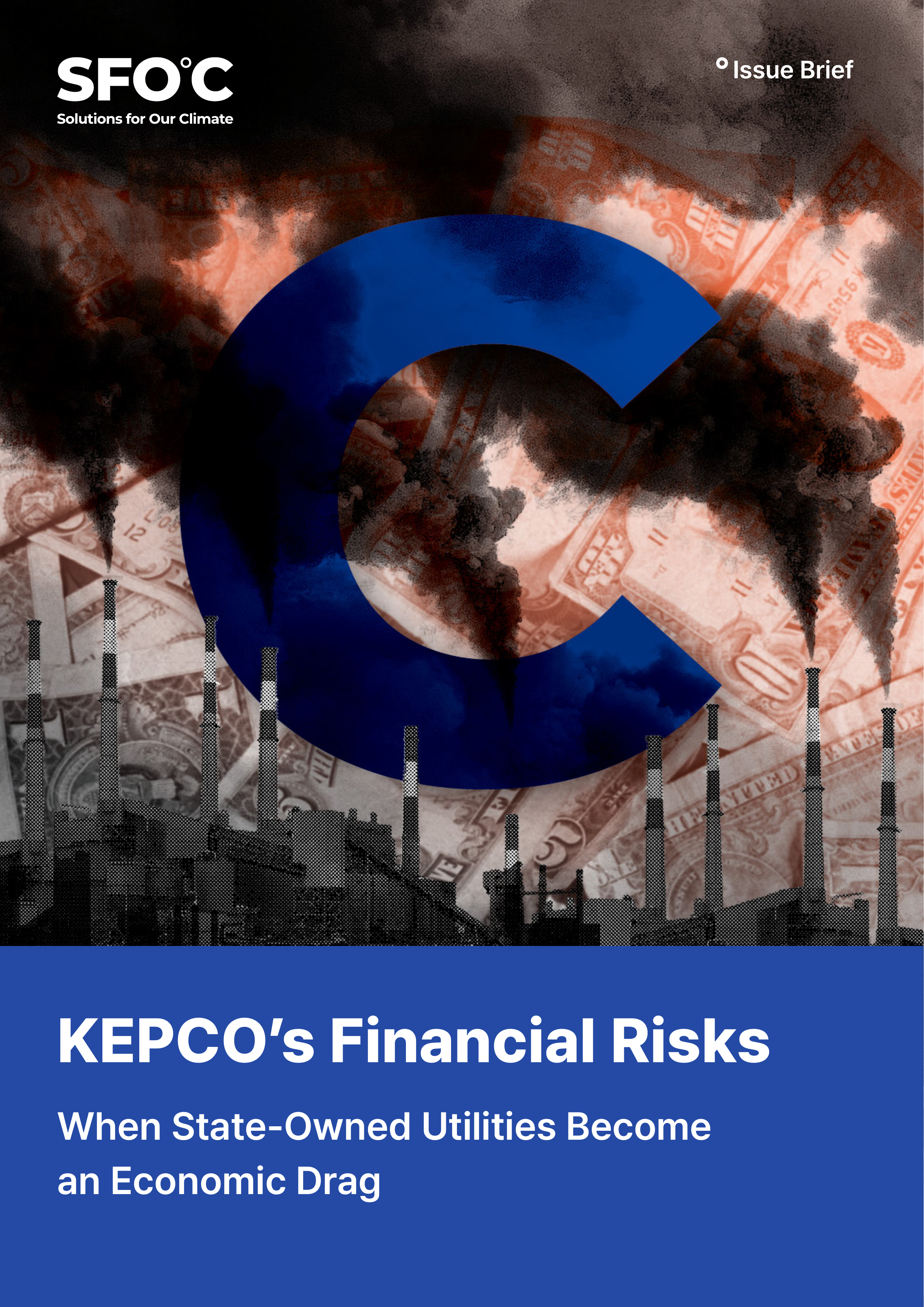
KEPCO’s Financial Risks: When State-Owned Utilities Become an Economic Drag
2026-07-23
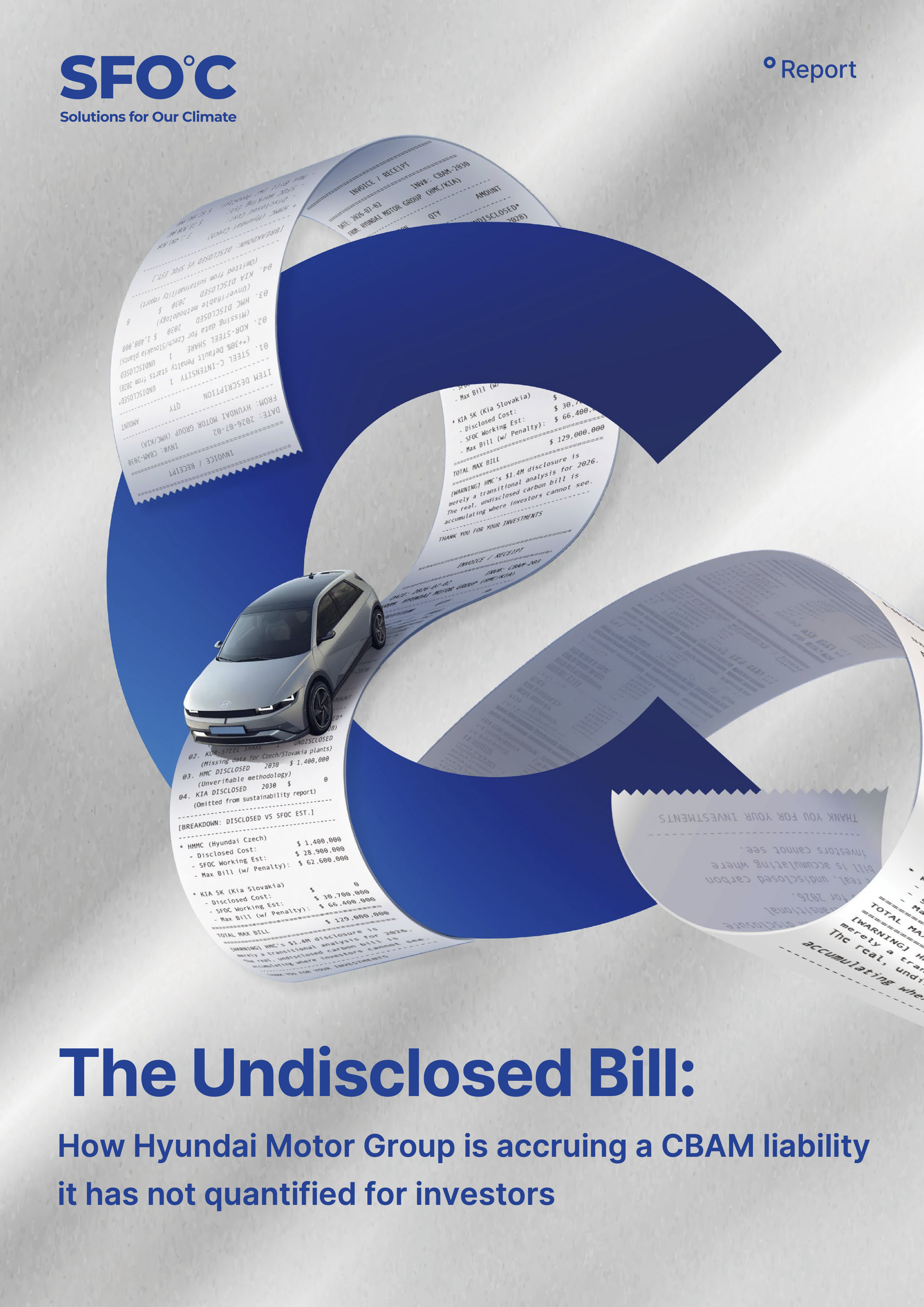
The Undisclosed Bill: How Hyundai Motor Group is accruing a CBAM liability it has not quantified for investors
2026-07-15
Steel in the Portfolio: An Engagement Framework for Institutional Investors
2026-06-16
Stewardship Without Climate : Reforming Korea’s Stewardship Code
2026-05-13
Financing Strategies for Coal Phase-Out: Germany's Sovereign Green Bond Model and Implications for South Korea
2026-04-21
An Assessment of Environmental and Social Impacts of LNG Carriers
2026-04-06

Recurring Crisis, Delayed Transition: From Fossil Fuel Dependence to Energy Independence
2026-03-18
Empty Seats at the Climate Table : Board Oversight Gaps in Hyundai Motor Company's Climate Governance
2026-03-03
Government Financing for H₂-DRI Commercialization: Comparative Risk-Sharing Cases and Implications for Korea
2026-01-26
Why LNG Reduction Matters: Redefining Energy Security and Unlocking Economic Gains
2025-12-08
No Budget, No Cuts: Budget and Methane Reduction Impact Analysis for Achieving 78% Low-Methane Feed Supply Target
2025-12-03
From Words to Data: Bridging Hyundai’s Climate Commitments and Disclosure
2025-11-28
South Korea’s Export Credit Finance in Transition: National Economic Impacts of the Global Shift from Fossil Fuels to Clean Energy
2025-11-16
Supplementary Brief: South Korea's Exposure to Shipping Stranded Asset Risks
2025-10-26
Mobilizing Finance for Korea's Coal Phase-Out: What International Experience Shows
2025-10-20
No Budget, No Cuts: Agriculture’s 2030 NDC Targets at Risk
2025-09-16
The Climate Crisis—Culprits and Liability: Contribution of South Korea’s Top Ten Emitting Corporates to Climate Loss & Damage
2025-08-10

No Room for More: Why LNG Carriers Are a Climate and Financial Risk
2025-05-13

Capitalizing on Coal: How Global Investors and Underwriters Enable KEPCO to Abandon the Sustainability Path
2025-03-20

Moving Away from Coal: 2025 POSCO Holdings Climate Risk
2025-03-17

A Sleeping Giant? The National Pension Service’s Missed Potential on Climate Action
2025-03-11

Bridging the Nature Finance Gap: Aligning South Korean Banks with the Global Biodiversity Framework
2024-10-27

LNG運搬船: 世界のガス取引を拡大させる海上パイプライン ――影の推進者を明らかにする
2024-06-12

Boom and Bust Coal 2024
2024-04-17
![[Brief] South Korea’s international public finance continues to block a just energy transition](https://content.sfoc.tapahalab.com/images/research/RC5Kime.jpg)
[Brief] South Korea’s international public finance continues to block a just energy transition
2024-04-02
![[Report] The Inconsistent 'Coal-Free Pledge' of Korea's National Pension Service](https://content.sfoc.tapahalab.com/images/research/VcDPdme.jpg)
[Report] The Inconsistent 'Coal-Free Pledge' of Korea's National Pension Service
2023-06-20

National Development Banks and the Climate Crisis
2022-06-13

Climate Risk Management in Financial Sector and the Role of Pension Funds
2022-02-10
![[토론회] 한국형 녹색분류체계(K-Taxonomy), 무엇이 녹색경제활동인가](https://content.sfoc.tapahalab.com/images/research/bn8jdme.jpg)
[토론회] 한국형 녹색분류체계(K-Taxonomy), 무엇이 녹색경제활동인가
2021-11-23

Fueling the Climate Crisis_South Korea's Public Financing for Oil and Gas
2021-08-31


