
Policy Research and Recommendations
We conduct in-depth analysis of climate, energy, industrial, and economic policies to propose viable policy alternatives and help bring about real policy change.
 LinkedIn
  X
X  LinkedIn
  X
X  LinkedIn
  X
X 🇪🇺⚖️ Can Japan's green steel claims withstand growing regulatory scrutiny in Europe? Join us on Tuesday, October 27, for a webinar exploring the potential EU legal risks associated with mass balance methodologies in low-carbon steel claims. As the EUs Carbon Border Adjustment Mechanism (CBAM) takes effect and regulators tighten oversight of environmental marketing claims, the discussion will examine the implications for steelmakers, automakers, investors, and downstream customers, as well as the growing divergence between Japanese and international approaches to green steel standards. Featuring: 🔹Dr. Niccolò Ridi (King's College London) 🔹Dr. Kenichi ISHIDA (JCLP) 🔹Kaoru KOIDE (Solutions for Our Climate/ Green Rights Law) 🔹[MC] Natsumi Tan (SFOC) Event Details 📅 Tuesday, October 27, 2026 🕓 16:00-17:30 JST/KST (Tokyo/Seoul) 🕗 08:00-09:30 CET (Brussels/Berlin/Paris) 🕖 07:00-08:30 GMT (London) 📍 Online (Zoom) 🗣️ English & Japanese (simultaneous interpretation) 🔗 Register here: https://luma.com/e1v3lqjv The event is organized by Solutions for Our Climate (SFOC) & supported by the Japan Climate Leaders' Partnership (JCLP). Tune-in for a timely discussion on how evolving European regulations could reshape expectations for green steel claims and standards across global supply chains. #GreenSteel #Steel #CBAM #IndustrialDecarbonization #Japan #SFOC
LinkedIn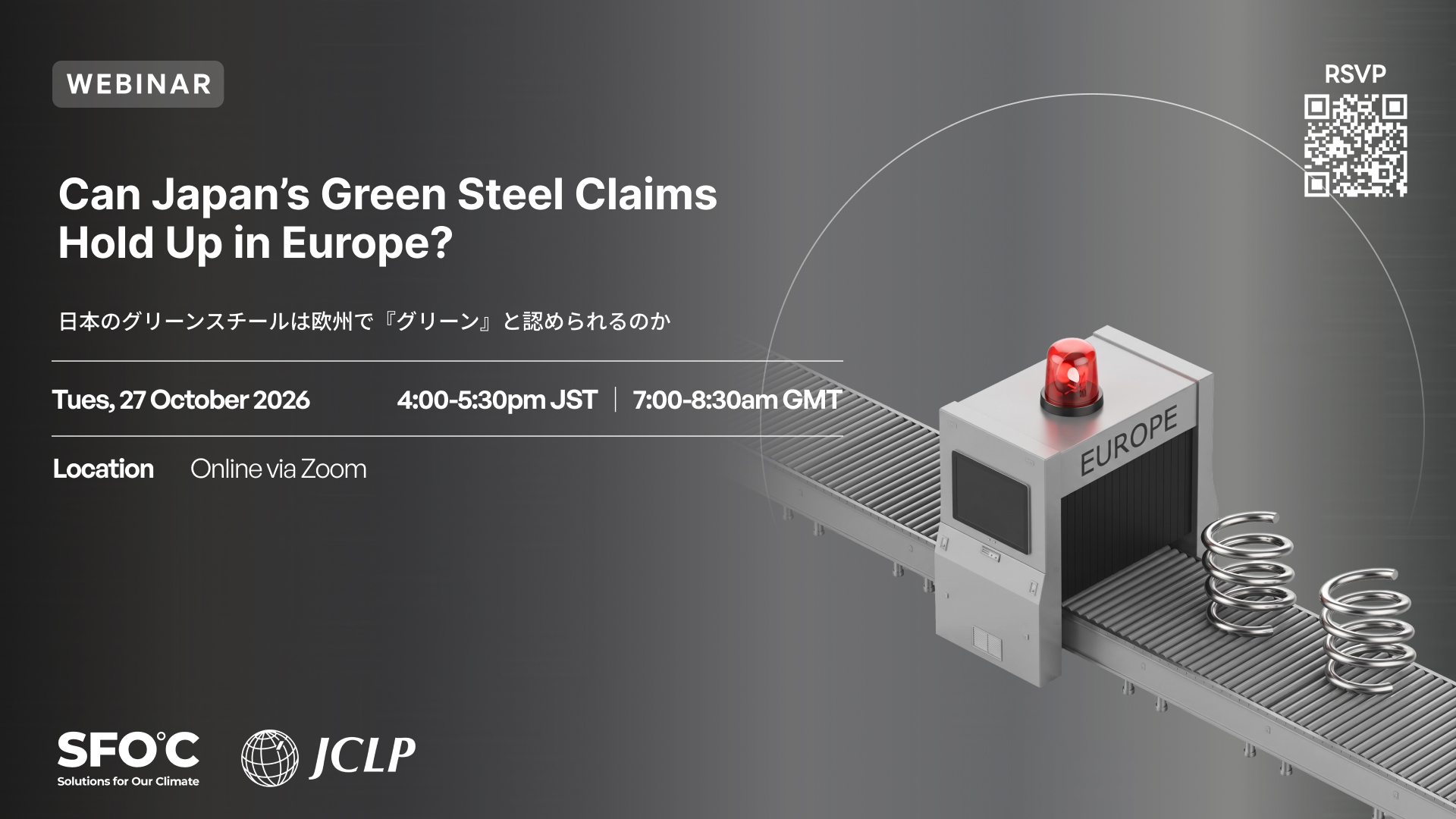 X
X  LinkedIn
  X
X 🌏 What happens in the Pacific matters far beyond the Pacific. At this week's UN Pre-COP31 summit in Fiji, global leaders reaffirmed support for 1.5°C, a transition away from fossil fuels, stronger ocean-climate action, and climate finance that reaches those who need it most. For Asia, which accounts for around half of global greenhouse gas emissions, the stakes could not be higher. Explore key takeaways from Pre-COP31 and what they mean for South Korea ahead of COP31 in Antalya 👇 #COP31 #PreCOP31 #ClimateAction #PacificVoices #ClimateFinance #EnergyTransition COP31 Türkiye COP31 Australia-Pacific
LinkedIn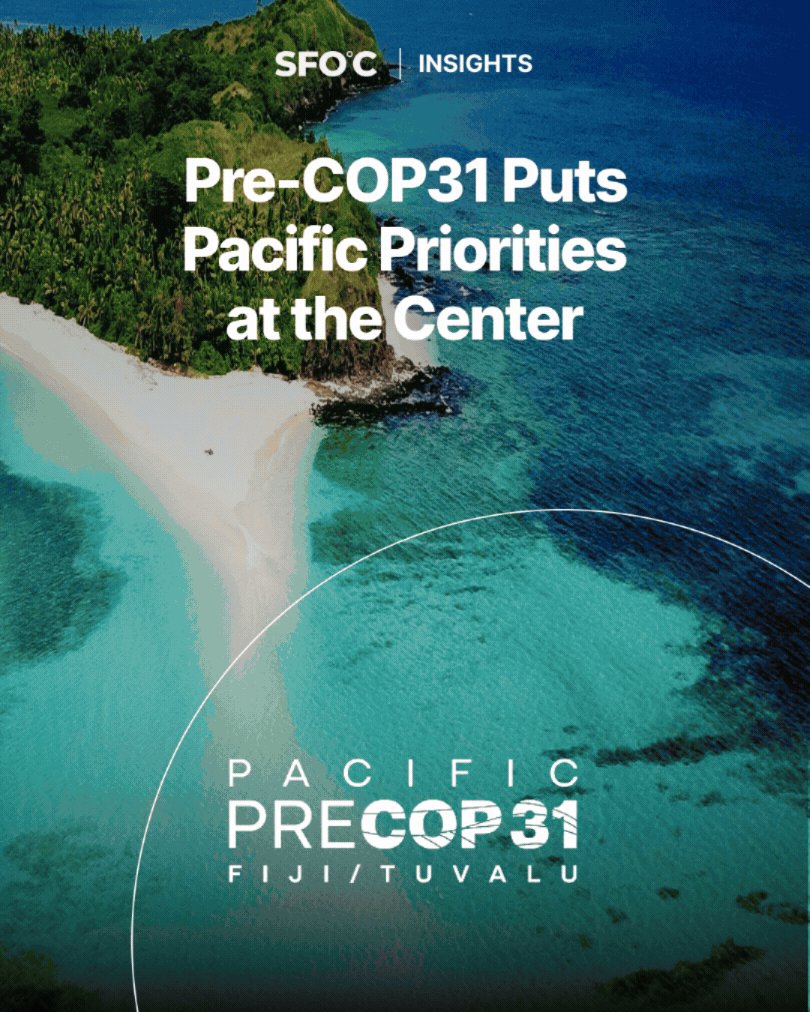 X
X We conduct in-depth analysis of climate, energy, industrial, and economic policies to propose viable policy alternatives and help bring about real policy change.

We hold corporations and governments accountable when they delay climate action, utilizing a range of legal strategies, including litigation, to drive policy improvement.

We believe that the power to change the world lies with people. Through compelling messages and diverse communication channels, we raise public awareness about the climate crisis and inspire collective action.

We understand that climate change knows no borders. Through networking and collaboration, we work with global environmental organizations to promote change at the international level.