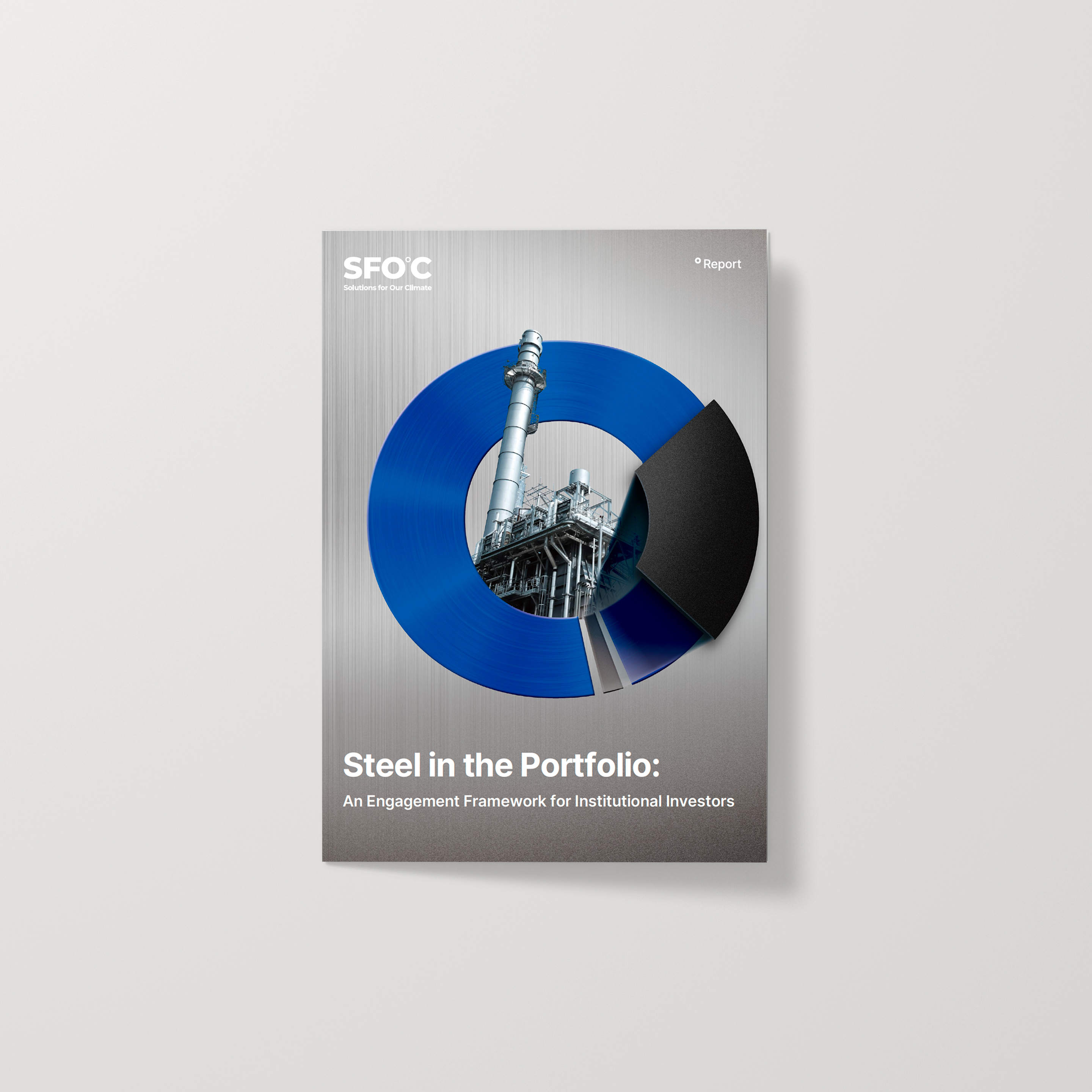
Steel in the Portfolio: An Engagement Framework for Institutional Investors

About
Steel is more than just another carbon-intensive industry. It is a linchpin of the broader industrial transition, acting as a major driver of financed emissions, downstream sectors’ value chain emissions, and hydrogen market development. Accordingly, beyond urging individual steel companies to take climate action, institutional investor engagement with steelmakers can serve as an effective strategy to manage climate transition risks in investment portfolios while unlocking growth opportunities in low-carbon industrial transformation.
Financed emissions management: An analysis of 242 companies within the National Pension Service’s domestic equity portfolio shows that the steel sector accounts for only about 1.5% of the portfolio value, yet it represents 24% of financed emissions based on the operational emissions (Scope 1 and 2) of the investees.
Downstream industry transition: Downstream steel sector accounts for approximately 21% of the portfolio value based on the 242 holdings analyzed, yet they contribute roughly 64% of financed emissions on a Scope 1, 2, and 3 basis and approximately 68% on a Scope 3 basis alone.
Hydrogen economy opportunities: By adopting hydrogen-based direct reduced iron (H2-DRI) technology at scale, the steel industry can anchor long-term demand for clean hydrogen production, low-carbon electricity, power grid, and hydrogen storage and transportation infrastructure.
For engagements to have a meaningful impact, investors must assess whether steelmakers' transition plans are translating into actions, focusing on the following three areas.
Transition plan specificity: A 2050 carbon neutrality target alone is insufficient to assess the feasibility of a steelmaker’s asset transition. Therefore, once long-term targets are established, investors must assess the company’s transition plans at the asset level.
Capital expenditure alignment: A company’s commitment to transition is often reflected more clearly in its capital allocation decisions than in its stated targets. Accordingly, to assess the credibility of a transition plan, it is critical to distinguish investments that advance the low-carbon transition from those intended to maintain or extend existing blast furnaces.
Public policy strategy: Steel transition is heavily influenced by policy support and regulatory environments. This requires an assessment of whether policy frameworks—such as the K-Steel Act, K-GX, Korea’s Emissions Trading Scheme, and electricity and hydrogen policies—translate into actual investment in low-carbon facilities, and whether industry association activities are aligned with the carbon neutrality target.
Global investors have already moved past merely calling for enhanced climate-related disclosures from steelmakers. Today, they are demanding 1.5°C-aligned reduction targets, low-carbon asset investment, capital expenditure alignment, climate-linked executive remuneration, and transparent policy engagement. As these cases demonstrate, investor engagement is a process of turning the climate agenda into financial and operational business questions.
Following the passage of the K-Steel Act in November 2025, the steel industry's transition has emerged as a major policy priority. Institutional investors must now assess whether this policy signal is translating into tangible business strategies and investment decisions. This requires closely monitoring whether companies are executing transition plans and deploying capital toward low-carbon initiatives, including transitioning to low-carbon steelmaking, procuring clean hydrogen and low-carbon electricity, and expanding electric arc furnaces (EAF) and hydrogen-based direct reduced iron (H2-DRI) capacity. Engaging with steelmakers offers institutional investors a practical strategy to manage climate transition risks in the portfolio and capture growth opportunities in the low-carbon economy through a single point of intervention
Download report
Press release
- [Press Release] Steel’s Hidden Weight: The Carbon Imbalance in Korea’s National Pension Fund
- [보도자료] K-스틸법 시행, 이제 투자자가 물어야 할 질문은 ‘철강 전환의 실행력’
- ‘K-스틸법 시행’ 기후솔루션 “철강사 탄소중립 선언보다 설비 전환 계획 봐야”
- 국민연금 국내주식 중 철강 투자 비중 1.5%…금융배출은 24% 차지
- K-스틸법 시행 앞두고 ‘국민연금 역할론’ 나와
- [K스틸법 시행上] '사면초가' 철강업계…40년 만에 철강산업 특별법 본격 가동
- 저탄소 철강 전환, 수소경제 수요 기반 좌우
Related research
Choosing a Green Steel Pathway : Implications for South Korea, Japan, and Australia
2026-09-14
Hidden Methane Emissions, Tangible Economic Costs: Lost Fuel Value and Heatwave-Related Climate Damages from Japan’s Imported Fossil Fuel Supply Chains
2026-08-03
![[SFOC] Hidden Methane Emissions, Tangible Economic Costs: Lost Fuel Value and Heatwave-Related Climate Damages from Korea’s Imported Fossil Fuel Supply Chains](https://content.forourclimate.org/images/research/yUNyzaf.jpg)
[SFOC] Hidden Methane Emissions, Tangible Economic Costs: Lost Fuel Value and Heatwave-Related Climate Damages from Korea’s Imported Fossil Fuel Supply Chains
2026-08-03
KEPCO’s Financial Risks: When State-Owned Utilities Become an Economic Drag
2026-07-23
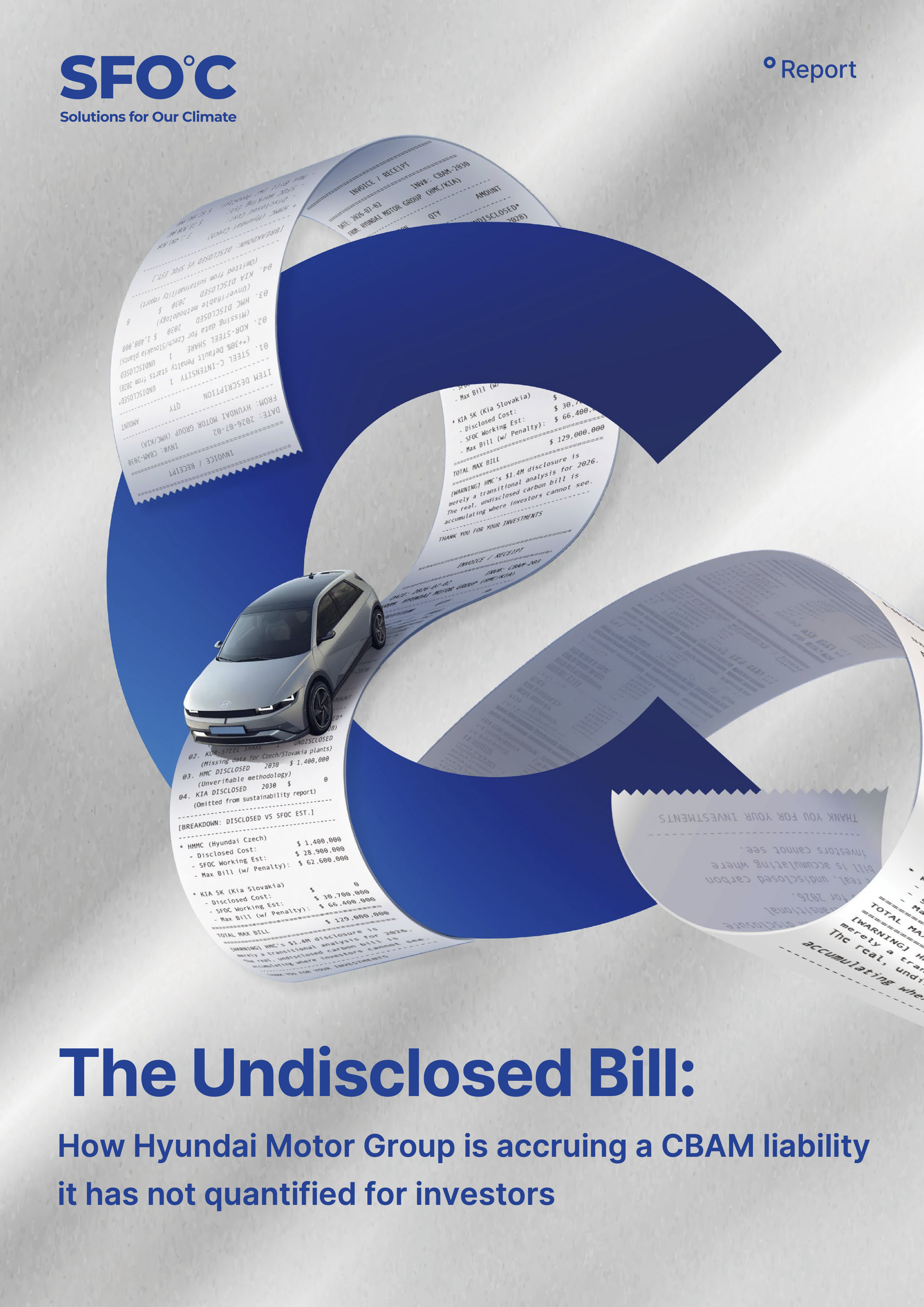
The Undisclosed Bill: How Hyundai Motor Group is accruing a CBAM liability it has not quantified for investors
2026-07-15
South Korea’s Steel Industry at a Crossroads: Developing a Credible Green Steel Standard
2026-07-09
Status of the National Pension Service’s Stewardship Activities and Recommendations for a Climate Stewardship Code
2026-07-06
Solving the Renewable Energy Disconnect: Enabling Korea’s 100GW RE Target Through Priority Grid Connection Policy
2026-06-01
Stewardship Without Climate : Reforming Korea’s Stewardship Code
2026-05-13
Financing Strategies for Coal Phase-Out: Germany's Sovereign Green Bond Model and Implications for South Korea
2026-04-21
An Assessment of Environmental and Social Impacts of LNG Carriers
2026-04-06
Recurring Crisis, Delayed Transition: From Fossil Fuel Dependence to Energy Independence
2026-03-18
When Climate Leadership Stops at Steel: East Asian Automakers and Steel Supply Chain Decarbonization
2026-03-08
Empty Seats at the Climate Table : Board Oversight Gaps in Hyundai Motor Company's Climate Governance
2026-03-03

REthinking Hyundai’s ‘eco’ steel: How fossil fuels threaten the brand
2026-02-13
Reforming South Korea's Power Sector: Setting the Stage For the Renewable Energy Transition
2026-02-04
The Cost of Delay: Socioeconomic Impacts of Steel Decarbonization in South Korea
2026-01-26
Government Financing for H₂-DRI Commercialization: Comparative Risk-Sharing Cases and Implications for Korea
2026-01-26
The Changing Legal Landscape for LNG Shipping Expansion
2026-01-08
Why LNG Reduction Matters: Redefining Energy Security and Unlocking Economic Gains
2025-12-08
No Budget, No Cuts: Budget and Methane Reduction Impact Analysis for Achieving 78% Low-Methane Feed Supply Target
2025-12-03
Settled in Secret: The Opaque Grid Fee System Undermining Renewable Energy PPA Expansion in South Korea
2025-12-01
From Words to Data: Bridging Hyundai’s Climate Commitments and Disclosure
2025-11-28
South Korea’s Export Credit Finance in Transition: National Economic Impacts of the Global Shift from Fossil Fuels to Clean Energy
2025-11-16
Exposed: Overcompensation of KEPCO's Coal Fired Power Plants
2025-11-10
Supplementary Brief: South Korea's Exposure to Shipping Stranded Asset Risks
2025-10-26
Mobilizing Finance for Korea's Coal Phase-Out: What International Experience Shows
2025-10-20
No Budget, No Cuts: Agriculture’s 2030 NDC Targets at Risk
2025-09-16
VPPs: The Key to Korea's Transition to a Renewable Energy-Based Power System
2025-08-28
The Climate Crisis—Culprits and Liability: Contribution of South Korea’s Top Ten Emitting Corporates to Climate Loss & Damage
2025-08-10
Accelerating Renewable PPAs in South Korea: 2025 Regulatory Updates and Unresolved Challenges
2025-08-06
Speed Bumps on the Renewable Energy Highway: Minimum Generation Levels of Thermal Power Plants
2025-08-05
From Policy to Purchase: Korea and Japan's Green Steel Public Procurement Strategies
2025-07-27

Driving Hydrogen-Based Steelmaking in South Korea: Focus on Hydrogen Sourcing
2025-06-25

Can the Korean Semiconductor Industry Meet its Renewable Energy Targets? Policy Recommendations
2025-06-24

No Room for More: Why LNG Carriers Are a Climate and Financial Risk
2025-05-13

Analyzing Korea’s 2035 NDC GHG Emissions Reduction Pathway through an Integrated Assessment Model
2025-04-23

Capitalizing on Coal: How Global Investors and Underwriters Enable KEPCO to Abandon the Sustainability Path
2025-03-20

Moving Away from Coal: 2025 POSCO Holdings Climate Risk
2025-03-17

A Sleeping Giant? The National Pension Service’s Missed Potential on Climate Action
2025-03-11

Green Premium - Out of Synch with Global GHG Protocol Standards
2025-02-16

Stronger Together: Unlocking Community Power for Lasting Change
2025-02-04

Hyundai Steel's Insufficient Decarbonization Roadmap: A Setback to Hyundai Motor Company’s Net Zero Ambitions?
2025-01-23

Extending the Lifespan of Gwangyang No.2 Blast Furnace: A Backward Step for Carbon Neutrality
2024-10-28

Bridging the Nature Finance Gap: Aligning South Korean Banks with the Global Biodiversity Framework
2024-10-27

South Korea's PPA System: Status and Opportunities for Renewable Energy Development
2024-10-10

Enabling the Green Steel Future - Unlocking Government-led Investment in Core Technology Development for Carbon Neutrality
2024-07-31
Green Steel Economics - Comparing Economics of Green H2-DRI and Traditional Steelmaking Around the World
2024-07-31

Issues with Fossil Fuel-Based Yongin National System Semiconductor Industrial Complex
2024-07-31

Improving the Governance of the Power System to Scale Up Renewables
2024-06-13

End the Free Emissions: Recommendations for Reforming K-ETS Based on Market Activation Scenario Analysis
2024-06-12

LNG運搬船: 世界のガス取引を拡大させる海上パイプライン ――影の推進者を明らかにする
2024-06-12
![[Brief] South Korea’s international public finance continues to block a just energy transition](https://content.sfoc.tapahalab.com/images/research/RC5Kime.jpg)
[Brief] South Korea’s international public finance continues to block a just energy transition
2024-04-02

Exploring Climate Risk and Its Potential Financial Impacts with POSCO Holdings
2024-03-19

POSCO Profile No. 2 - The Journey Toward Greenwashing: Greenate
2024-03-15

Current Issues in KPX’s Governance and Policy Proposal for Sustainable Change
2023-11-22

POSCO Profile No. 1 - Coal Tomorrow with POSCO: Doubts Rising on Korean Steelmaker’s Net-Zero Future
2023-10-06
![[Report] The Inconsistent 'Coal-Free Pledge' of Korea's National Pension Service](https://content.sfoc.tapahalab.com/images/research/VcDPdme.jpg)
[Report] The Inconsistent 'Coal-Free Pledge' of Korea's National Pension Service
2023-06-20
![[Report] Financing a Paris-Aligned Coal Exit in South Korea](https://content.sfoc.tapahalab.com/images/research/ld8wdme.jpg)
[Report] Financing a Paris-Aligned Coal Exit in South Korea
2023-06-01

Industry Trends Brief No.1: Korean Government's Low Carbon Steel Production Strategy
2023-04-17

Clean power in South Korea: A roadmap to zero fossil gas in South Korea’s power sector
2023-03-27
![[CREA-SFOC] Unveiling the Truth Behind Blast Furnace Pollution_South Korea](https://content.sfoc.tapahalab.com/images/research/C4Xvdme.jpg)
[CREA-SFOC] Unveiling the Truth Behind Blast Furnace Pollution_South Korea
2022-11-28

에너지 안보와 탄소중립을 위한 공정한 전력시장 발표자료집
2022-11-25
![[Consultation Brief] No Room for New Gas in South Korea](https://content.sfoc.tapahalab.com/images/research/uDmDeme.jpg)
[Consultation Brief] No Room for New Gas in South Korea
2022-11-22

Jeju's 2030 Carbon-Free Vision Begins With Renewable Curtailment Freedom
2022-09-22

Unbalanced Power Market: Analysis of how market structures discriminate against demand response in favor of gas power generation
2022-09-20
![[이슈브리프] 한전 적자 부추기는 전력시장 보상제도와 거버넌스](https://content.sfoc.tapahalab.com/images/research/FzvSdme.jpg)
[이슈브리프] 한전 적자 부추기는 전력시장 보상제도와 거버넌스
2022-08-24

Revisiting Korean Green Public Procurement Policies to Promote Green Steel Demand
2022-08-10

Accelerating Corporate Renewable Electricity Procurement in Korea
2022-08-01

National Development Banks and the Climate Crisis
2022-06-13
![[ISSUE BRIEF] Fossil Fuels, the Main Culprit behind KEPCO’s Deficit](https://content.sfoc.tapahalab.com/images/research/q5TSdme.jpg)
[ISSUE BRIEF] Fossil Fuels, the Main Culprit behind KEPCO’s Deficit
2022-06-03

Transforming the Korean Power Market to Reduce Renewable Curtailment
2022-05-03

Steel Sector Pathways for Korea's 2050 Carbon Neutrality
2022-03-14

Climate Risk Management in Financial Sector and the Role of Pension Funds
2022-02-10
![[Issue Brief] Assessment of Climate Change Policies of Major South Korean Financial Institutions](https://content.sfoc.tapahalab.com/images/research/a4ondme.jpg)
[Issue Brief] Assessment of Climate Change Policies of Major South Korean Financial Institutions
2022-01-04

RE100 Scheme Left Stranded, with Focus on High Network cost and Unreasonable Guidance on Trilateral PPAs
2021-12-23
![[이슈 브리프] 좌초되는 한국형 RE100 제도: 망이용료와 제3자 PPA를 중심으로](https://content.sfoc.tapahalab.com/images/research/etandme.jpg)
[이슈 브리프] 좌초되는 한국형 RE100 제도: 망이용료와 제3자 PPA를 중심으로
2021-12-14

Opportunities and Challenges for the Steel Industry to Become Carbon Neutral by 2050
2021-11-25

The South Korea Steel Industry and Carbon Neutrality: Responses, Issues and Policy Recommendations
2021-11-25
![[토론회] 한국형 녹색분류체계(K-Taxonomy), 무엇이 녹색경제활동인가](https://content.sfoc.tapahalab.com/images/research/bn8jdme.jpg)
[토론회] 한국형 녹색분류체계(K-Taxonomy), 무엇이 녹색경제활동인가
2021-11-23

Bridge to Death: Air Quality And Health Impacts of Fossil Gas Power
2021-11-19
![[이슈 브리프] 탈석탄 투자 가이드라인](https://content.sfoc.tapahalab.com/images/research/tJRidme.jpg)
[이슈 브리프] 탈석탄 투자 가이드라인
2021-09-13
![[이슈 브리프] 신설 석탄발전소 가치평가 결과와 시사점](https://content.sfoc.tapahalab.com/images/research/nQCGime.jpg)
[이슈 브리프] 신설 석탄발전소 가치평가 결과와 시사점
2021-09-06

Fueling the Climate Crisis_South Korea's Public Financing for Oil and Gas
2021-08-31

Employment opportunities from a coal-to-renewables transition in South Korea
2021-07-28


