Limited climate risk management raises uncertainty for investors, as the steel sector continues to play an outsized role in portfolio emissions.
June 16, 2026 (SEOUL) – A new report finds that the steel sector plays a disproportionately large role in driving climate-related financial risk within the investment portfolios of South Korea’s National Pension Service (NPS), suggesting that these exposures may require more active climate risk management.
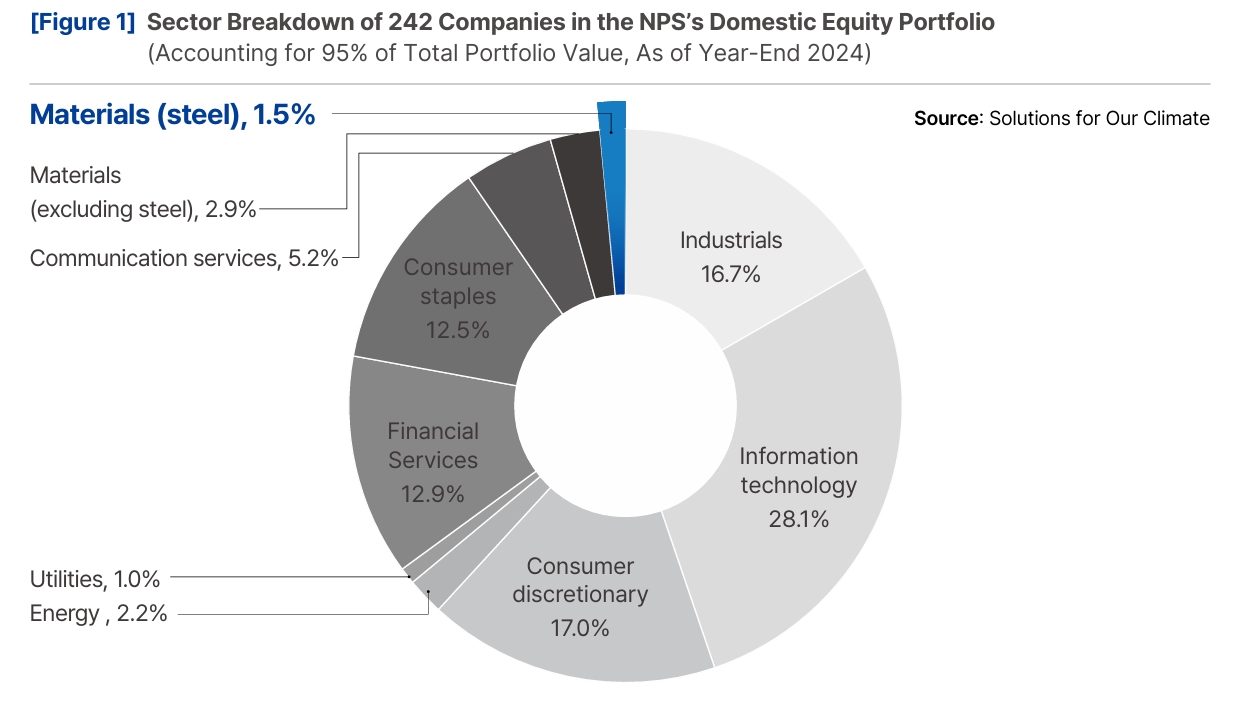
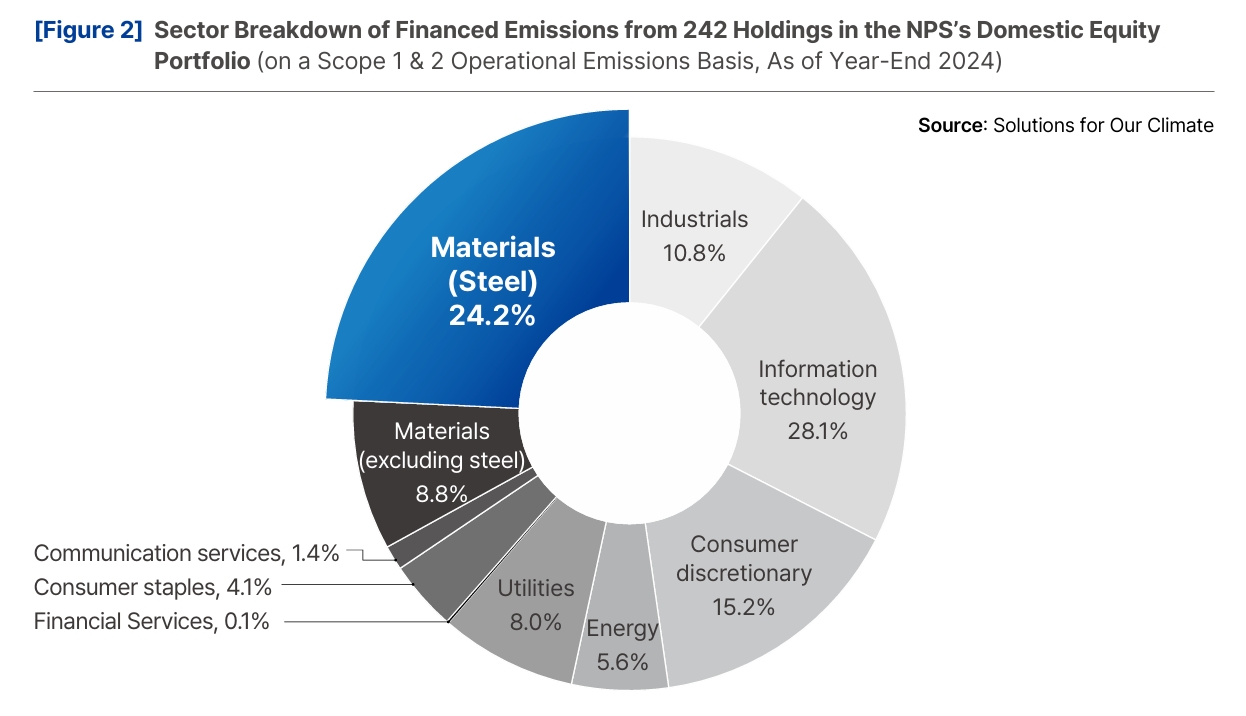
Despite steel representing only 1.5% of the domestic equity value of the NPS, it accounts for around 24% of its financed emissions based on the operational emissions (Scope 1 and 2) of investee companies. A large share of these emissions is linked to POSCO Holdings, one of South Korea’s major steel manufacturers, which alone accounts for approximately 20% of the fund’s total financed emissions.
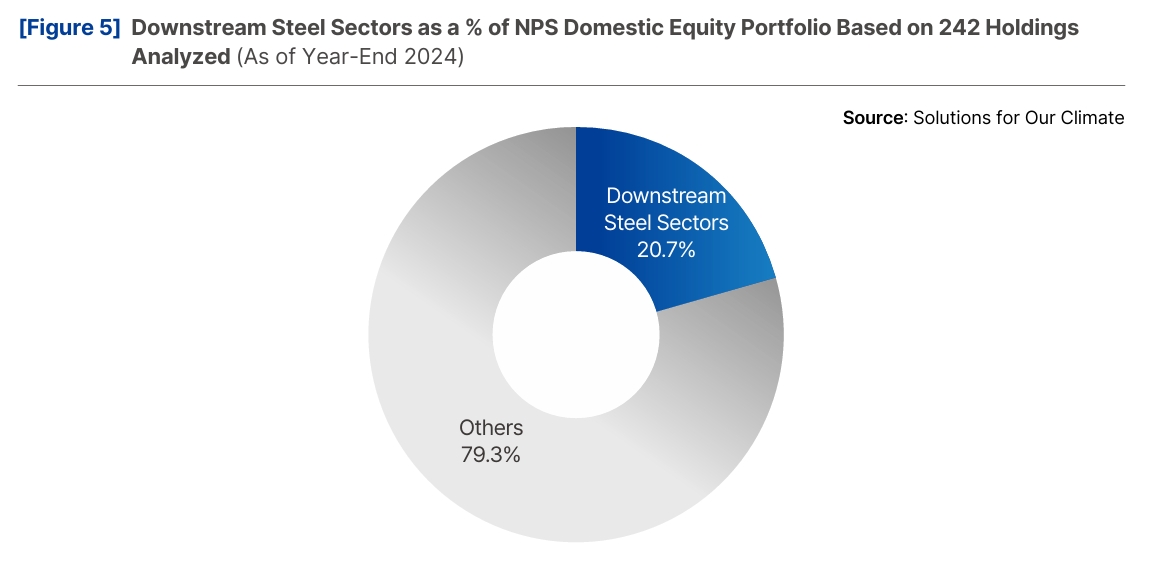
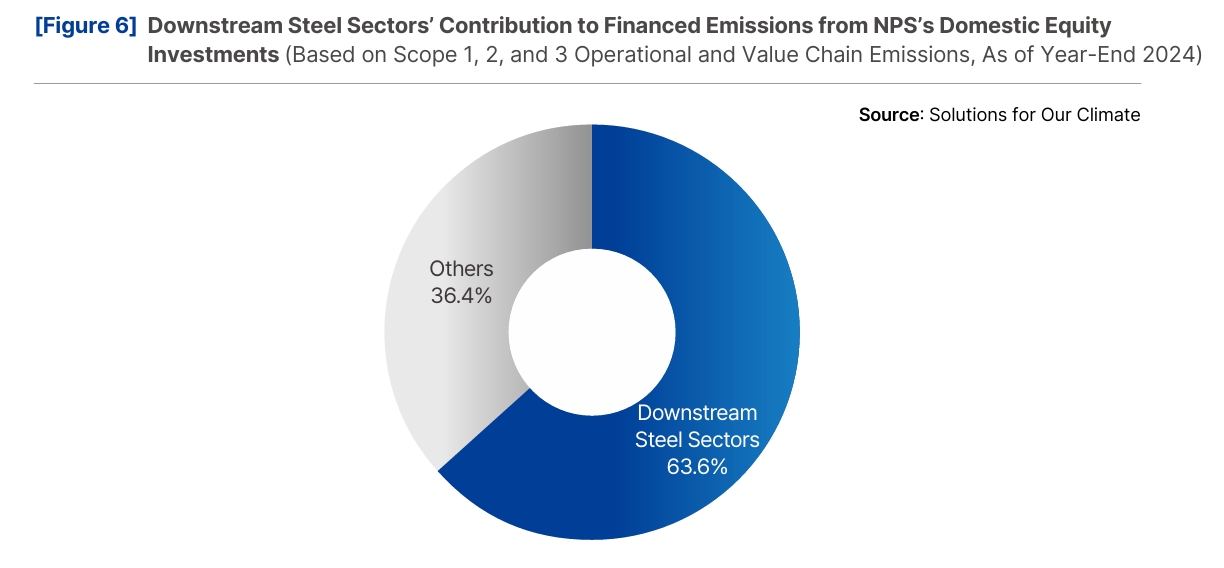
The influence of steel extends across supply chains. Downstream industries which rely heavily on steel, such as automotive, shipbuilding and construction, account for roughly 21% of the portfolio value within the analyzed samples but contribute around 64% of total financed emissions when Scope 1, 2, and 3 emissions across the value chain are aggregated.
This indicates that the pace of decarbonization in the steel sector may have implications well beyond the industry, with potential consequences for investor risk and uncertainty.
In 2023, NPS revised its “Stewardship Guidelines” to include climate risk management. The passage of the “K-Steel Act” in 2025 further signals growing policy momentum to support the Korean industry’s transition towards carbon neutrality while maintaining its competitiveness amid tightening tariffs and carbon market regulations, including the EU’s Carbon Border Adjustment Mechanism (CBAM). However, these policy frameworks alone may be insufficient to effect real change, underscoring the need to translate policy signals into concrete business strategies and investments.
Against this backdrop, the implementation of investors’ action and new policy measures will be critical in determining the pace of the industry’s transition. Following a six-month grace period, the K-Steel Act is set to take effect on June 17, 2026, making June a critical policy momentum point for Korea’s steel transition.
Yet for POSCO Holdings—the single largest contributor to financed emissions in the NPS portfolio—public disclosures fail to show what engagement objectives the NPS has set or how it measures progress towards them.
Steel is a sector where limited engagement resources can garner outsized impact, making it one of the most efficient tools for managing portfolio-level climate risk. SFOC’s analysis shows that an accelerated transition of the steel industry from coal-fueled to hydrogen-based can generate cumulative economic output that is nearly 2.4 times higher than from a conservative transition scenario.
The K-Steel Act marks a turning point in putting Korea’s policy ambition for steel decarbonization formally on the table. However, translating that ambition into corporate accountability requires active investor engagement; not just passive expectation. In this context, the report highlights practical approaches for the NPS and institutional investors to assess whether steel companies’ transition strategies are credible, reinforcing the targeted engagement to align with long-term climate goals.
Hyunjeong Bak, Investor Engagement Lead at Solutions for Our Climate (SFOC), said, “In the domestic equity portfolio reconstructed by Solutions for Our Climate (SFOC), steel accounts for only 1.5% of holdings by value, but represents 24% of Scope 1 and 2 financed emissions. This shows that steel should be a climate engagement priority for institutional investors such as the National Pension Service (NPS). If the K-Steel Act has created a policy signal for transition, the task now for the NPS and institutional investors is to actively assess whether that signal translates into companies’ actual investment decisions and capital allocation.”
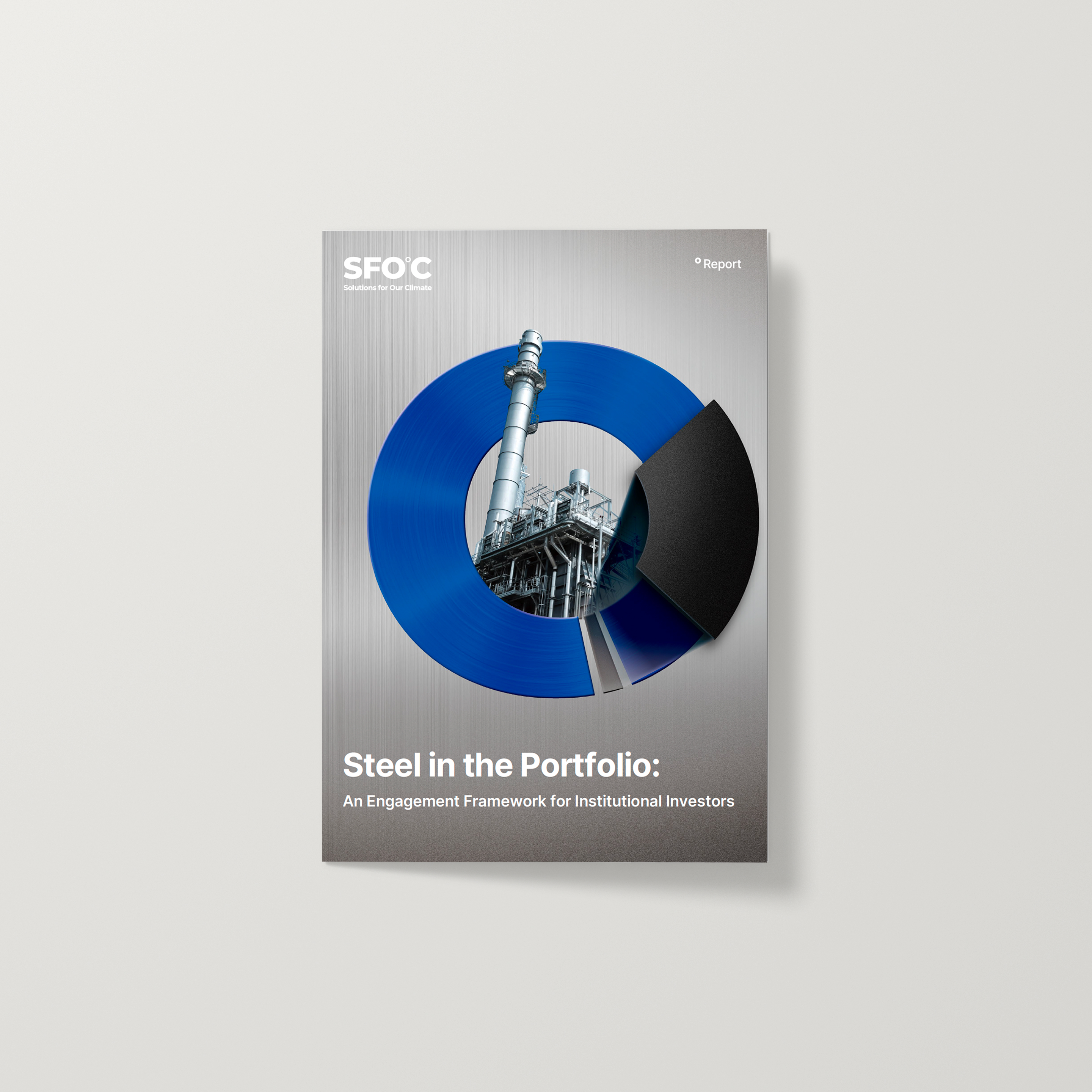
The full report is available here: Steel in the Portfolio: An Engagement Framework for Institutional Investors
ENDS.
Solutions for Our Climate (SFOC) is an independent nonprofit organization that works to accelerate global greenhouse gas emissions reduction and energy transition. SFOC leverages research, litigation, community organizing, and strategic communications to deliver practical climate solutions and build movements for change.
For media inquiries, please reach out to:
Frances Danielle Monsada, International Communications Officer, francesdanielle.monsada@forourclimate.org
Share this insights
![[SFOC] Hidden Methane Emissions, Tangible Economic Costs: Lost Fuel Value and Heatwave-Related Climate Damages from Korea’s Imported Fossil Fuel Supply Chains](https://content.forourclimate.org/images/research/GbNyzaf.jpg)











![[CREA-SFOC] Unveiling the Truth Behind Blast Furnace Pollution_South Korea](https://content.sfoc.tapahalab.com/images/research/C4Xvdme.jpg)


![[이슈 브리프] 탈석탄 투자 가이드라인](https://content.sfoc.tapahalab.com/images/research/tJRidme.jpg)
![[이슈 브리프] 신설 석탄발전소 가치평가 결과와 시사점](https://content.sfoc.tapahalab.com/images/research/nQCGime.jpg)


