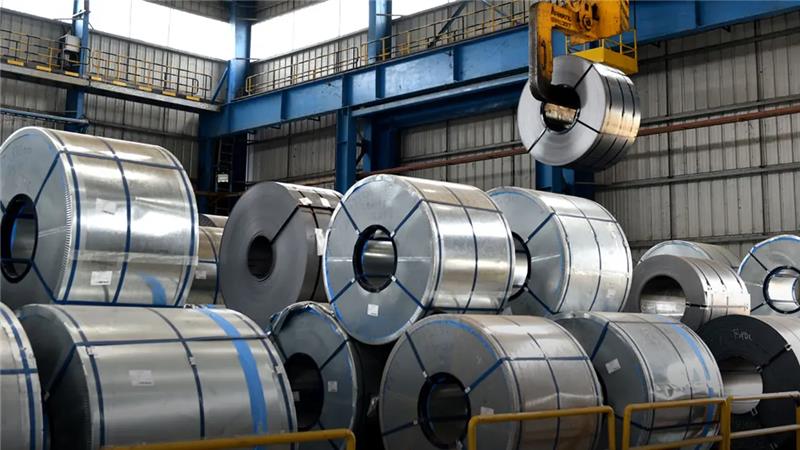
This article is the first in a blog series that explores the importance of green steel standards and their development in East Asia.
What is Green Steel?
Green steel is steel produced with significantly lower greenhouse gas (GHG) emissions than conventional steel. The lower the emissions, the greener the steel. Each ton of steel shifted away from coal brings us closer to a livable climate — and the greater the reduction, the bigger the impact on climate crisis.
Why does Green Steel matter?
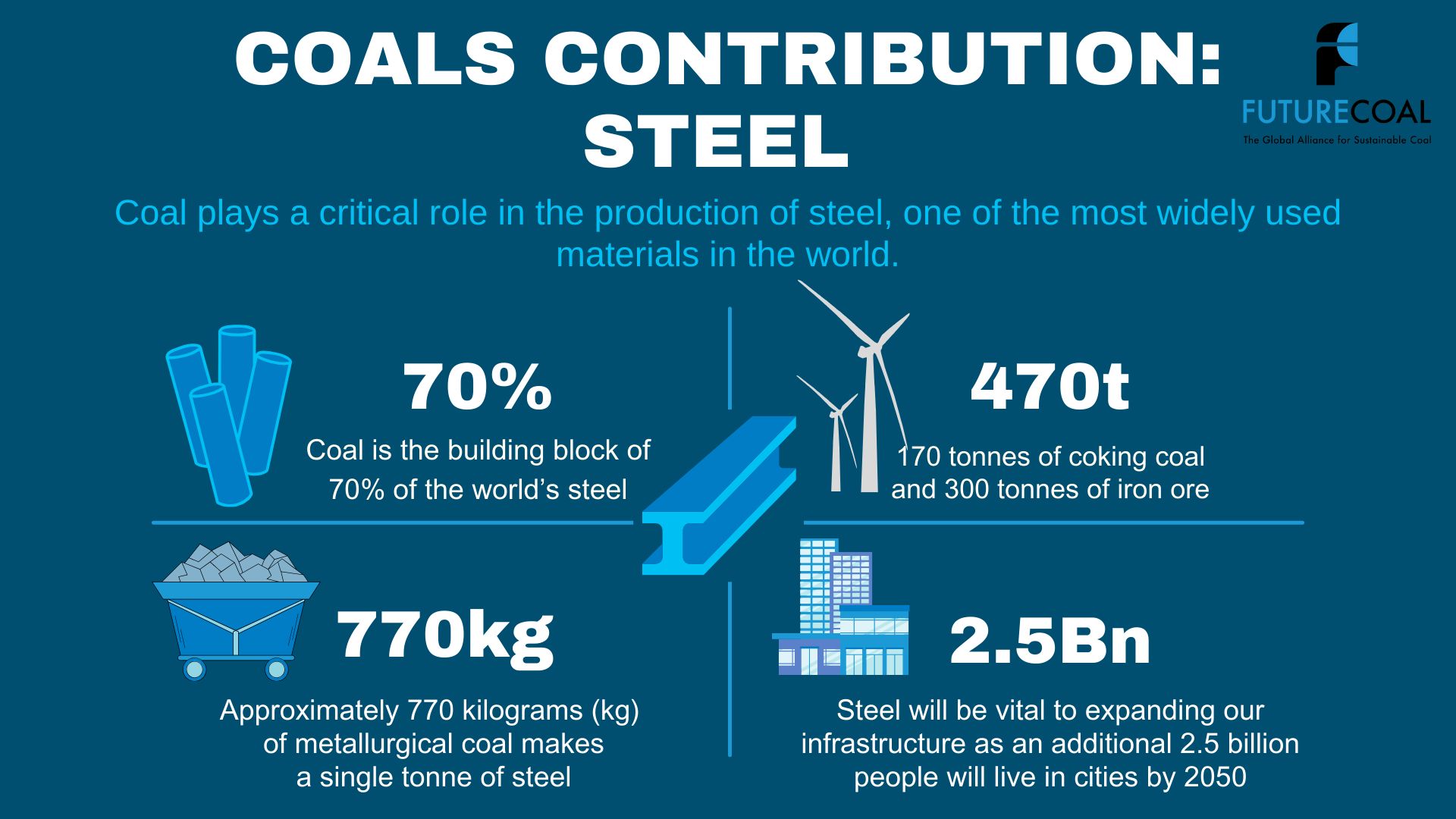
Today, more than 70% of steel is made using emission-intensive, coal-fired blast furnaces (BF-BOF). Steel is the most widely used metal in the world, making this a problem at scale. Producing steel is extraordinarily energy-intensive, and coal-based production emits around 2 tons of CO₂ per ton of steel. Beyond climate, it also generates significant air pollutants with serious health consequences for communities near production sites. The result: the steel industry accounts for around 7–8% of global CO₂ emissions, making it one of the highest-emitting sectors in the world.
Cleaner alternatives exist. Electric arc furnaces (EAFs) produce steel by melting recycled scrap with electricity and, when powered by renewable energy, can significantly reduce emissions. Hydrogen-based direct reduced iron (DRI) replaces coal with green hydrogen to produce iron before steelmaking, eliminating most of the carbon emitted in conventional production.
The Growing Need for Standards
The direction is clear: green steel means moving away from coal-based production toward near-zero emissions. However, in practice, the definition is still not fully consistent across markets. Terms like “low-carbon steel” and “green steel” can vary significantly depending on the benchmarks, system boundaries, and accounting methods being used, leading to divergent interpretations.
The lack of clarity can make it harder to compare products and leave room for inconsistent or overstated claims. Strengthening green steel definitions and ensuring transparency in how “green” labels are used will be key to maintaining credibility and minimizing greenwashing risks.
Therefore, credible green steel standards are needed.
What Makes a Credible Green Steel Standard
Green steel standards provide a framework for defining and assessing emissions from steel production. In practice, they turn climate ambitions into practical rules for how steel emissions are measured, compared, and verified. Their design determines whether “green steel” drives meaningful decarbonization or risks becoming a label without substance.
Green Light: Strong Standards=Global Competitiveness
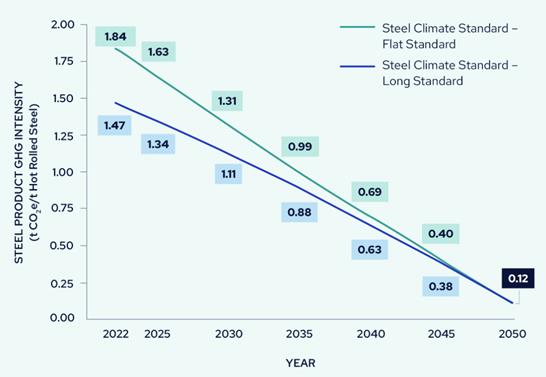
Clear and credible carbon intensity thresholds
Standards should set the emission thresholds that determine whether steel can credibly be classified as “green.” These thresholds should be ambitious enough to reflect real transition, while remaining feasible across different production routes. If thresholds are too permissive, conventional BF-BOF production with only marginal improvements could still qualify as “green.”
At the same time, setting a single threshold across different production routes also creates risks. It could either unfairly favor cleaner routes such as EAFs or weaken standards to accommodate more emissions-intensive pathways. In other words, standards do not just decide whether steel is “green” but also shape how ambitious and credible that label really is.
International Interoperability
Green steel standards should enable emissions to be measured and compared consistently across global markets. Since steel is a widely traded commodity with highly integrated supply chains and no meaningful national boundaries, a lack of international interoperability can result in the same product being labeled differently across regions, creating confusion and undermining trust — particularly in cross-border trade.
This matters even more now as carbon border measures begin to reshape global steel trade. The European Union's Carbon Border Adjustment Mechanism (CBAM) requires importers to pay for the carbon emissions embedded in certain products, especially steel, sold into the EU market. A similar carbon border adjustment mechanism in the UK is also expected to take effect next year. Together, these developments are starting to put a carbon price on the global steel supply chain. This makes interoperable standards increasingly important for a credible, fair, and well-functioning green steel market.
Red Light: High Risks of Greenwashing
Mass balance without physical traceability
Green steel standards should ensure that emission reductions are linked to the actual product being sold and prevent greenwashing. Without product‑level traceability, certain approaches such as mass balance accounting allow emission reductions made across a company’s wider operations (with different sites) to be pooled and assigned to selected products. This means a product can be labeled “green” even if it is not produced through a genuinely low-emission process.
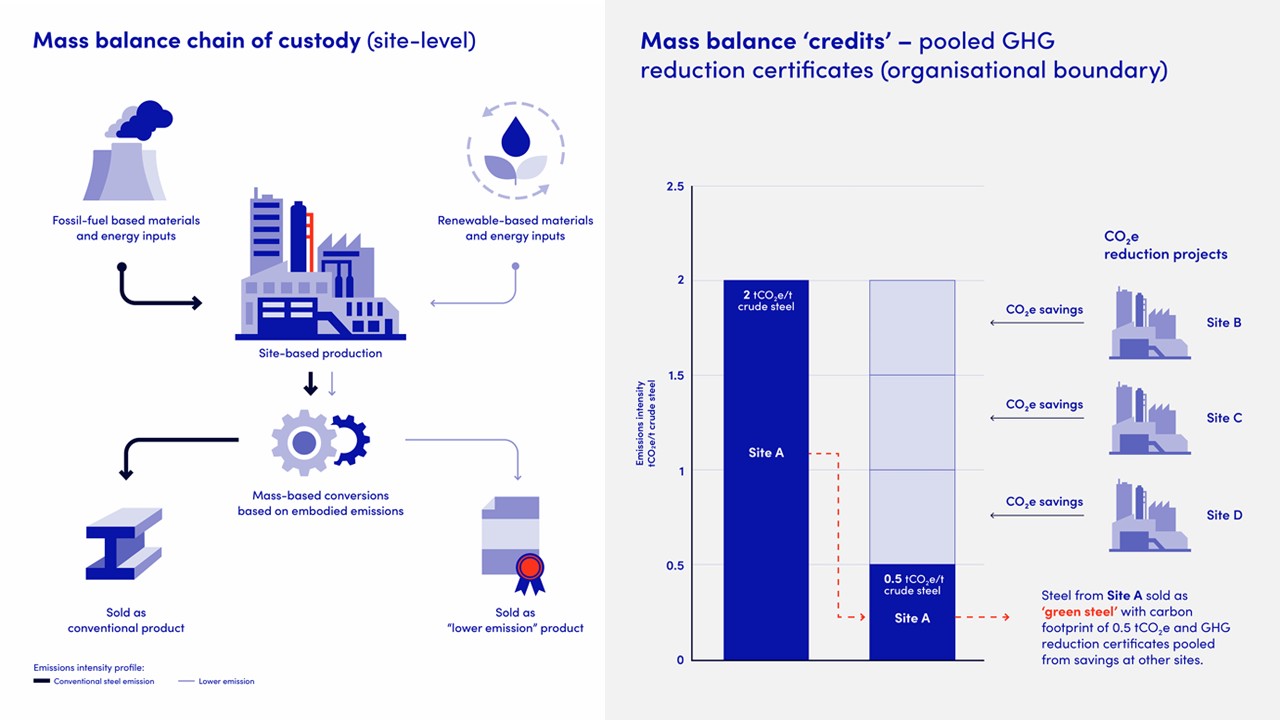
This is why physical traceability matters. Claims that lack a clear physically traceable link between the production process and the product itself are increasingly being questioned by emerging green steel standards, international methodological frameworks (ISO 14044 and ISO 14067), trade mechanisms including the EU CBAM, as well as demand-side initiatives and civil society groups.
Risky Business: Who is at Risk from Misleading Green Steel Standards?
Green steel standards are meant to be credible, transparent, and interoperable. However, when they are poorly designed, they can create risks across the value chain: weakening climate incentives, distorting markets, and undermining trust.
Steelmakers
Unclear and inconsistent carbon intensity thresholds can allow high-emission products to qualify as “green”, giving steelmakers little incentive to move away from coal-based production. This can also expose steelmakers to greenwashing risks, particularly if products labeled as “green” are later challenged for lacking real emissions reductions.
In addition, as the EU CBAM expands, misalignment between domestic green steel standards and EU benchmarks may result in higher carbon costs and compliance burdens for steel exporters.
Steel Buyers
For buyers, the main risk is greenwashing. Permissive standards can allow coal-based steel to be labeled as “green”, enabling downstream users to incorporate such inputs and market their own products as “green.” This exposes companies to legal and reputational risks.
Investors
For investors, the primary concern is capital misallocation. Misleading standards make it difficult to distinguish between companies that are genuinely transitioning and those that are not. This can channel investment into carbon-intensive assets that may lose value over time, especially as climate policies tighten and market dynamics shift. In that sense, weak standards can increase the risk of future stranded assets.
As green steel moves from concept to market reality, the question is no longer whether standards are needed, but what kind of standards will shape the transition. Weak or misleading standards risk enabling greenwashing, misdirecting investment, and undermining trust across the value chain. Credible and internationally interoperable standards, by contrast, can help define what counts as real progress, support fair competition across markets, and accelerate genuine steel decarbonization. In that sense, green steel standards are not just a technical detail; they are becoming a key part of how the green transition is defined, trusted, and delivered in practice.
Looking Ahead
In the next edition, we will turn to real-world examples from East Asia, exploring how green steel standards are being developed and what they could mean for the future of green steel.
Stay tuned!
Further Reading
Find terminology around green steel confusing and want to learn more? Check out our Green Steel Glossary below.
Related insights
Advancing the Transition Away from Fossil Fuels
Key Outcomes from Santa Marta
2026-05-29
Green Steel Standard Development in East Asia
Green Steel Standards Blog Series #2
2026-05-13
Hyundai Has a Chance to Lead Asia’s Auto Transition — But Time Is Running Out
Time is running out for Hyundai to match Its EV success with climate transparency
2025-09-23


