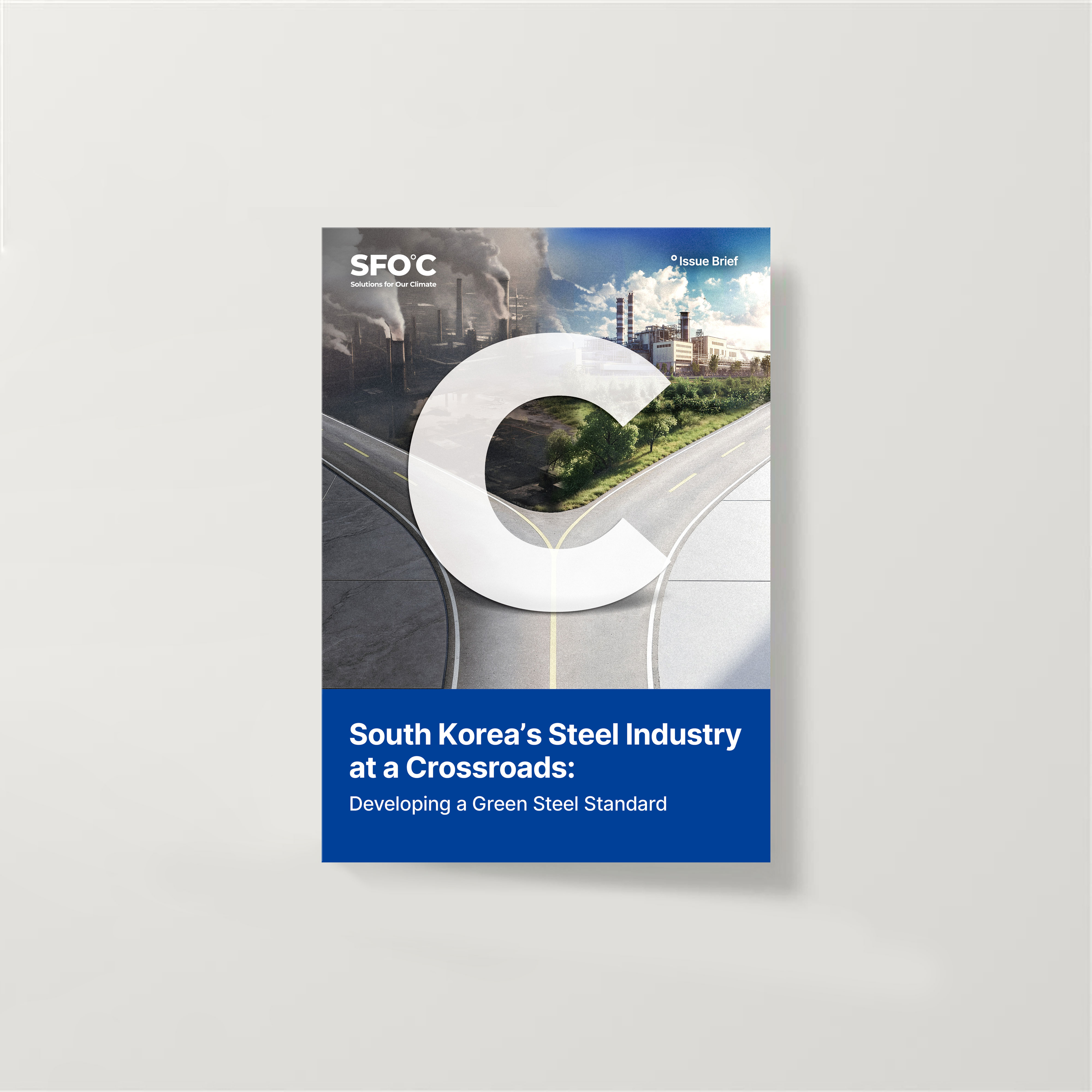
South Korea’s Steel Industry at a Crossroads: Developing a Credible Green Steel Standard

About
This issue brief examines why green steel standards matter, analyzes emerging approaches to green steel certification, and assesses how different design choices may influence the competitiveness and long-term decarbonization of South Korea’s steel industry. As South Korea develops its low-carbon steel certification framework under the K-Steel Act, the report explores how green steel standards can function not only as product classification tools, but also as mechanisms that shape investment decisions, technology deployment, and the industry's transition toward low-emission steelmaking pathways.
Executive summary
South Korea’s steel industry is at a critical juncture. As one of the world’s largest steel producers and exporters, South Korea faces growing pressure to decarbonize while maintaining its international competitiveness. At the same time, the government has identified hydrogen-based direct reduced iron (H₂-DRI) as a key long-term pathway for steel sector decarbonization and has begun establishing policy frameworks to support this transition through the K-GX and the K-Steel Act.
However, South Korea currently lacks a clear and credible green steel standard. If weak certification criteria are adopted, steelmakers may receive green steel recognition without fundamentally transforming production processes, risking continued reliance on carbon-intensive blast furnace (BF) production. Green steel standards are not merely product-labeling tools; they influence investment decisions, green technology deployment, market development, and the pace of industrial transition.
Internationally, green steel standards are evolving rapidly. Across major standards, regulatory frameworks, and buyer initiatives, there is growing convergence around clear carbon intensity thresholds and stronger requirements for physical traceability. Taken together, these developments reflect a broader shift: green steel standards are increasingly designed to drive genuine industrial transition, rather than reward incremental emissions reductions within carbon-intensive production systems. In this context, standard design plays a decisive role in determining whether market recognition and policy support accelerate the shift away from BF-based production toward genuinely low-emission steelmaking pathways such as H₂-DRI.
For South Korea, the design of a green steel standard will play an important role in determining whether the steel sector successfully transitions toward H₂-DRI production or remains locked into BF-based pathways. To support a credible and competitive transition, South Korea should:
Avoid mass-balance approaches that allow BF-based production systems to receive green steel recognition without fundamental technological transition.
Adopt clear, performance-based carbon intensity thresholds grounded in real emissions reductions.
Align green steel definitions with internationally recognized principles and emerging global trade frameworks.
Regularly update the standard to remain aligned with technological progress and the H₂‑DRI transition.
The choices South Korea makes today in defining green steel will help determine whether its steel sector successfully transitions toward hydrogen-based production or remains locked into carbon-intensive BF pathways. A credible green steel standard can strengthen market confidence, improve international competitiveness, and accelerate the decarbonization of South Korea’s steel industry.
Related research
Choosing a Green Steel Pathway : Implications for South Korea, Japan, and Australia
2026-09-14
The Undisclosed Bill: How Hyundai Motor Group is accruing a CBAM liability it has not quantified for investors
2026-07-15
Steel in the Portfolio: An Engagement Framework for Institutional Investors
2026-06-16
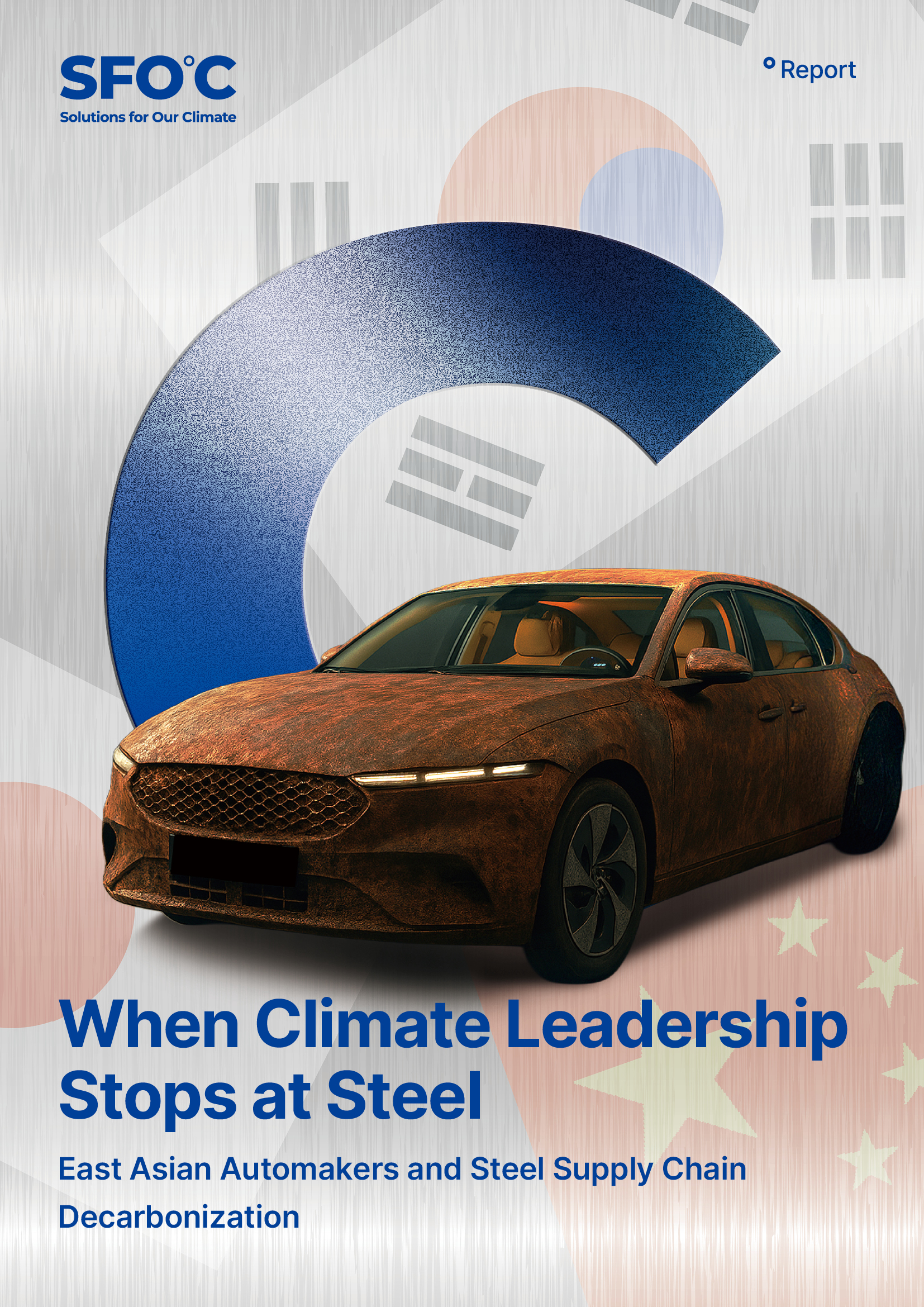
When Climate Leadership Stops at Steel: East Asian Automakers and Steel Supply Chain Decarbonization
2026-03-08
Empty Seats at the Climate Table : Board Oversight Gaps in Hyundai Motor Company's Climate Governance
2026-03-03

REthinking Hyundai’s ‘eco’ steel: How fossil fuels threaten the brand
2026-02-13
The Cost of Delay: Socioeconomic Impacts of Steel Decarbonization in South Korea
2026-01-26
Government Financing for H₂-DRI Commercialization: Comparative Risk-Sharing Cases and Implications for Korea
2026-01-26
From Words to Data: Bridging Hyundai’s Climate Commitments and Disclosure
2025-11-28
From Policy to Purchase: Korea and Japan's Green Steel Public Procurement Strategies
2025-07-27
Driving Hydrogen-Based Steelmaking in South Korea: Focus on Hydrogen Sourcing
2025-06-25

Analyzing Korea’s 2035 NDC GHG Emissions Reduction Pathway through an Integrated Assessment Model
2025-04-23

Moving Away from Coal: 2025 POSCO Holdings Climate Risk
2025-03-17

Hyundai Steel's Insufficient Decarbonization Roadmap: A Setback to Hyundai Motor Company’s Net Zero Ambitions?
2025-01-23

Extending the Lifespan of Gwangyang No.2 Blast Furnace: A Backward Step for Carbon Neutrality
2024-10-28

Enabling the Green Steel Future - Unlocking Government-led Investment in Core Technology Development for Carbon Neutrality
2024-07-31
Green Steel Economics - Comparing Economics of Green H2-DRI and Traditional Steelmaking Around the World
2024-07-31

End the Free Emissions: Recommendations for Reforming K-ETS Based on Market Activation Scenario Analysis
2024-06-12

Exploring Climate Risk and Its Potential Financial Impacts with POSCO Holdings
2024-03-19

POSCO Profile No. 2 - The Journey Toward Greenwashing: Greenate
2024-03-15

POSCO Profile No. 1 - Coal Tomorrow with POSCO: Doubts Rising on Korean Steelmaker’s Net-Zero Future
2023-10-06

Industry Trends Brief No.1: Korean Government's Low Carbon Steel Production Strategy
2023-04-17
![[CREA-SFOC] Unveiling the Truth Behind Blast Furnace Pollution_South Korea](https://content.sfoc.tapahalab.com/images/research/C4Xvdme.jpg)
[CREA-SFOC] Unveiling the Truth Behind Blast Furnace Pollution_South Korea
2022-11-28

Revisiting Korean Green Public Procurement Policies to Promote Green Steel Demand
2022-08-10

Steel Sector Pathways for Korea's 2050 Carbon Neutrality
2022-03-14

Opportunities and Challenges for the Steel Industry to Become Carbon Neutral by 2050
2021-11-25

The South Korea Steel Industry and Carbon Neutrality: Responses, Issues and Policy Recommendations
2021-11-25


