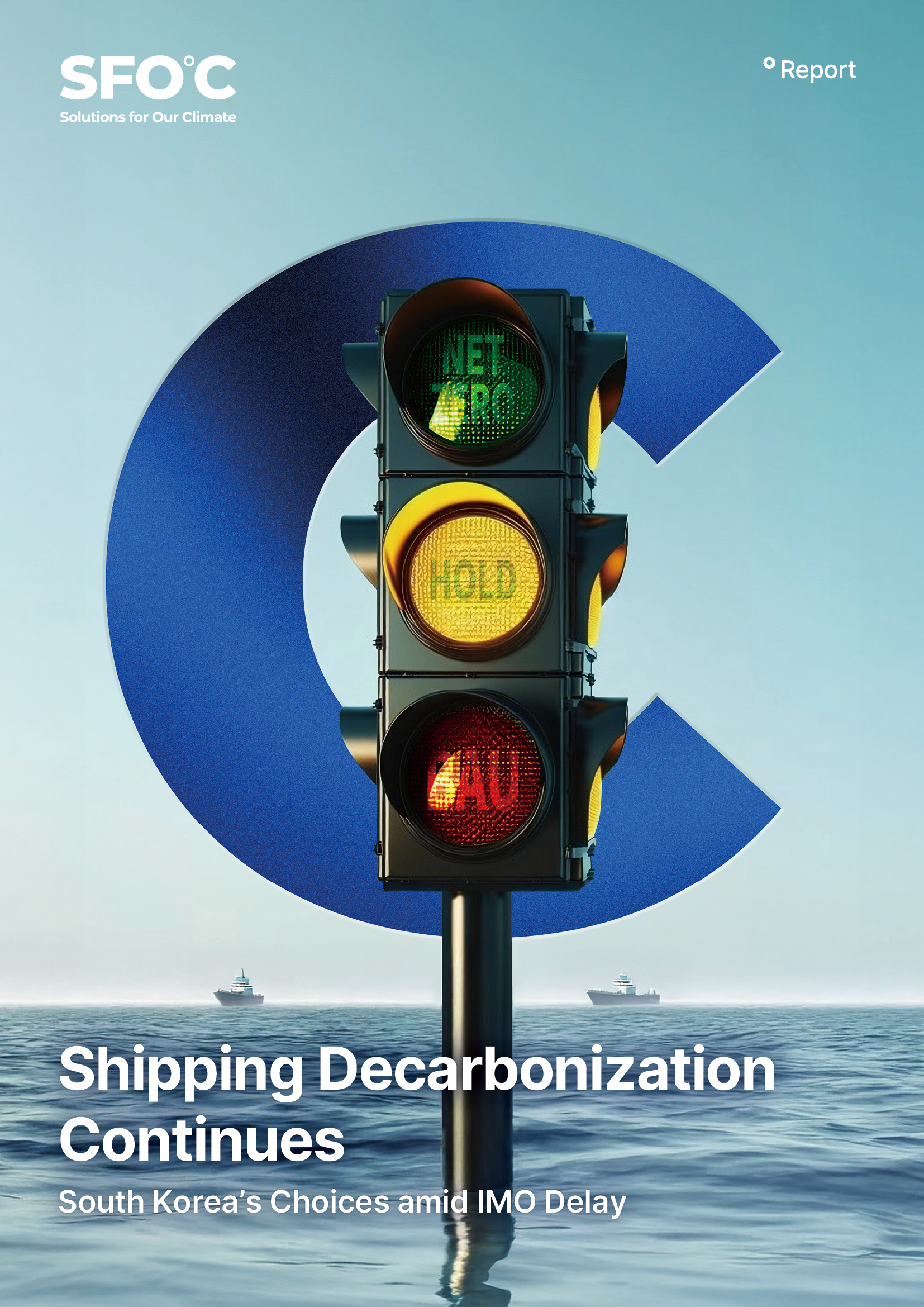
Shipping Decarbonization Continues: South Korea's Choices amid IMO Delay

About
This report analyzes the structural risks confronting the Korean shipping industry due to regulatory uncertainty following the delay of the IMO’s mid-term measures, known as the Net-Zero Framework (NZF). Using fuel transition scenarios and total cost modeling for the Korean-operated vessels, the research evaluates potential decarbonization pathways for international shipping. It further analyzes how delays in regulatory implementation may affect cost structures, strategic decision-making, and the pace of the industry’s fuel transition.
Executive summary
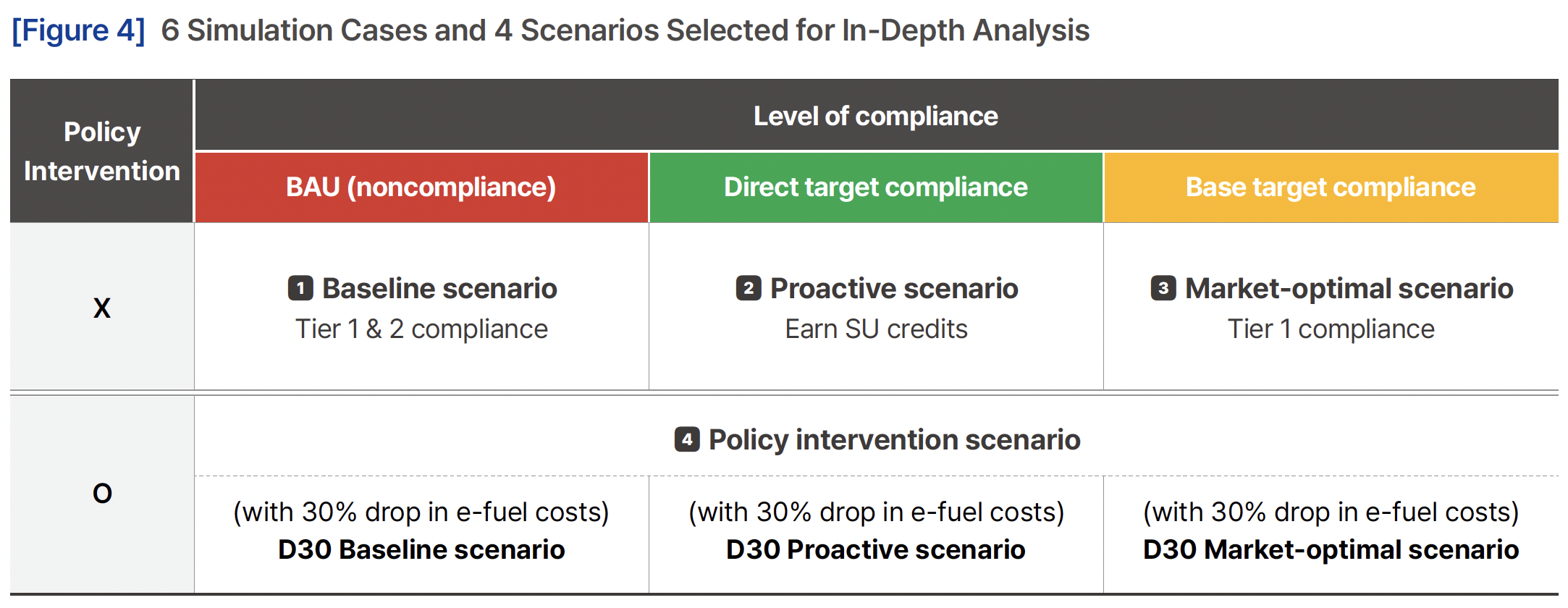
This study analyzes six scenarios to examine how fuel mix and total costs change when government policy intervention reduces the price of zero- and near-zero (ZNZ) fuels by 30 percent by 2035 relative to 2028 levels. The analysis evaluates the implications for fuel transition strategies in the oceangoing fleet operated by Korean companies within the IMO’s mid-term decarbonization framework.
Escalating Cost of Delay
The Baseline scenario appears cost-effective in the short term, but long-term costs increase sharply as remedial unit (RU) obligations rise non-linearly. Delay costs grow faster than transition costs, creating a structural vulnerability for shipping companies. In a regulatory environment with overlapping global and regional rules, short-term cost-minimization strategies may lead to significantly higher long-term compliance costs.
Limitations of LNG-Centered Strategy
LNG faces structural constraints in meeting GHG Fuel Intensity (GFI) requirements due to lifecycle emissions and methane slip. Modeling results show LNG accounts for less than 10 percent of the fuel mix across all scenarios, indicating limited long-term competitiveness.
Importance of Policy Support for ZNZ Fuels
ZNZ fuels (e.g., e-fuels) scale more rapidly when regulatory pressure is combined with targeted policy support. Policies that reduce fuel prices can significantly lower total system costs by 2035. Price stability and supply chain development are critical to accelerating the fuel transition.
Policy Implications
Current Korean law classifies LNG-fueled vessels as “eco-friendly,” dispersing public support across fuel pathways with different long-term decarbonization potential. Policy instruments to develop ZNZ fuel supply chains and directly incentivize their use remain limited. The speed and sustainability of maritime decarbonization will depend heavily on government policies supporting fuel price stability, supply development, and infrastructure readiness.
Related research
An Assessment of Environmental and Social Impacts of LNG Carriers
2026-04-06
Recurring Crisis, Delayed Transition: From Fossil Fuel Dependence to Energy Independence
2026-03-18
The Changing Legal Landscape for LNG Shipping Expansion
2026-01-08
Global Top 100 Shipping Companies by Environmental Performance(2025) - Is Korea’s Shipping Ready for the Net-Zero Era?
2025-11-04
Supplementary Brief: South Korea's Exposure to Shipping Stranded Asset Risks
2025-10-26
IMO Net-Zero Framework: Fuel Cost and Carbon Price Impacts
2025-07-23

No Room for More: Why LNG Carriers Are a Climate and Financial Risk
2025-05-13

Charting a Net-Zero Pathway: A Korea-Europe Green Shipping Corridor Linking Pyeongtaek and Key European Ports
2025-04-22

Still Adrift: Updated assessment of the global energy transition's impact on the LNG shipbuilding industry
2024-10-14

A Study on South Korea's 2050 Net Zero Pathway for Shipping
2024-09-25

Environmental Risks of Bridge Shipping Fuels and Fuel Transition Plans of South Korea, China and Japan
2024-08-12

Limitations of LNG in the Shipping Decarbonization
2024-07-31

LNG運搬船: 世界のガス取引を拡大させる海上パイプライン ――影の推進者を明らかにする
2024-06-12

Reconsidering Korea's LNG Bunkering 100% Rebate Policy
2024-06-04
![[Report] Achieving Net Zero in International Shipping through Korea-US-Japan Green Shipping Corridor](https://content.sfoc.tapahalab.com/images/research/s11Jime.jpg)
[Report] Achieving Net Zero in International Shipping through Korea-US-Japan Green Shipping Corridor
2024-02-13

Industry Trends Brief No.3 - Port Decarbonization: Focusing on South Korean Five Major Ports
2023-09-15

Korea's Green Shipping Pathways: The Korean Shipping Landscape and Policy Recommendations for Ocean-Climate Leadership in Shipping
2022-12-09


