March 18, 2026 (SEOUL) - The disruption in the Strait of Hormuz has exposed South Korea and Japan’s structural vulnerability to fossil fuel supply shocks, as freight rates surge, vessels are stranded, and industrial disruptions ripple across the economy, according to a new issue brief by Solutions for Our Climate (SFOC).
South Korea sources approximately 70% of its crude oil through the Strait of Hormuz, along with 18% of its LNG imports, leaving it highly exposed to disruptions in a single maritime chokepoint.
Japan faces similar risks, sourcing over 90% of its crude oil from the Middle East, with around 75% transiting Hormuz. Its LNG exposure is lower at 7%, reflecting a more diversified supply.
Blockade triggers cascading shocks
The near-total shutdown of strait transits was driven not primarily by physical obstruction, but by the collapse of war risk insurance. Within 72 hours of the strikes, seven of the world's twelve P&I clubs – covering approximately 90% of the global merchant fleet – cancelled coverage for the Strait of Hormuz. Premiums surged from 0.25% to 3% of hull value, adding millions of dollars per transit and collapsing the economics of passage for most commercial operators.
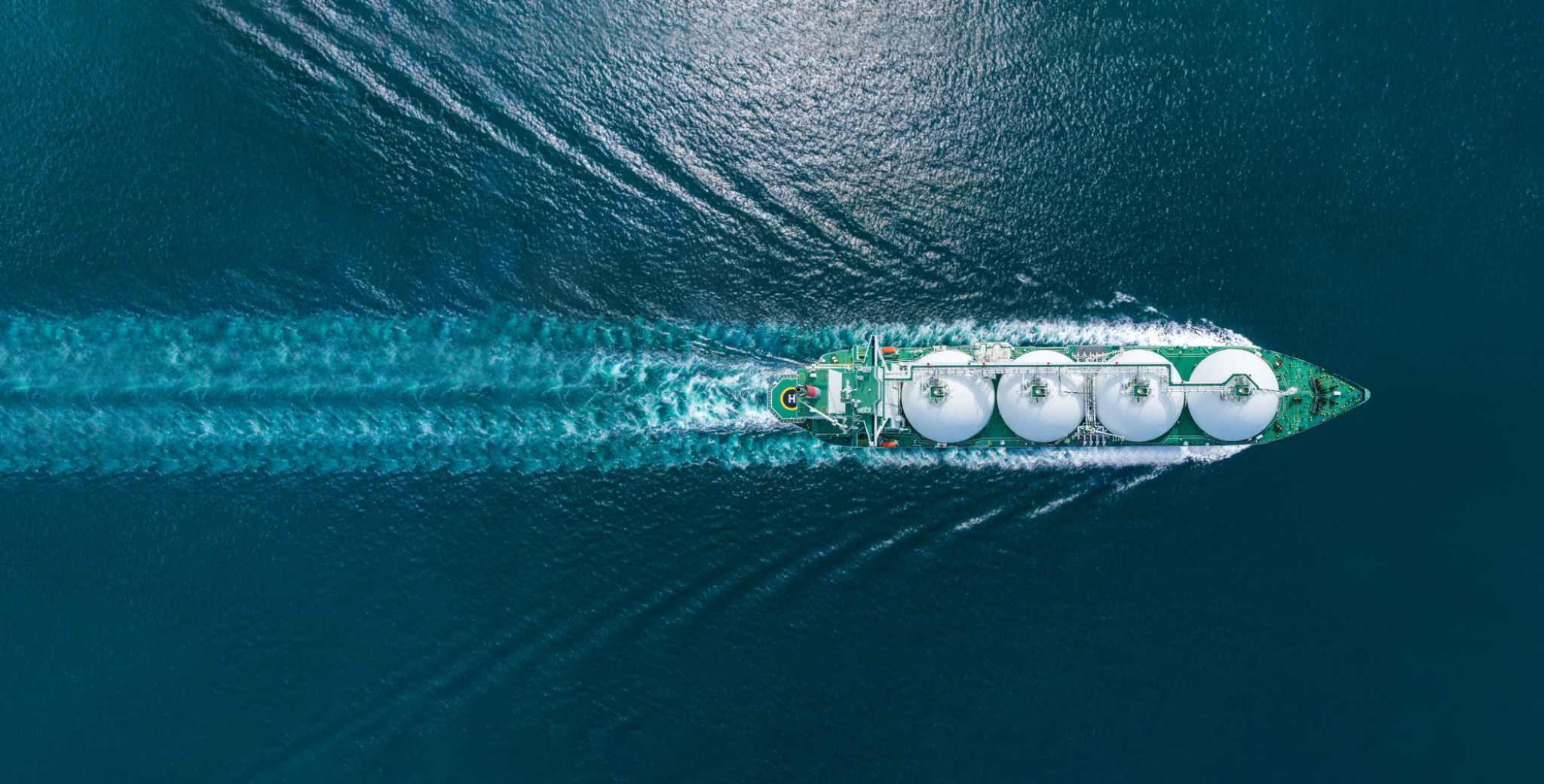
The impact on freight markets was immediate. LNG carrier rates have surged to around $300,000 per day – a 650% increase – while crude tanker rates have reached historic highs.
Korean refiners are already absorbing the impact. GS Caltex reportedly paid $440,000/day for a VLCC from Saudi Arabia’s Yanbu port. Meanwhile, S-Oil secured an emergency charter at $555,000/day, among the highest on record. Seven Korean-flagged oil tankers remain stranded near the strait.
The disruption is now spreading across downstream industries. Petrochemical firms including Lotte Chemical, LG Chem, and Hanwha Solutions have issued potential force majeure notices, while Yeochun NCC (Korea’s largest ethylene producer) has declared supply disruption.
As naphtha depends on refinery output – itself reliant on crude shipments through Hormuz – the shock is rippling across the industrial value chain.
In Japan, authorities have released 170 days of strategic oil reserves, while Tokyo Electric Power Company has warned of potential rolling blackouts.
How public finance is reinforcing the exposure
The 2022 Russia-Ukraine energy crisis showed how price volatility hits import-dependent economies. Korea’s LNG spending nearly doubled (+96.5%) from $25.5 billion to $50.0 billion despite flat demand, while Japan’s spending rose 65.2% even as demand declined.

Image 1: Comparison of LNG spending across selected Asian economies, 2021 vs. 2022
Over the past eleven years, South Korea directed ₩141 trillion ($127 billion) to fossil fuels, compared to ₩11 trillion ($9.7 billion) for renewables – a 13-fold gap. Around 60% of public export finance in the past five years has supported LNG infrastructure construction. In 2024 alone, Korea spent ₩160 trillion ($120 billion) on fuel imports.
Japan shows a similar trend, providing $93 billion in public finance for overseas oil and gas projects from 2013 to 2024, which is nearly four times its $24.5 billion for renewables. Over the past three years, the government spent $32.2 billion on household electricity subsidies to absorb the price shock from the Russia-Ukraine war.
This investment pattern deepens exposure to geopolitical chokepoints, driving volatility, and passing costs to consumers and industry.
Gas economics weaken as risks rise
According to the Institute for Energy Economics and Financial Analysis (IEEFA), at current LNG prices (~$15/MMBtu), operating a 1 GW gas plant costs nearly $800 million annually in fuel alone. This translates to a levelized cost of roughly $130–140/MWh, which is three to four times higher than solar and wind.
If LNG prices remain 50% above 2025 averages, gas-fired power costs could increase by 32%-37%, while solar costs would rise by only around 3%. Each gigawatt of solar could avoid approximately $3 billion in LNG import costs over 25 years.
Over the past eleven years, South Korea directed $97 billion more to fossil fuels than renewables; Japan, $68.5 billion more. These gaps could have supported an estimated 100 GW of solar in Korea and 70 GW in Japan, generating substantial long-term savings.
The issue brief has posited that this continued investment in fossil fuels creates a self-reinforcing cycle: LNG investment heightens exposure to geopolitical risks, drives price spikes, and shifts costs to consumers – only to be used to justify further investment, deepening dependence and vulnerability.
Juno Kim, Senior Industry Advisor at SFOC and former ESG Lead at Hyundai Heavy Industries (one of the world’s largest shipbuilders and a dominant force in LNG carrier construction), said:
“South Korea built its shipbuilding dominance on LNG carriers – and its public finance system has spent decades underwriting that bet. Now the same infrastructure is becoming a liability. Korea finances fossil fuels at thirteen times the rate of renewables, and the yards that built the global gas trade are watching LNG carrier orders begin to decline. The very dependence that public finance was meant to secure is now the source of the risk. That is not energy security – that is a trap."
ENDS.
Solutions for Our Climate (SFOC) is an independent nonprofit organization that works to accelerate global greenhouse gas emissions reduction and energy transition. SFOC leverages research, litigation, community organizing, and strategic communications to deliver practical climate solutions and build movements for change.
For media inquiries, please reach out to:
Antonette Tagnipez, International Communications Officer, at antonette.tagnipez@forourclimate.org
Share this insights
![[SFOC] Hidden Methane Emissions, Tangible Economic Costs: Lost Fuel Value and Heatwave-Related Climate Damages from Korea’s Imported Fossil Fuel Supply Chains](https://content.forourclimate.org/images/research/GbNyzaf.jpg)








![[Brief] South Korea’s international public finance continues to block a just energy transition](https://content.sfoc.tapahalab.com/images/research/RC5Kime.jpg)
![[Report] Achieving Net Zero in International Shipping through Korea-US-Japan Green Shipping Corridor](https://content.sfoc.tapahalab.com/images/research/s11Jime.jpg)


![[Report] The Inconsistent 'Coal-Free Pledge' of Korea's National Pension Service](https://content.sfoc.tapahalab.com/images/research/VcDPdme.jpg)


![[토론회] 한국형 녹색분류체계(K-Taxonomy), 무엇이 녹색경제활동인가](https://content.sfoc.tapahalab.com/images/research/bn8jdme.jpg)
![[이슈 브리프] 탄소포집, 이용 및 저장기술(CCUS) 현황과 문제점](https://content.sfoc.tapahalab.com/images/research/SWESdme.jpg)


