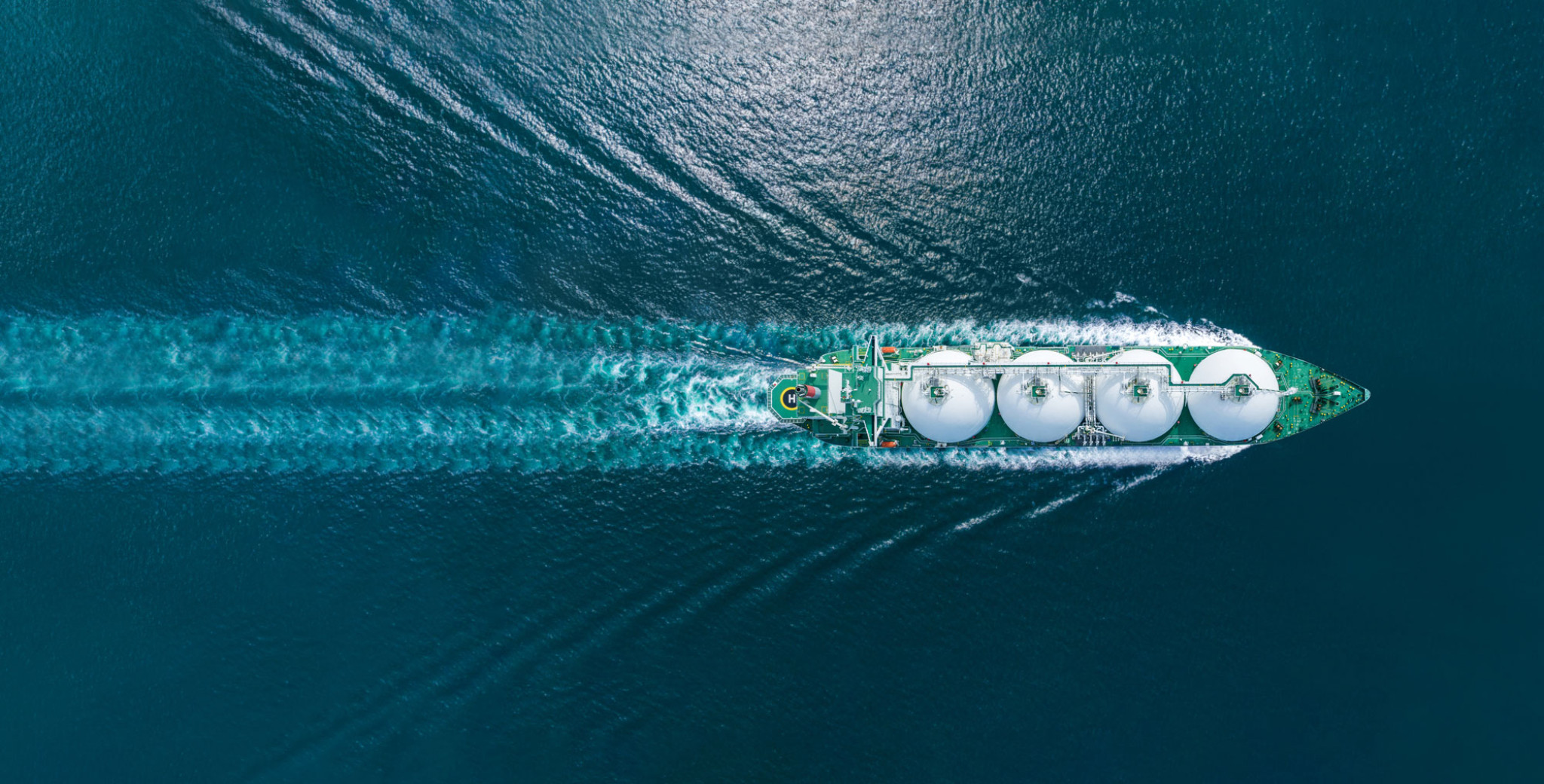
New SFOC research presented at COP31 finds LNG ship owners are planning to build more ships, despite weakened demand linked to the Hormuz crisis. Most of them will outlive 2050 net-zero targets.
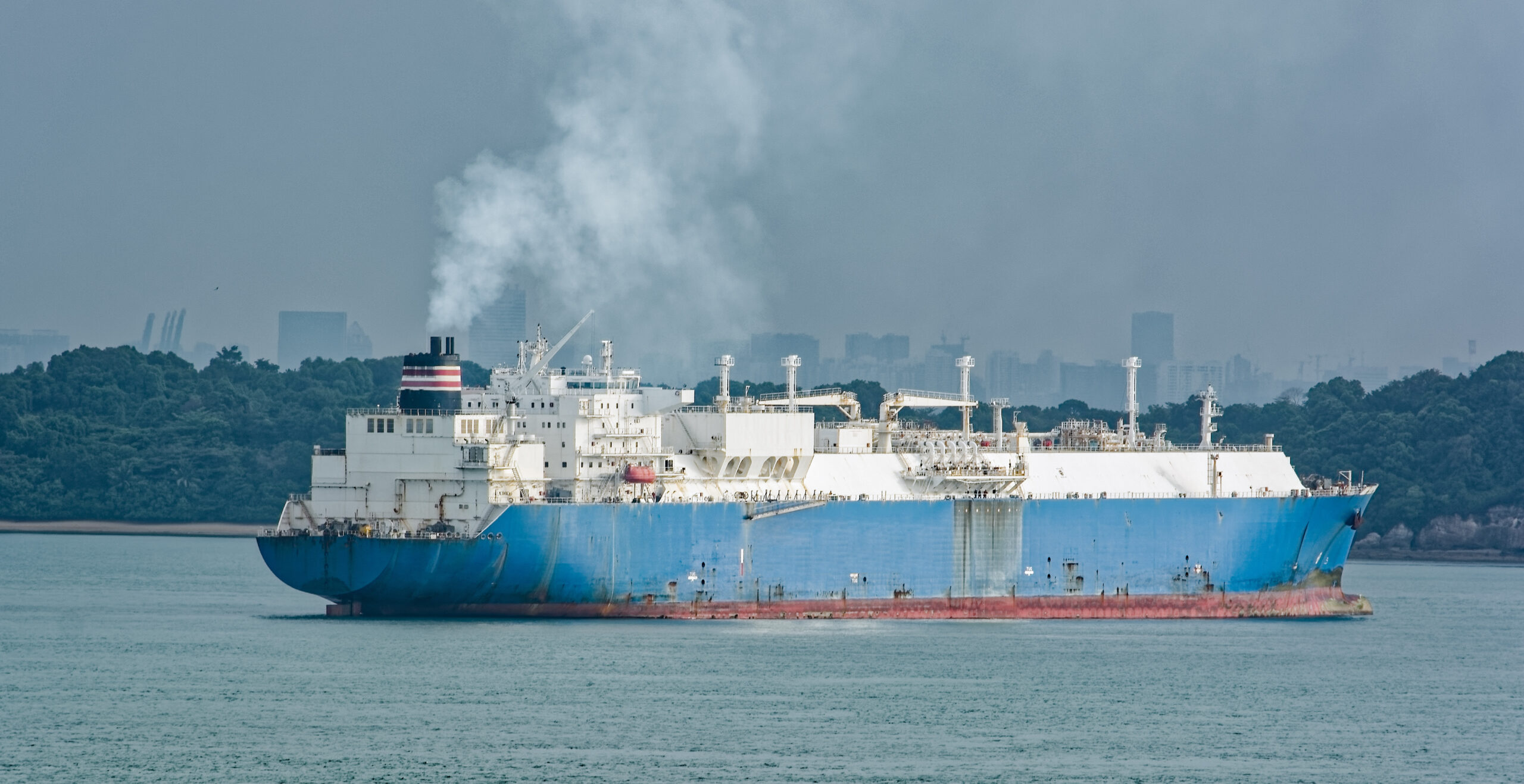
November 11, 2026 (ANTALYA) – Companies that own ships designed to transport Liquefied Natural Gas (LNG) commissioned 61 new vessels to be built between January and mid-September, even as the Hormuz crisis pushes Asian importers to cancel LNG projects and speed up renewables. The figures come from new research by Solutions for Our Climate (SFOC), presented at an event on the sidelines of COP31 in Antalya.
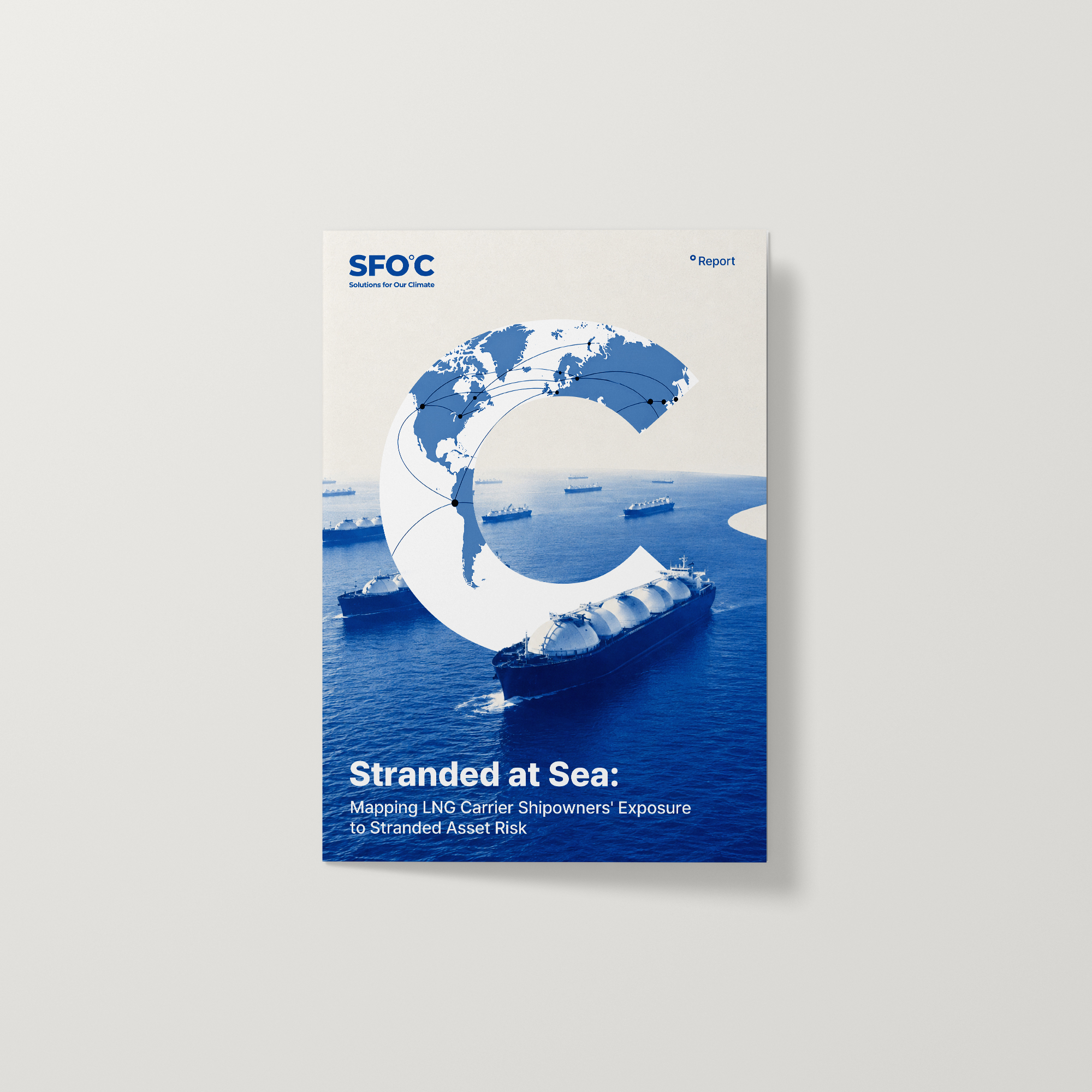
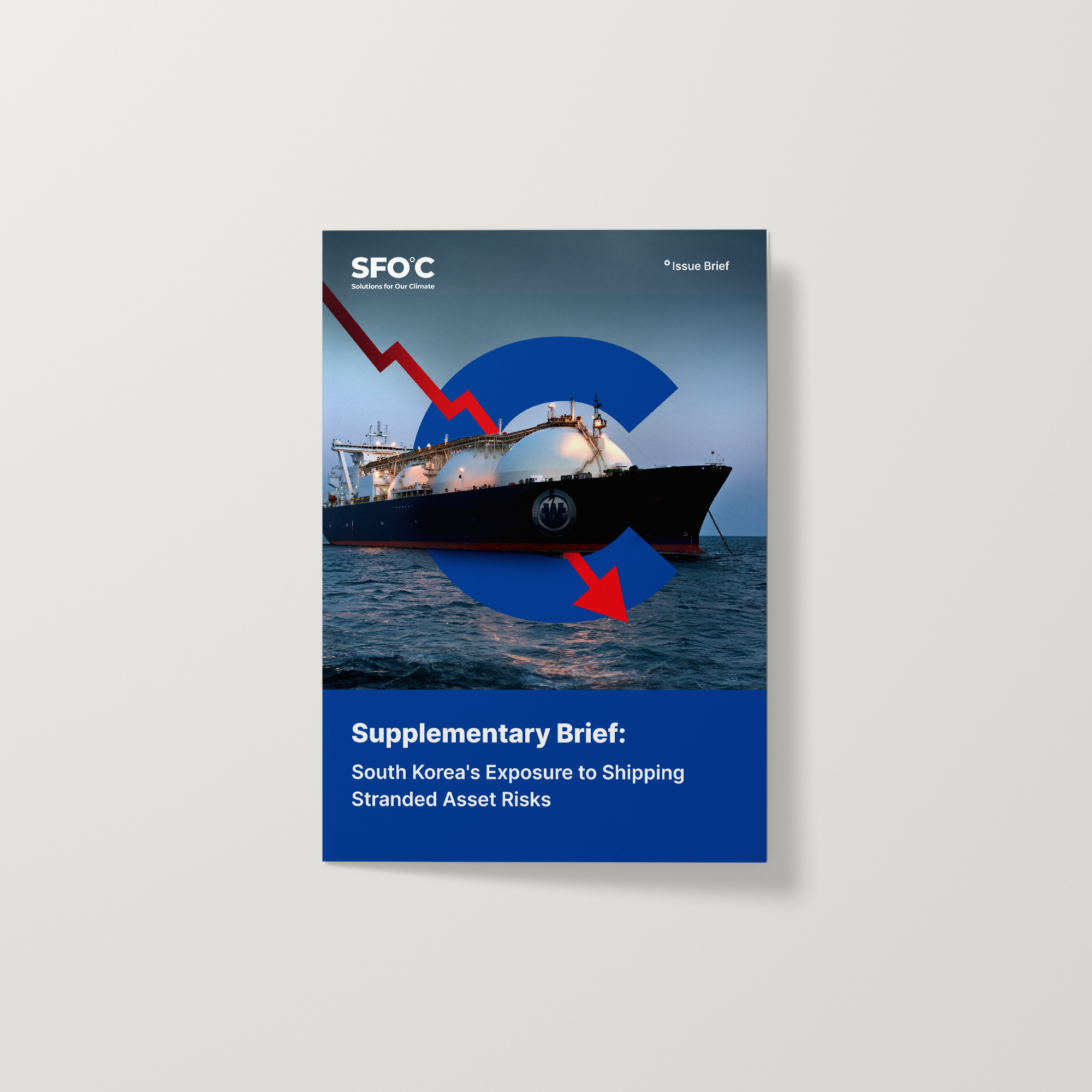
The report, Stranded at Sea: Mapping LNG Carrier Shipowners' Exposure to Stranded Asset Risk, examines whether the growth in LNG carrier orders could leave companies with vessels that are no longer needed. It maps all 1,111 large LNG carriers in service and on order worldwide as of September 2026, identifying the 125 companies that own them and examining 31 of them in detail.
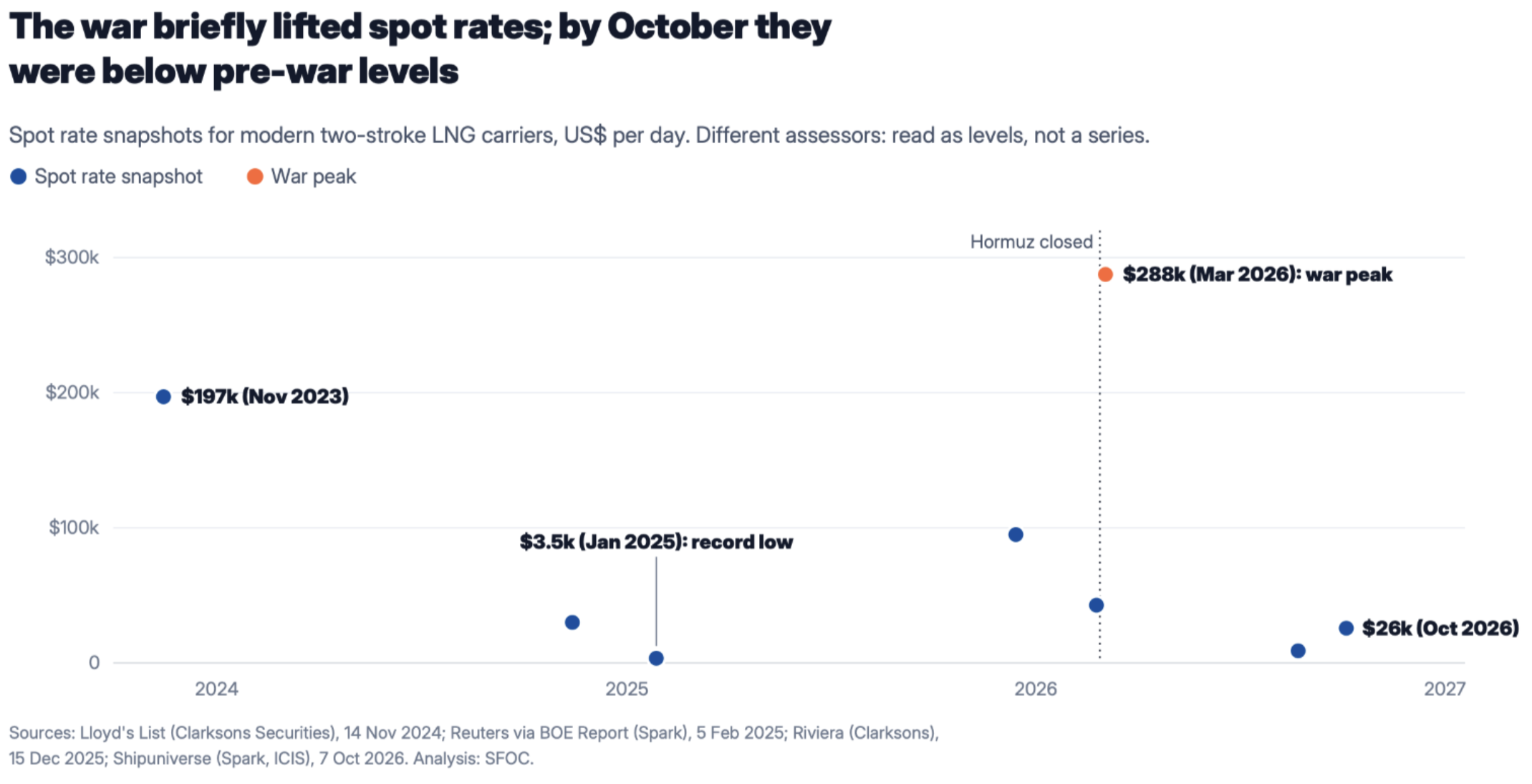
The closure of the Strait of Hormuz since late February has cut off almost a fifth of global LNG supply. Charter rates briefly spiked, but by early October spot rates had fallen 83–91% from their wartime peaks. Higher gas prices also hit demand. IEEFA estimates the shift in Asia could erase 16 million tonnes a year of long-term LNG demand and expects Europe's demand to fall about 23% between 2025 and 2030. Owners kept ordering anyway.
At least 17 LNG carriers were ordered without a charter in the first half of 2026, equal to the number in 2024 and 2025 combined. Wood Mackenzie expects the LNG market to soften from 2028, the year 77 new carriers are due.
Key findings include:
Oversupply is already contracted. The large LNG carrier fleet grew from at least 335 ships in 2016 to 833 today. Another 278 are on order, adding 36% to current capacity, and independent analysts expect a surplus of 110–200 ships.
Most new ships will outlive the 2050 net-zero target. Every ship on order is still within its design life after 2050. On a 30-year life, the same is true of 55% of all capacity in service and on order; on the 38-year average used in UCL and Kuehne Climate Center's Investment Risk Monitor, 78%. The orderbook alone is worth about USD 69 billion.
A few owners hold most of the risk. Ten owner groups hold 44% of capacity in service. Nakilat, Mitsui OSK Lines, China Merchants, NYK Line and ADNOC hold 36% of all capacity on order, and Japan's three majors (MOL, NYK and K Line) hold 13.1% of world capacity.
Charter cover is mostly hidden. Only 21% of ships in service have a charter end date on public record, and 84% of those end by 2035.
Many owners have little else to fall back on. Nine of the 31 groups have at least half their fleet in LNG carriers, and 17 have raised their LNG share since 2016.
Stranding has started. 78 ships (9.4% of the fleet) are idle or laid up. Leaving aside the 27 idle ships tied to Qatar's trade, 51 (6.1%) are still out of work, and the average LNG carrier scrapped in 2025 was only 26 years old.
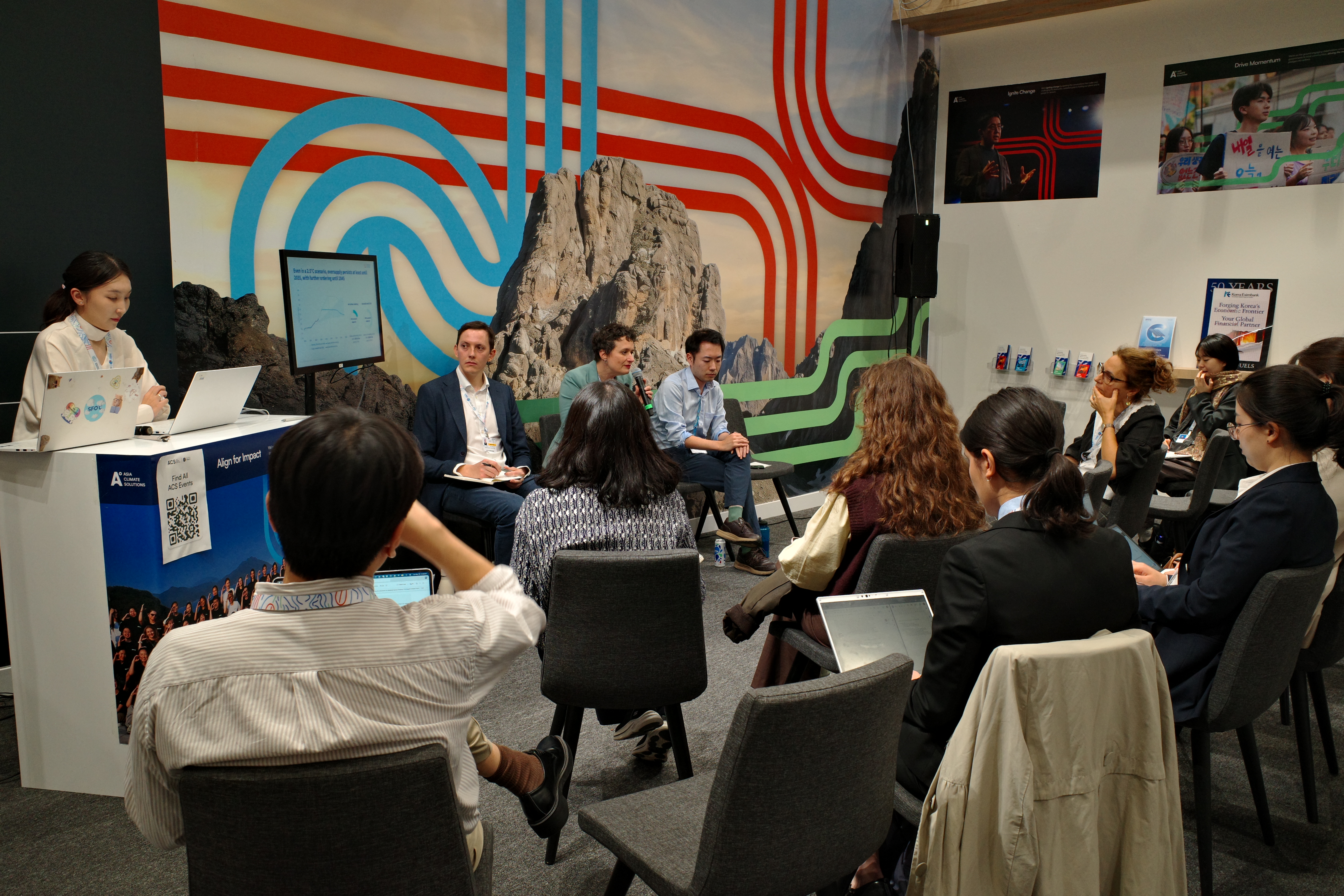
The findings were presented at Stranded at Sea: LNG Carrier Overbuild and Financial Risk, a side event hosted by SFOC at the Asia Climate Solutions (ACS) Pavilion in the COP31 Blue Zone. Elina Aibek kyzy, Midstream gas private finance researcher at SFOC, presented the report. During the event, Stefanie Sohm, Program Lead at the Kuehne Climate Center (KCC), gave a preview on the forthcoming update to the ‘Investment Risk Monitor for Fossil Fuel Carrying Ships,’ developed by The Shipping and Ocean Research Group at University College London in collaboration with the KCC. The monitor quantifies the financial risk of LNG, LP, and oil carriers over a range of different energy scenarios until 2050.
Hiroki Osada of Friends of the Earth Japan (FoE Japan) presented on how Japan creates LNG demand for trading, including by reselling cargoes from projects financed by the Japan Bank for International Cooperation (JBIC). He argued that part of Asia’s LNG demand is created by policy rather than by markets, which will get harder as gas prices rise and renewables win on cost. Rich Collett-White, Energy Analyst at Carbon Tracker Initiative, also joined the panel.
Under the International Energy Agency's net-zero pathway, no new LNG carriers are needed. Key recommendations include:
Shipowners should stop adding to the fleet and never order a ship without long-term employment. They should test every vessel against a 25-year life and climate-aligned demand, and disclose charter cover and useful-life assumptions ship by ship.
Banks, lessors and export credit agencies should make a charter that outlasts the loan a condition of finance, disclose their LNG carrier exposure, and end public guarantees for new LNG carriers.
Insurers should price transition risk into hull and machinery cover and use annual renewals to ask clients for transition plans.
SFOC's earlier research found that four Japanese banking groups (MUFG, SMBC Group, Sumitomo Mitsui Trust and Mizuho) provided 26.9% of global project-level LNG carrier finance in 2020–2025, with MUFG alone at 12.8%.
Lena Vivier-Endo, Midstream Gas Private Finance Researcher at Solutions for Our Climate (SFOC) and co-author of the report said, “This year should have been a warning. When Hormuz closed, Asian buyers began cancelling LNG projects and speeding up renewables, but shipowners kept ordering carriers, more of them without a charter. Every ship on order is designed to trade past 2050. The banks financing them are betting that the demand will still be there.”
Stefanie Sohm, Program Lead at Kuehne Climate Center (KCC) said, “Across a range of energy scenarios, the LNG carrier fleet is heading for serious oversupply, with the risk of stranded assets extending well into the 2040s. Investors should consider whether short-term gains still outweigh the medium and long-term risk of write-offs.”
ENDS.
Solutions for Our Climate (SFOC) is an independent nonprofit organization that works to accelerate global greenhouse gas emissions reduction and energy transition. SFOC leverages research, litigation, community organizing, and strategic communications to deliver practical climate solutions and build movements for change.
The Kuehne Climate Center works on transforming logistics from a major source of emissions into the backbone of a resilient, low-carbon society. As part of the Kühne Foundation, the KCC works on the decarbonization of global freight and supply chains, as well as on unlocking logistics for the industrial transformation and resource management. The team works globally, with a focus on fast-growing regions, currently with offices in Hamburg, Germany; Nairobi, Kenya, and Dar es Salaam, Tanzania.
For media inquiries, please reach out to:
Cody Williams, International Communications Officer (Japan), SFOC, cody.williams@forourclimate.org
Melanie Schehl, Communications Lead (Germany), Kuehne Climate Center,
melanie.schehl@kuehne-foundation.org
Notes to editors
Fleet figures are from Clarksons Research's World Fleet Register (15 September 2026) and cover LNG carriers of 100,000 cbm or more. Charter data is from Kpler. Data analysis by Data Talks.
Ships owned through joint ventures are split between owners by equity share, so group figures can differ from company-reported fleets.
Idle and laid-up status follows Clarksons. The 2026 Hormuz closure inflates the idle count, so the report also gives the count without Qatar-linked idle ships.
Share this insights