April 21, 2026 (YEOSU, South Korea) - Government officials, financial institutions, and international stakeholders gathered in Yeosu for a high-level discussion on how policy finance, grid modernization, and subnational leadership can accelerate South Korea’s clean energy transition.
Held alongside the UNFCCC Climate Week and K-GX, the event, “Energy Transition for All: Financing and Grid Solutions for a Renewable Energy Future,” focused on practical pathways for subnational governments to mobilize public and private finance for renewable energy infrastructure and industrial electrification, and identifying practical policy solutions for renewables to be deployed on the power grid.
Jörn Beißert, Deputy Chief of Mission at the German Embassy to the Republic of Korea, drew parallels between the two nations – both export-oriented, industrial economies with scarce domestic energy resources – to argue that Korea's transition is not only necessary but achievable.

Image 1: Jörn Beißert, Deputy Chief of Mission at the German Embassy to the Republic of Korea, addressed participants during the session.
“I think Germany is an interesting case in point for Korea because both countries have big similarities. We are both export-oriented, industrialized countries where industry still plays a very important role. We are also very resource-poor; thus renewable energy will play a big role. It will also allow us to increase our political independence, our political autonomy, and our ability to make decisions for ourselves,” said Beißert.
Drawing on Germany’s experience as a frontrunner in renewable energy deployment, he identified two structural challenges that must be resolved in tandem: grid infrastructure and mobilizing investment at scale. In Korea, as in Germany, energy generation and demand are geographically mismatched, a bottleneck that threatens to slow the buildout of renewables. Beißert pointed to Germany's use of feed-in tariffs and priority grid access as policies that successfully broadened market participation, while acknowledging that high energy costs and inefficient policy design remain ongoing challenges.
He further emphasized that public funding could build a base but not alone drive transformation at the required scale. Governments must instead establish clear legal frameworks, stable pricing mechanisms, and targeted financial incentives to unlock private capital, and maintain the long-term, transparent investment environments that make renewable energy bankable, competitive, and scalable. Panelists, including representatives from Korea Development Bank and Climate Group, reinforced these points, emphasizing that policy finance plays a catalytic role, not only by providing funding, but by shaping markets and reducing investment risk. They further highlighted that stronger alignment across national policy, public finance, and subnational implementation is essential to scale investment, accelerate deployment, and ensure an inclusive transition without compromising energy security.
Local and regional leaders from across South Korea also participated in the forum, spotlighting the indispensable role of subnational governments in driving the transition from the ground up. Discussions centered on and enabling Renewable Energy Zones (REZs) by securing direct participation of subnational governments in decision-making and reforming grid policies that favor traditional fossil fuel generation – policies which play a decisive factor in effective integration of renewable energy.
Gahee Han, Head of Power Markets & Grid at Solutions for Our Climate (SFOC), spotlighted and called for action on foundational policy barriers that have been stifling Korea’s energy transition. "Achieving Korea's 2030 target of 100GW in new renewable energy is simply not possible under the current grid constraints imposed by KEPCO, the state-owned utility that monopolizes the power grid while also owning fossil fuel-dependent generation assets. The reality on the ground tells a troubling story: as coal-fired power plants retire in Chungnam Province – home to nearly half of Korea's entire coal fleet – the grid capacity they leave behind has not been opened up for renewable energy to take their place,” said Han.
Han urged subnationals to proactively call on the central government to grant preferential grid access for renewable energy in their region, enabling regions to protect and grow their local economies by developing REZs.
Hyekyung Moon, Head of Green Energy for Boryeong City, Chungnam Province, shared the reality local governments have been facing while developing public renewable projects in the region. “Chungnam has been preparing offshore wind and solar projects and has also undergone a process of phasing out coal-fired power. Despite the energy transition, when it comes to grid connection, KEPCO tells us the offshore wind project can connect after 2030, long after the coal plants in the region have shut down,” said Moon.
Moon further emphasized the need for policy measures that ensure effective deployment of renewables in regions transitioning away from coal, and that utilizing the expertise of local governments will be key to success.
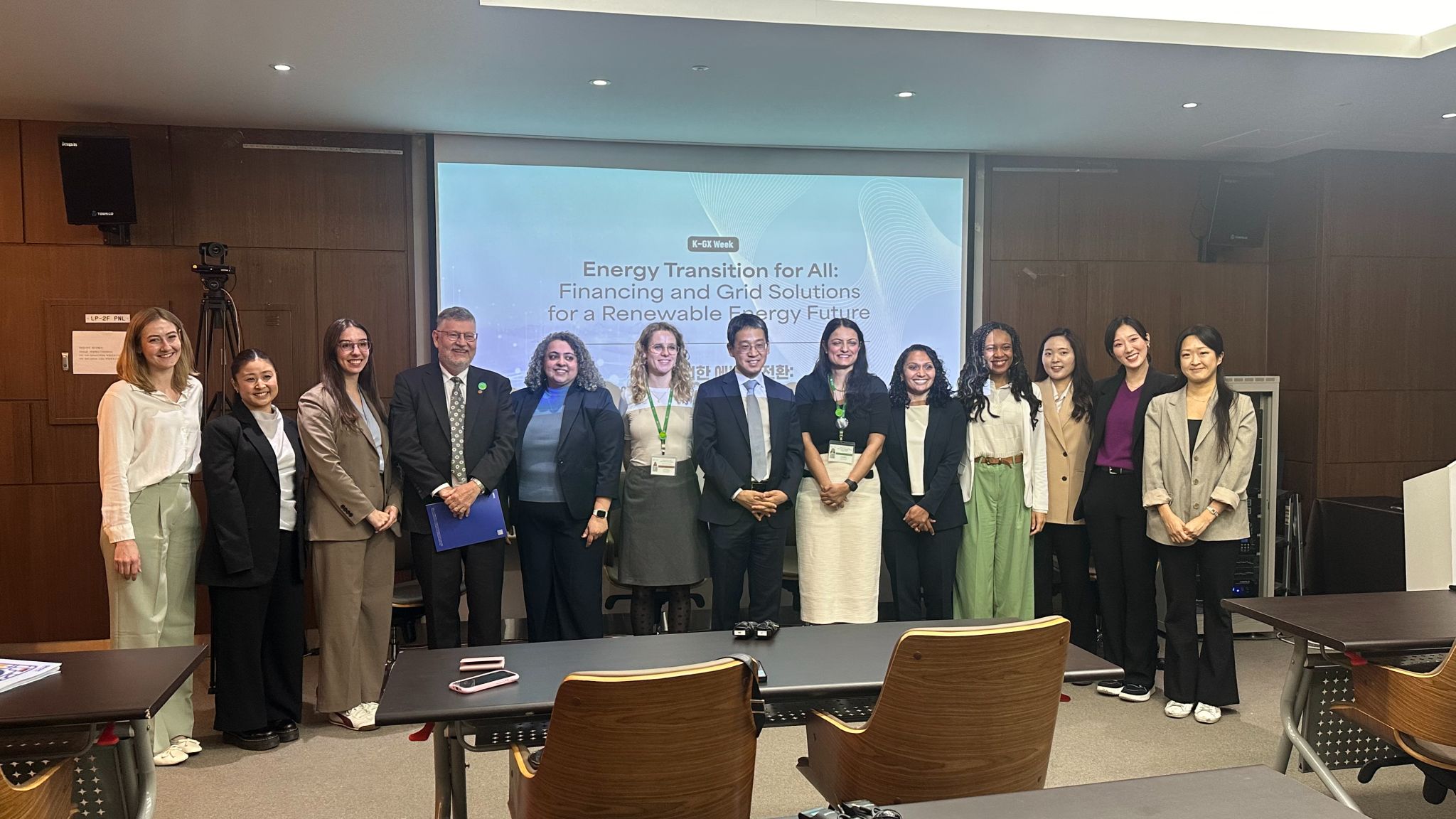
Image 2: Speakers, participants, and organizers gathered for a group photo following the session at K-GX.
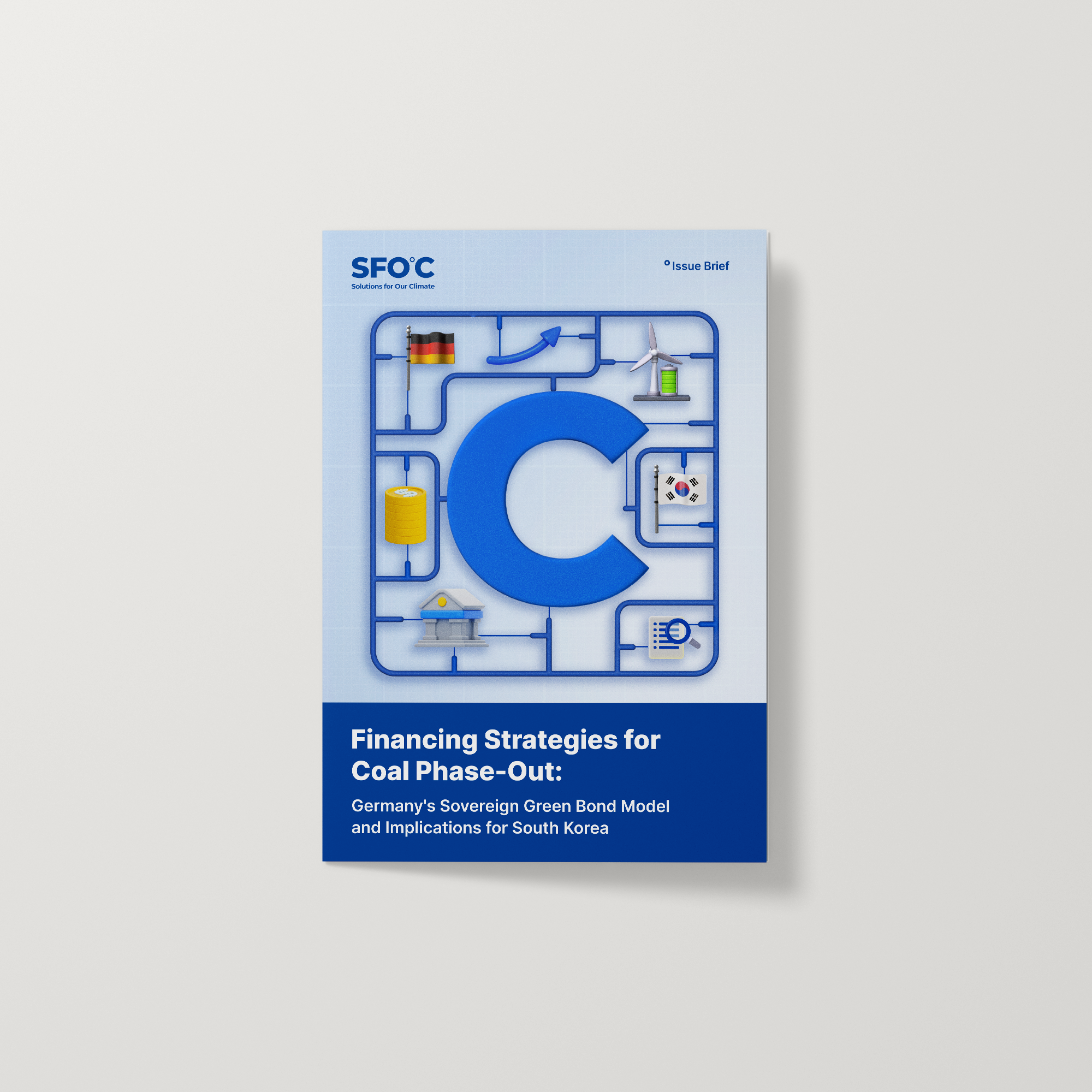
Alongside the event, SFOC released a new issue brief, Financing Strategies for Coal Phase-Out: Germany's Sovereign Green Bond Model and Implications for South Korea, which offers a concrete framework for how Korea can fund its coal-to-clean transition without expanding long-term public debt.
Drawing lessons from Germany, the issue brief highlights the importance of a clear financing architecture combining carbon pricing revenues, dedicated multi-year transition funds, and the strategic use of sovereign green bonds as refinancing instruments, supported by strong transparency measures. It also recommends separating coal exit costs from forward-looking clean energy investments. This framing can enhance fiscal credibility, build political support, and make the transition more legible to both domestic and international investors.
The research notes that achieving South Korea’s 2050 carbon neutrality target and strengthened Nationally Determined Contributions (NDCs) will require a rapid and large-scale shift away from coal. While existing mechanisms – such as the Climate Response Fund and the Korean Emissions Trading System (K-ETS) – provide an initial foundation, current funding levels and institutional structures remain insufficient. Sovereign green bonds are identified as a promising additional instrument to close that gap.
ENDS.
Solutions for Our Climate (SFOC) is an independent nonprofit organization that works to accelerate global greenhouse gas emissions reduction and energy transition. SFOC leverages research, litigation, community organizing, and strategic communications to deliver practical climate solutions and build movements for change.
For media inquiries, please reach out to:
Antonette Tagnipez, International Communications Officer, at antonette.tagnipez@forourclimate.org
Share this insights
![[SFOC] Hidden Methane Emissions, Tangible Economic Costs: Lost Fuel Value and Heatwave-Related Climate Damages from Korea’s Imported Fossil Fuel Supply Chains](https://content.forourclimate.org/images/research/GbNyzaf.jpg)





![[Report] Financing a Paris-Aligned Coal Exit in South Korea](https://content.sfoc.tapahalab.com/images/research/ld8wdme.jpg)


![[Consultation Brief] No Room for New Gas in South Korea](https://content.sfoc.tapahalab.com/images/research/uDmDeme.jpg)


![[이슈브리프] 한전 적자 부추기는 전력시장 보상제도와 거버넌스](https://content.sfoc.tapahalab.com/images/research/FzvSdme.jpg)

![[ISSUE BRIEF] Fossil Fuels, the Main Culprit behind KEPCO’s Deficit](https://content.sfoc.tapahalab.com/images/research/q5TSdme.jpg)


![[이슈 브리프] 좌초되는 한국형 RE100 제도: 망이용료와 제3자 PPA를 중심으로](https://content.sfoc.tapahalab.com/images/research/etandme.jpg)


![[이슈 브리프] 탈석탄 투자 가이드라인](https://content.sfoc.tapahalab.com/images/research/tJRidme.jpg)
![[이슈 브리프] 신설 석탄발전소 가치평가 결과와 시사점](https://content.sfoc.tapahalab.com/images/research/nQCGime.jpg)


