A joint letter from civil society groups worldwide calls on 34 Japanese financial institutions to strengthen due diligence on LNG carrier financing and address the long-term risks of mobile fossil fuel assets.
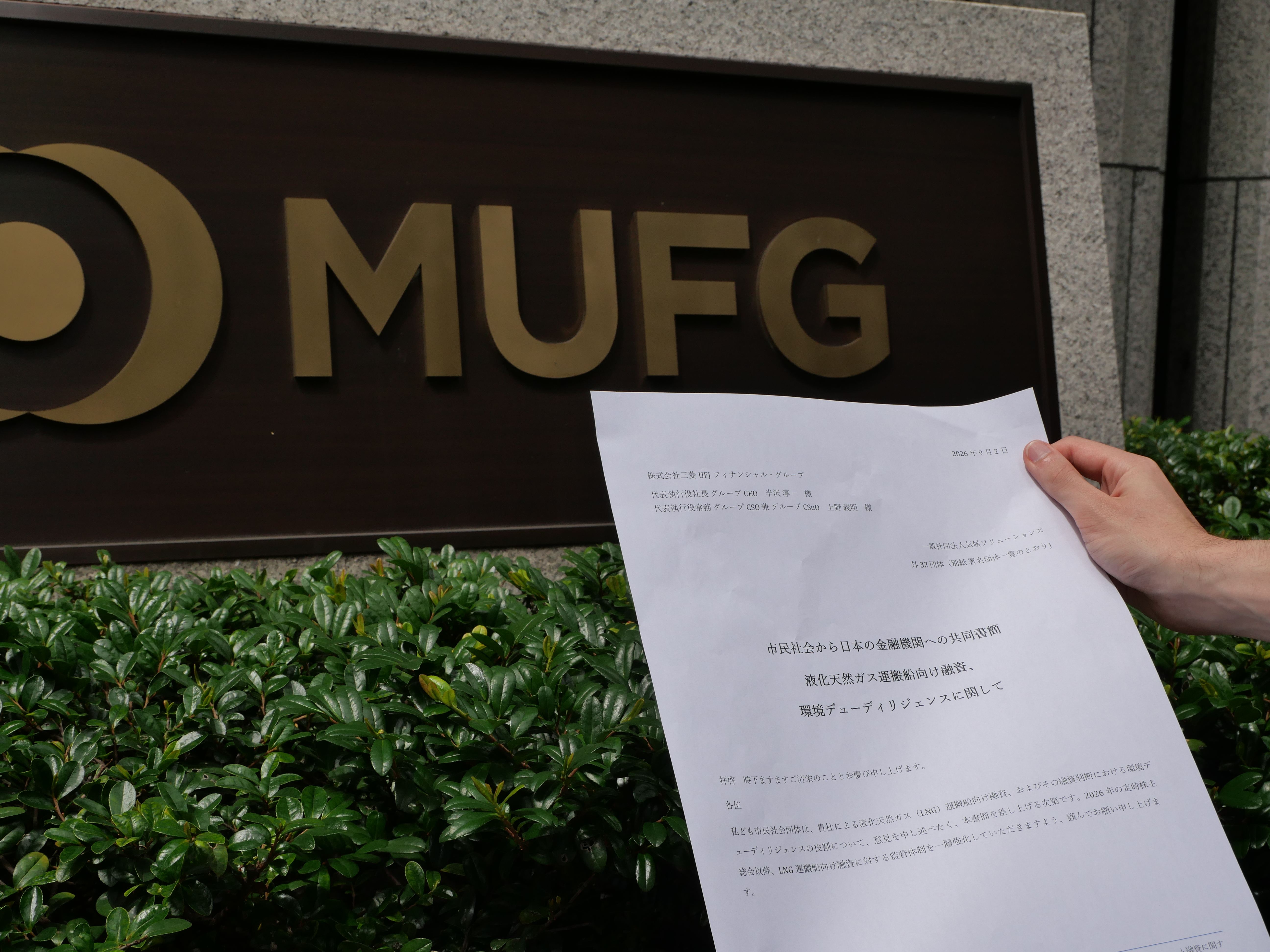
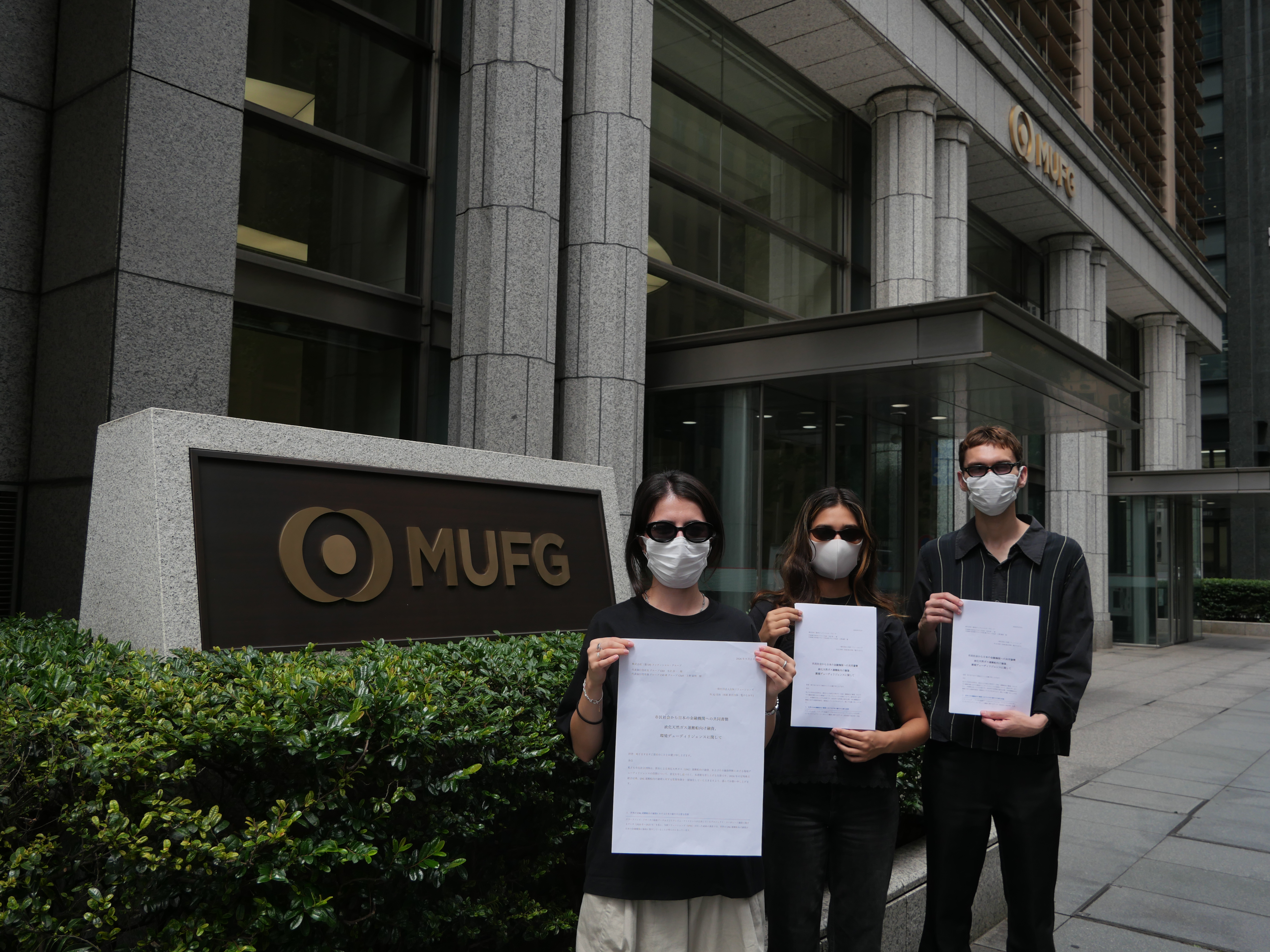
September 2, 2026 (TOKYO) – Thirty-three civil society organizations from Asia, Europe, Africa, Australia and North America have sent a joint letter to 34 Japanese financial institutions identified as majorfinanciers of LNG carriers, calling on them to apply proper environmental and social due diligence and respond within 30 days.
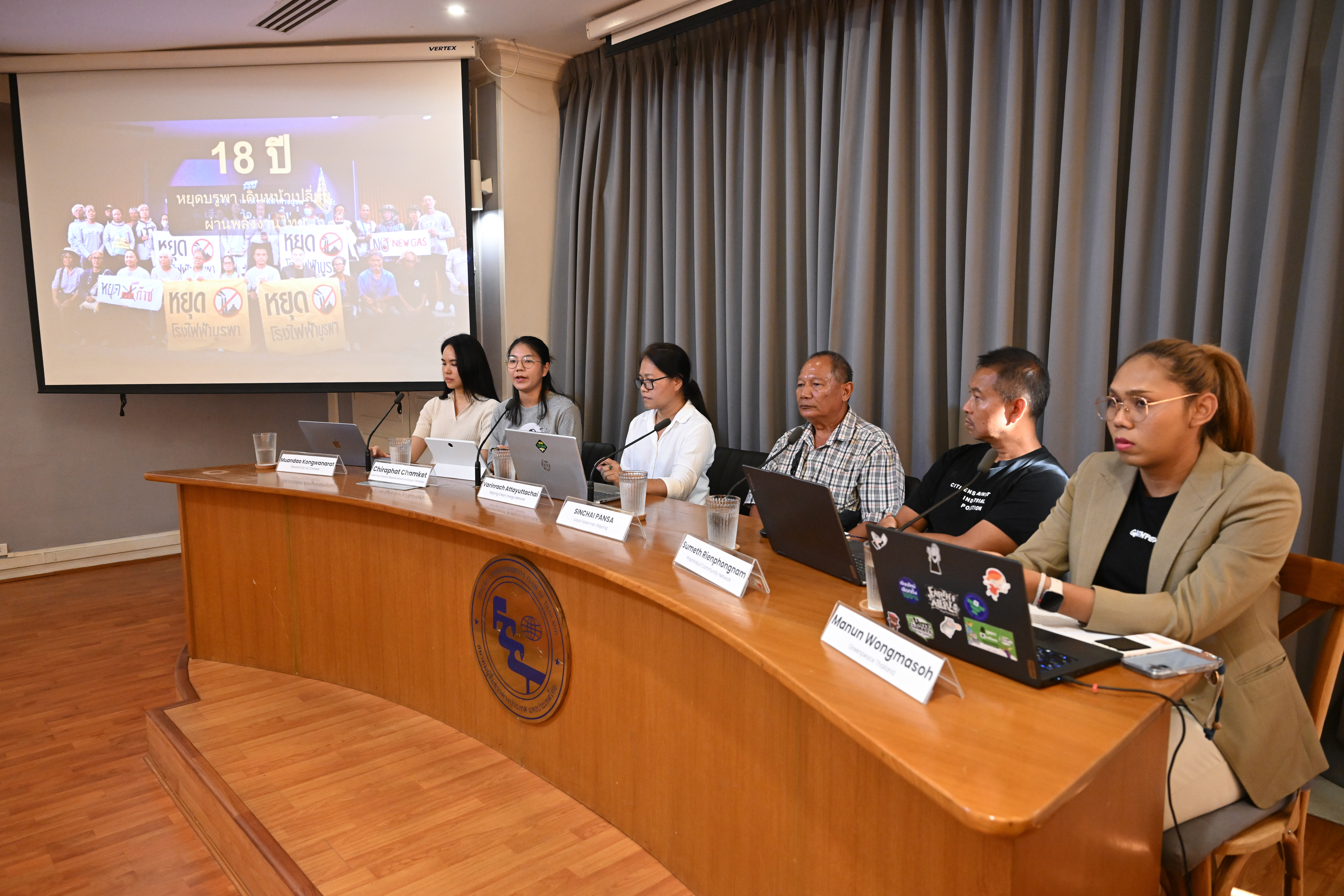
Solutions for Our Climate (SFOC) initiated the joint letter, which was co-signed by Friends of the Earth Japan, Kiko Network, Jubilee Australia Research Centre, Stand.earth and other civil society organizations. In the letter, the organizations call on Japanese financial institutions to:
Require environmental and social due diligence for LNG carrier financing, including shipping-specific environmental impact assessments that consider marine biodiversity and community rights.
Recognize that LNG carriers, while movable assets, create cumulative environmental and social impacts and require vessel-level due diligence alongside project-level assessments.
Adopt exclusion policies for midstream gas infrastructure to exclude LNG carriers from green and transition finance taxonomies, including AZEC-linked instruments.
Assess financing decisions against projected LNG carrier oversupply risks through 2030.
Disclose whether current or planned financing includes vessels serving the Mozambique LNG project.
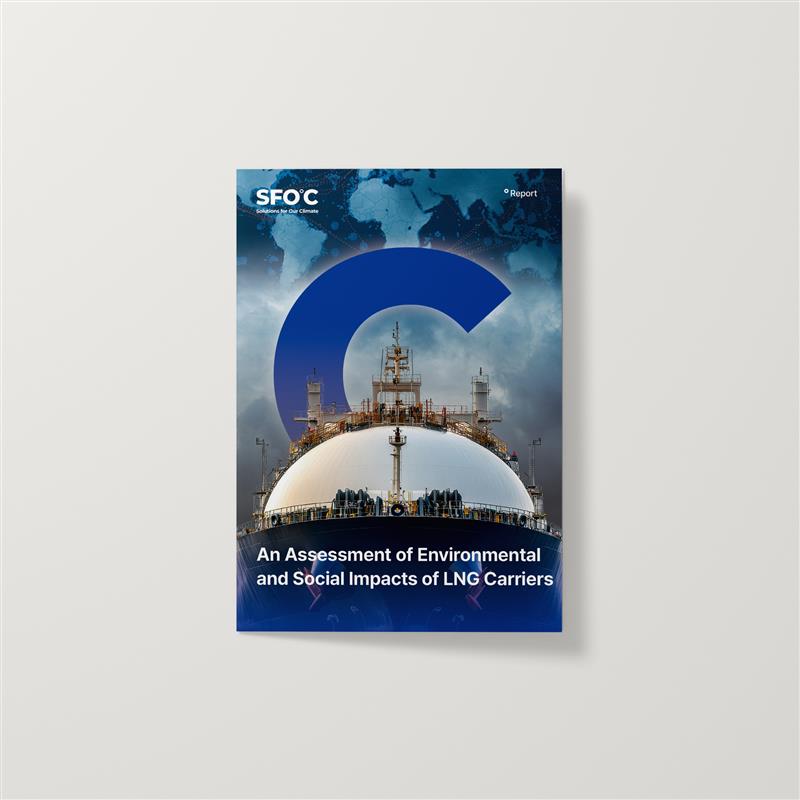
Following SFOC’s latest report, the letter highlights that 34 Japanese financial institutions — spanning megabanks, trust banks, and regional lenders — are collectively the world's largest financiers of LNG carriers. Among them, Mitsubishi UFJ Financial Group (MUFG), Sumitomo Mitsui Financial Group (SMFG, SMBC Group), Sumitomo Mitsui Trust Holdings, Mizuho Financial Group, and Yamaguchi Financial Group provided USD 1.77 billion (26.9%) of all global project-level LNG carrier finance between 2020 and 2025, out of a global total of USD 6.58 billion. MUFG alone accounts for 12.8%, making it the single largest LNG carrier financier internationally.
At the corporate level, the same 34 banks provided USD 761 million between 2021 and 2024, accounting for 8.5% of global corporate LNG-shipowner financing. The funding primarily supported operators worldwide rather than Japanese fleets: domestic Japanese shipowners secured only 3.3% of that financing, leaving a 5.2 percentage-point disparity.
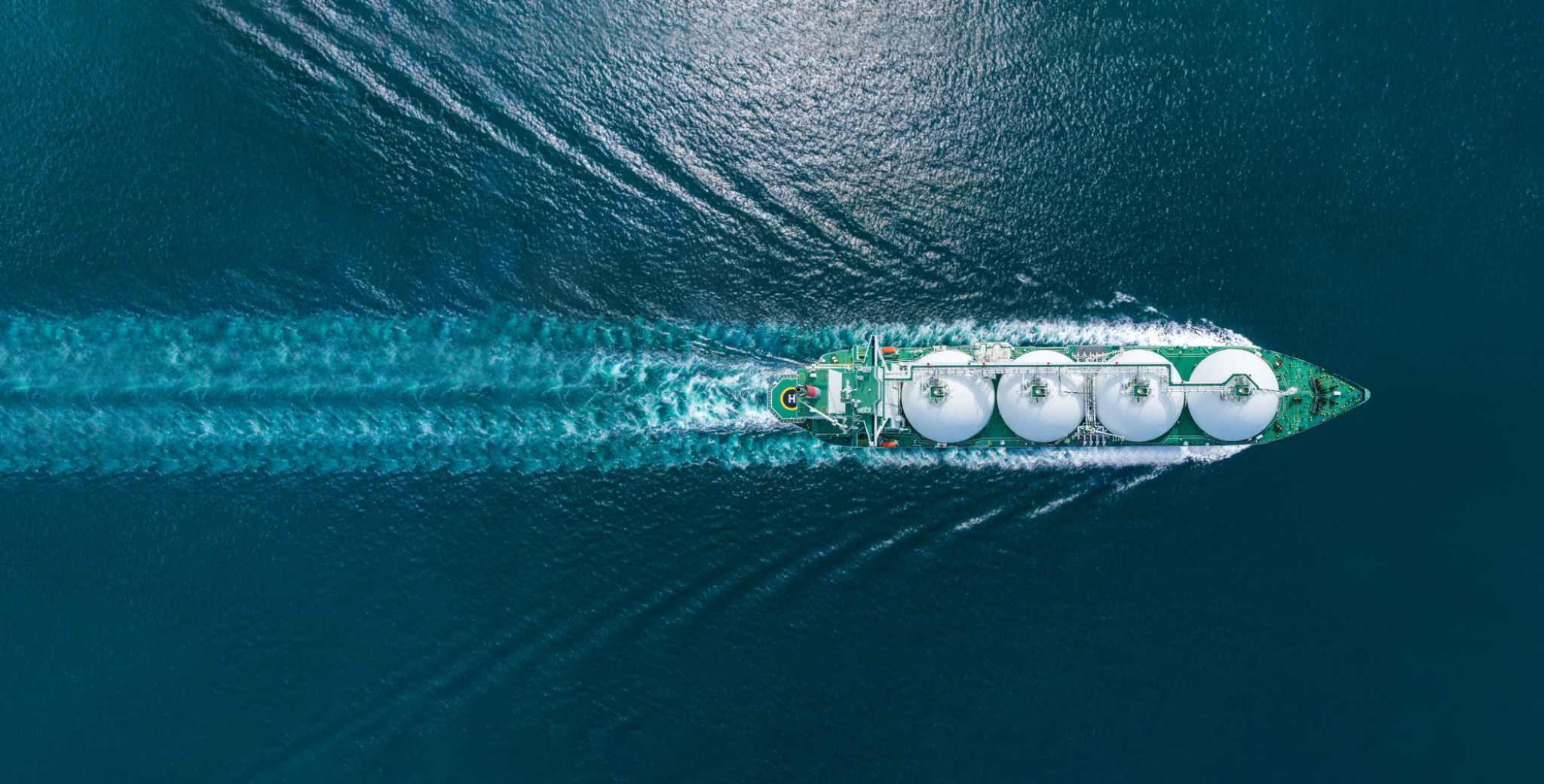
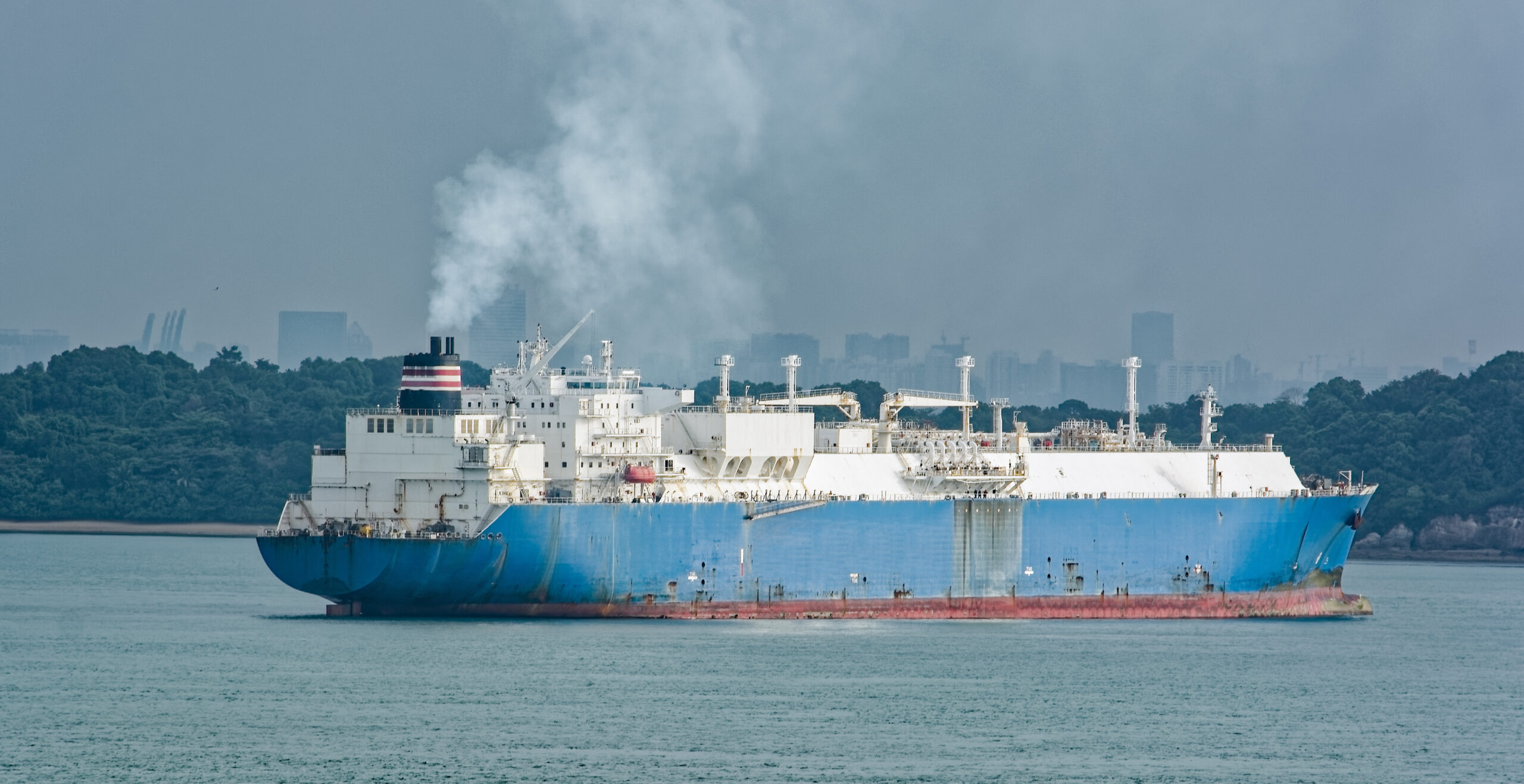
LNG carriers financed by Japanese institutions operate across some of the world's most ecologically and politically sensitive regions, including the Coral Triangle, the Gulf of Mexico, the Mozambique Channel and the Strait of Hormuz. However, the signatories argue, these vessels have not been subject to environmental impact assessments. Research by SFOC estimates that LNG carrier fleets financed and owned by Japanese corporations enable approximately 2,084 MtCO₂e in annual lifecycle emissions—roughly one-third of total annual emissions from the United States.
Meanwhile, Japanese LNG carrier financiers are becoming increasingly out of step with global peers, as a growing number of international financial institutions have adopted restrictions or exclusions on LNG carrier financing.
The letter also points to the financial risks of continued LNG carrier expansion. Independent projections cited in the letter indicate that the global LNG carrier fleet could face capacity oversupply exceeding 40% by 2030, raising the risk of stranded assets for institutions continuing to finance new vessel orders.
Statements from the letter signatories
Mayuko Sato, FOE Japan (Fossil Fuels, Development and Human Rights)
“Japanese financial institutions continue to provide massive financial support to LNG carriers, which enable LNG operations that emit extremely high levels of toxic greenhouse gases. If proper environmental and social impact due diligence were conducted, it would become clear how the entire LNG operation, including the traffic of LNG carriers, negatively impacts valuable marine ecosystems and the lives and health of local people. As a country that has heavily contributed to climate change, Japan and its financial institutions have a responsibility to curb financing that supports fossil fuel extension.”
Yasuko Suzuki, Kiko Network (Program Coordinator)
“Japan’s policy to position LNG as a decarbonized fuel and expand its use not only fails to contribute to emissions reduction but also merely postpones addressing issues related to Japan’s energy security.”
ENDS.
Solutions for Our Climate (SFOC) is an independent nonprofit organization that works to accelerate global greenhouse gas emissions reduction and energy transition. SFOC leverages research, litigation, community organizing, and strategic communications to deliver practical climate solutions and build movements for change.
For media inquiries, please reach out to:
Cody Williams, International Communications Officer (Japan)
cody.williams@forourclimate.org
070-8579-4441
Notes to editors
Full letter, signatory list, and underlying data tables available on request under embargo.
Research combines Clarksons Research fleet data (May 2026) with project- and corporate-level financing data (2020–2025) sourced via Reclaim Finance.
Japan's LNG carrier fleet comprises 169 vessels in service or on order as of May 2026. MOL operates 53 (2nd-largest fleet globally); NYK operates 46 (5th globally) and continues to expand via long-term charters for new carriers under construction at HD Hyundai Heavy Industries, with deliveries from 2028.
Share this insights
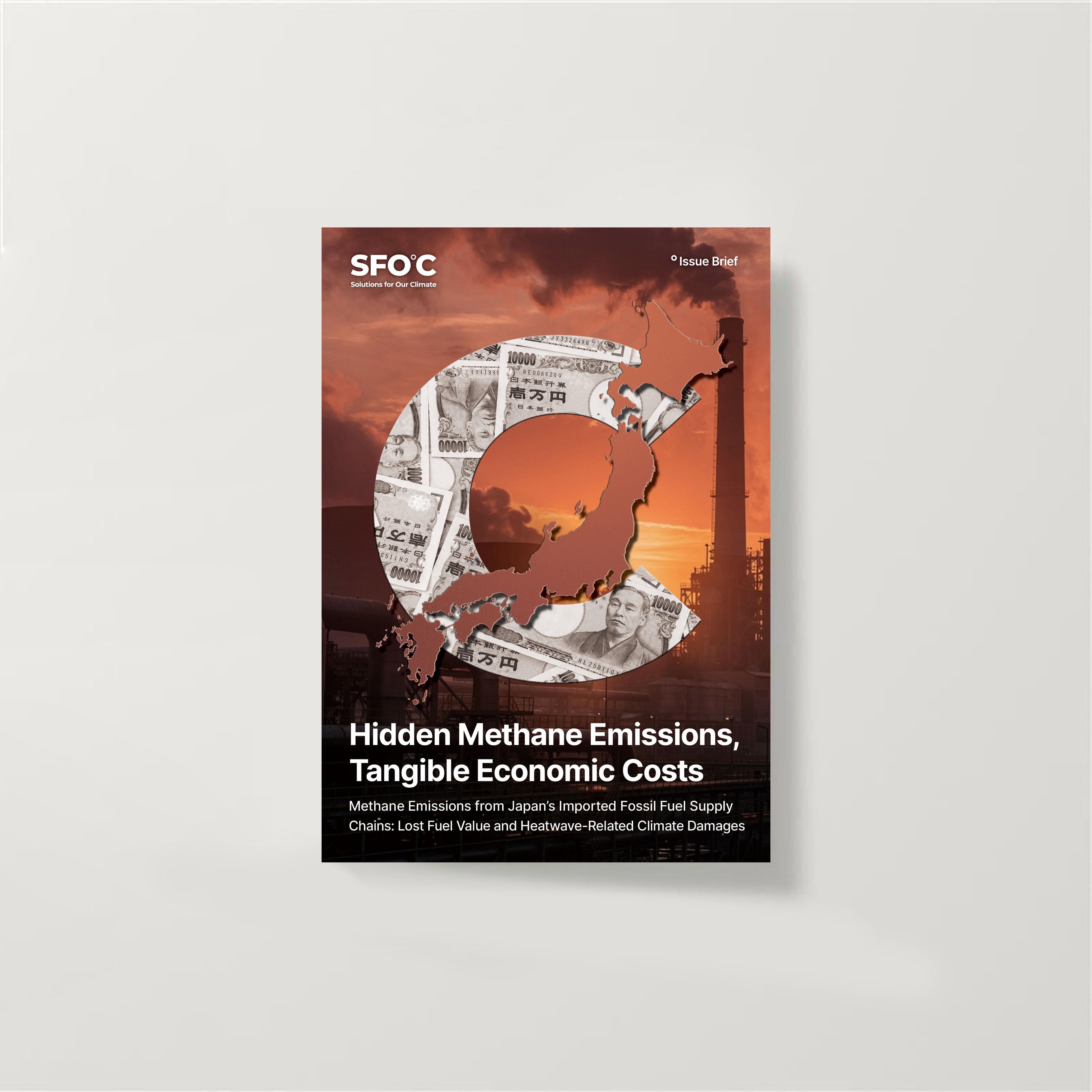
![[SFOC] Hidden Methane Emissions, Tangible Economic Costs: Lost Fuel Value and Heatwave-Related Climate Damages from Korea’s Imported Fossil Fuel Supply Chains](https://content.forourclimate.org/images/research/GbNyzaf.jpg)







![[Brief] South Korea’s international public finance continues to block a just energy transition](https://content.sfoc.tapahalab.com/images/research/RC5Kime.jpg)


![[토론회] 한국형 녹색분류체계(K-Taxonomy), 무엇이 녹색경제활동인가](https://content.sfoc.tapahalab.com/images/research/bn8jdme.jpg)
![[이슈 브리프] 탄소포집, 이용 및 저장기술(CCUS) 현황과 문제점](https://content.sfoc.tapahalab.com/images/research/SWESdme.jpg)


