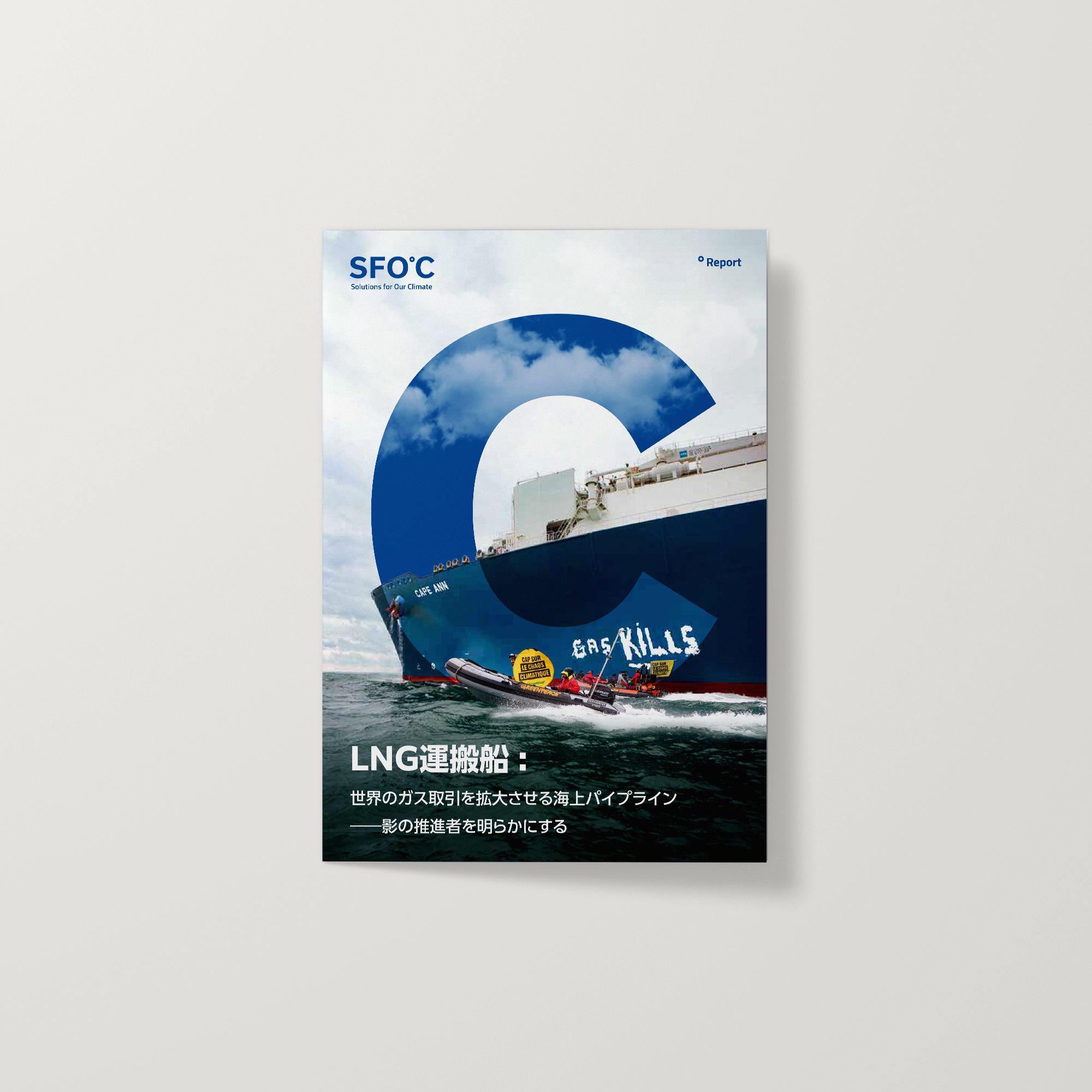
January 8, 2025 (TOKYO) – Major Japanese shipping companies are facing growing legal, regulatory, and financial exposure as they continue expanding their fleets of liquefied natural gas (LNG) carriers, according to a new issue brief by Solution for Our Climate (SFOC).
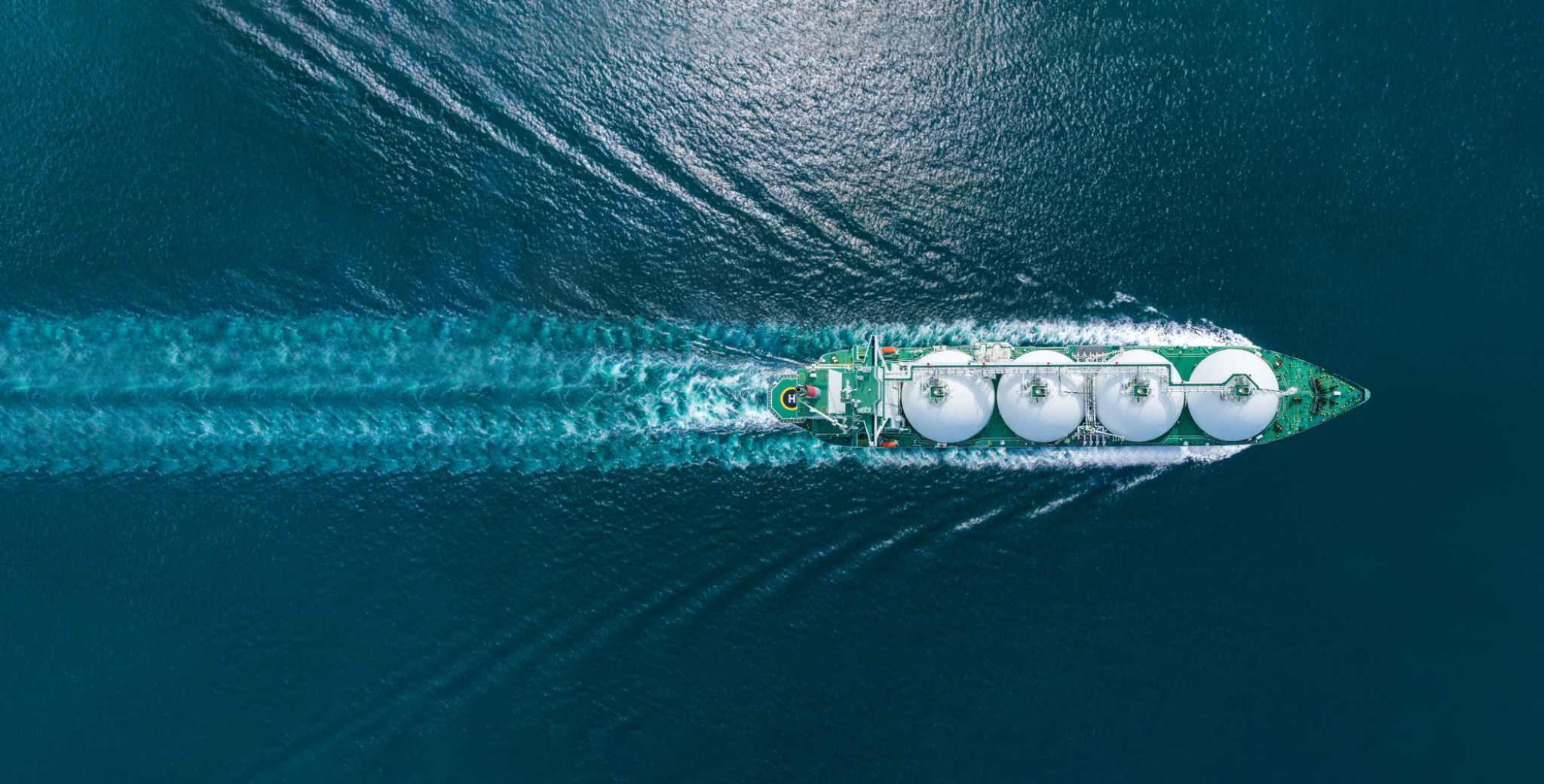
The rapid buildout of LNG carriers worldwide is increasingly viewed as incompatible with international climate goals, with the sector alone could generate up to 12.7 billion tons of CO₂ annually, while also enabling additional emissions from gas extraction and consumption. SFOC has published “No Room for More – Why LNG Carriers are a Climate and Financial Risk” to address the risks associated with long-term reliance on LNG transport.
As global scrutiny intensifies, Japanese shipping companies involved in LNG transport are facing heightened questions over the long-term financial and environmental risks of fleet expansion. The analysis released today therefore provides further detail on the risks confronting Japanese shipping companies.
Legal exposure faced by companies is rising as climate litigation accelerates around the world. 68 lawsuits have been filed to date, calling for financial redress from climate damage, of which 54% target fossil fuel producers, such as ExxonMobil, Shell, and Chevron. In Japan, more than 450 citizens have filed a lawsuit against the national government last December. With the landmark Lliuya v. RWE AG case, courts are also showing a greater willingness to consider corporate responsibility for climate harm beyond a company’s direct operations. Within this context, LNG carriers—functioning as “floating infrastructure” that enables further fossil fuel expansion—are emerging as a potential new focus for legal action.
In 2023, the International Tribunal for the Law of the Sea (ITLOS) issued an advisory opinion classifying greenhouse gas emissions as “pollution of the marine environment” and affirming that State Parties, including Japan, have an obligation to prevent and reduce such pollution. For Japan, one of the world’s largest owners of LNG carriers, this could translate into tighter oversight of shipping operators.
ESG and human-rights concerns add another layer of risk. For example, the Mozambique LNG project has been implicated in serious human rights abuses and environmental destruction, and the governments of the United Kingdom and the Netherlands have already announced the suspension of their financial support. If multiple Japanese companies and public financial institutions involved in this project continue transporting related LNG despite documented evidence of allegations including land grabbing, forced evictions, violence, and ecosystem destruction, access to ESG-linked financing may decrease, also contract reviews by customers, or intervention by regulators such as the Ministry of the Environment, the Consumer Affairs Agency, or the Fair-Trade Commission may occur if there is suspicion of greenwashing.
Financial exposure is compounded by broader market dynamics. Globally, speculative orders for LNG carriers have increased, raising the risk of overcapacity, declining charter rates, and stranded assets. As the energy transition accelerates, some financial institutions are reassessing involvement in LNG-related projects—potentially tightening lending conditions or withdrawing support in ways that could affect Japanese companies reliant on debt financing for fleet expansion.
The analysis concludes that Japanese shipping companies will need to adopt proactive measures to navigate these converging risks. Enhanced emissions disclosure capturing lifecycle, indirect, and enabled emissions is becoming essential to meet investor expectations and emerging regulatory standards. Companies are also encouraged to develop credible science-based decarbonization plans and diversify investments toward low-carbon transport solutions that reduce reliance on fossil fuel expansion.
As legal, financial, and reputational pressures grow worldwide, LNG-dependent strategies are becoming harder to justify. The Japanese shipping companies must reassess their LNG-focused growth plans considering global climate obligations, shifting market dynamics, and evolving expectations from regulators and investors.
ENDS.
Solutions for Our Climate (SFOC) is an independent nonprofit organization that works to accelerate global greenhouse gas emissions reduction and energy transition. SFOC leverages research, litigation, community organizing, and strategic communications to deliver practical climate solutions and build movements for change.
For media inquiries, please reach out to Andrea Leung, Communications Team, andrea.leung@forourclimate.org.
Share this insights
![[SFOC] Hidden Methane Emissions, Tangible Economic Costs: Lost Fuel Value and Heatwave-Related Climate Damages from Korea’s Imported Fossil Fuel Supply Chains](https://content.forourclimate.org/images/research/GbNyzaf.jpg)







![[Brief] South Korea’s international public finance continues to block a just energy transition](https://content.sfoc.tapahalab.com/images/research/RC5Kime.jpg)
![[Report] Achieving Net Zero in International Shipping through Korea-US-Japan Green Shipping Corridor](https://content.sfoc.tapahalab.com/images/research/s11Jime.jpg)


![[토론회] 한국형 녹색분류체계(K-Taxonomy), 무엇이 녹색경제활동인가](https://content.sfoc.tapahalab.com/images/research/bn8jdme.jpg)
![[이슈 브리프] 탄소포집, 이용 및 저장기술(CCUS) 현황과 문제점](https://content.sfoc.tapahalab.com/images/research/SWESdme.jpg)


