Biomass Energy Expansion at the Expense of Indonesia’s Gorontalo Forests

About
Gorontalo Province, located in the Wallacea biodiversity hotspot on the island of Sulawesi, Indonesia, is increasingly becoming a centre of industrial woody biomass production. Driven by domestic energy policies and growing international demand for wood pellets, particularly from Japan and South Korea, the expansion of energy plantation forests (Hutan Tanaman Energi, HTE) is placing increasing pressure on natural forests, biodiversity, ecosystem services, and the rights and livelihoods of Indigenous Peoples and Local Communities (IPLCs).
Key findings
Biomass plantations are expanding into Gorontalo’s forests.
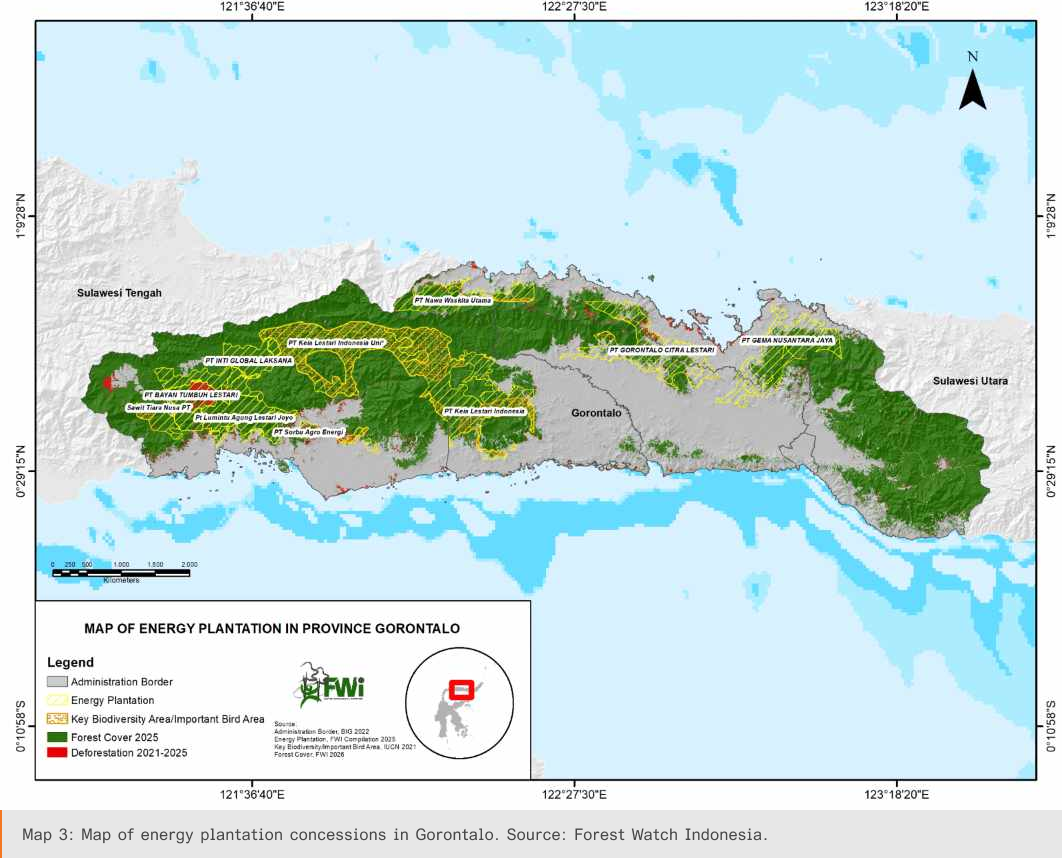
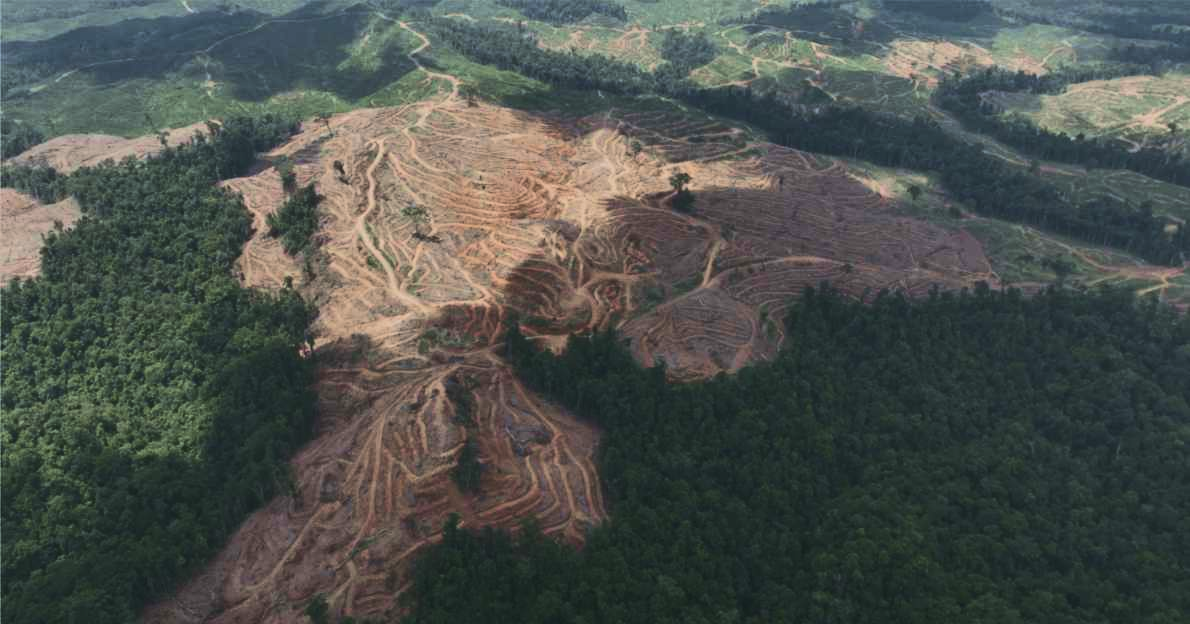
Ten energy plantation concessions spanning more than 265,000 hectares, with 9,617 hectares of deforestation recorded inside 4 active concessions during 2020–2026, about 18% of the forest they contained in 2020, with 44,685 hectares of forest still at risk. In the PT Banyan Tumbuh Lestari alone, 42% of the forest has been lost, with another 720 hectares identified in January–April 2026.
Forest conversion threatens exceptional biodiversity and sensitive watersheds.
Gorontalo lies within the Wallacea biodiversity hotspot, and about 28% of the concessions area (75,412 hectares) overlaps Key Biodiversity Areas and 59,623 hectares of Important Bird Areas. Some concessions also lie upstream of flood-prone communities in Pohuwato, where clearing may aggravate runoff and erosion.

Communities face mounting landrights concerns.
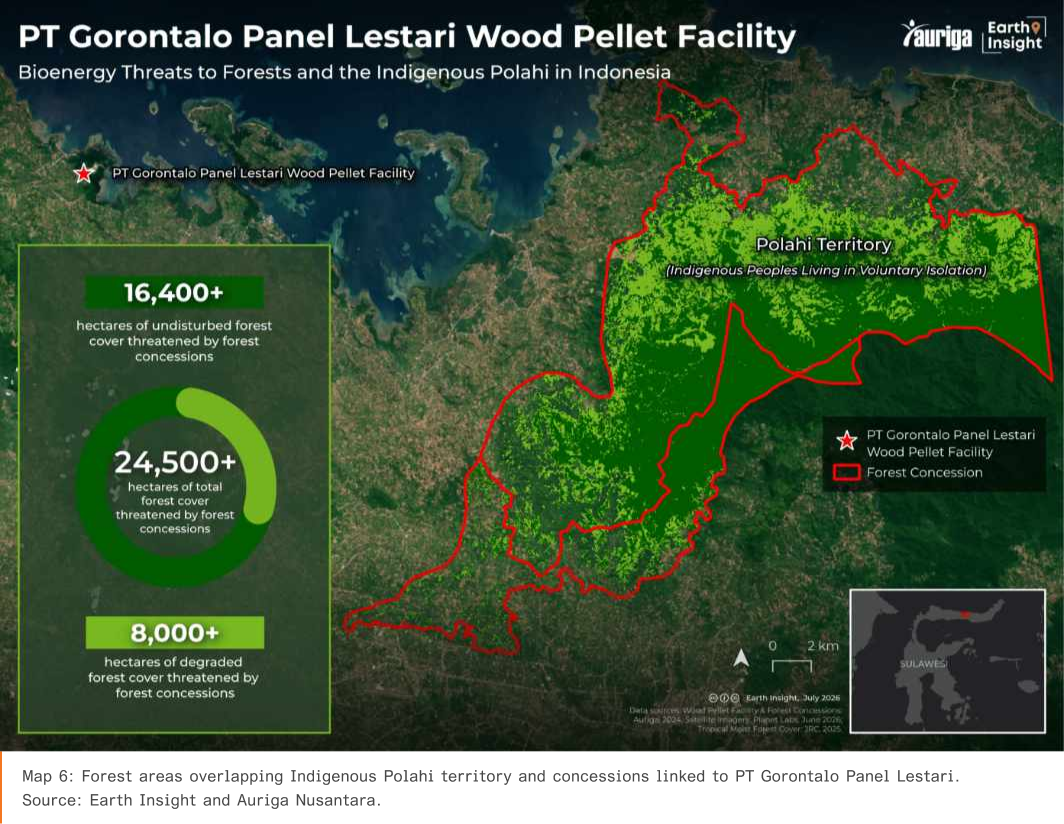
Concessions linked to the PT Gorontalo Panel Lestari pellet supply chain contain more than 24,500 hectares of tropical
rainforest, in areas that overlap the territory of the Indigenous Polahi People. In Pohuwato, disputes over plantation benefit obligations have been accompanied by reported detentions and criminalisation.
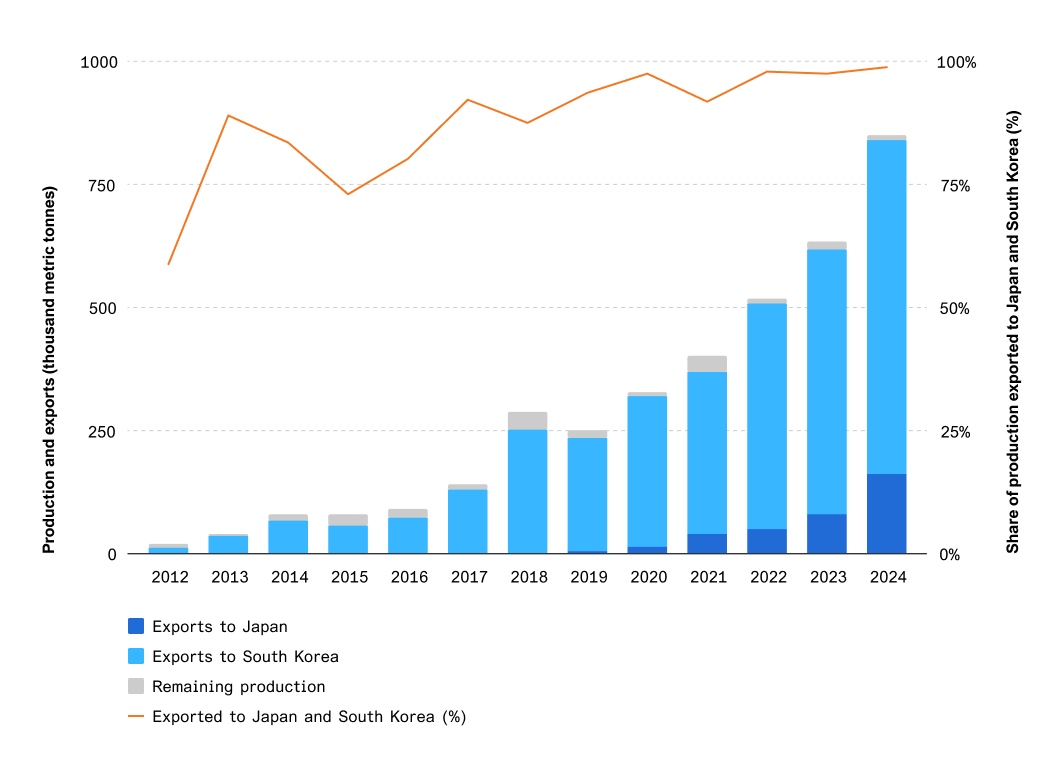
Japanese and South Korean demand is driving the expansion of Indonesia’s pellet industry.
In 2024, exports to these two countries accounted for more than 98% of Indonesia’s reported wood pellet production, demonstrating the industry’s overwhelming dependence on these markets. Between 2021 and 2025, Japan’s wood pellet imports from Indonesia increased from 28,000 to 405,000 tonnes, while South Korea’s nearly tripled from 315,000 to 898,000 tonnes. Japanese trading company Hanwa holds a reported 20% stake in PT Biomasa Jaya Abadi, a major pellet producer in Gorontalo.
Policy reforms have yet to close major safeguards gaps.
Existing demand for wood pellets continues, despite South Korea scaling back some biomass subsidies, and Japan introducing lifecycle emissions requirements in April 2026. Meanwhile legality checks, certifications and corporate site visits do not necessarily prevent forest conversion or ensure meaningful consultation with affected communities
Related research
Behind Korea’s Biofuels: Sustainability Risks in Indonesia–Korea Palm Oil Supply Chains
2026-07-01
Sustainable Biomass Program: Certifying the Unsustainable
2025-07-31

South Korea to Reduce Subsidies for Biomass Energy, Explained
2025-01-19

Bridging the Nature Finance Gap: Aligning South Korean Banks with the Global Biodiversity Framework
2024-10-27

Unheeded Warnings: Forest Biomass Threats to Tropical Forests in Indonesia and Southeast Asia
2024-10-10

A Climate and Biodiversity Loophole Support for Biomass Power Undermines Global Targets —A South Korea Case
2024-05-22

Subsidized Deforestation: 10 Years of Biomass Power in South Korea
2024-04-05

Mission Failed: The limitations of palm oil certifications in preventing deforestation
2023-04-13

Forest biomass: Burning the bridge to a renewable future
2022-08-26

[Webinar] International webinar on enhancing due diligence of forest risk commodities' supply chains in Asia
2022-04-28

Importing Deforestation: Forest-risk Commodity Supply Chains and Due Diligence Legislation in South Korea
2022-03-23

Trashing the Last Rainforest: How Papua Treasures are Being Dumped into the Wastepaper Bin
2022-03-15

산림·생태 바이오에너지 제20대 대선 공동 정책 제안서
2022-01-25

[토론회] 한국형 녹색분류체계(K-Taxonomy), 무엇이 녹색경제활동인가
2021-11-23

Japan-Korea International Media Briefing on Biomass
2021-10-21

[Webinar] Palm Oil based Biofuels Policy and Socio-Environmental Impacts in Asia
2021-09-12

Not Good Oil to Burn: Biofuel Policy in South Korea
2021-08-18

Can Biomass Qualify as Renewable Energy? The State of Biomass Policy in South Korea
2020-09-27

(KOR) Biomass Is the New Coal: Is Biomass Generation Truly ‘Renewable Energy’?
2020-09-27


