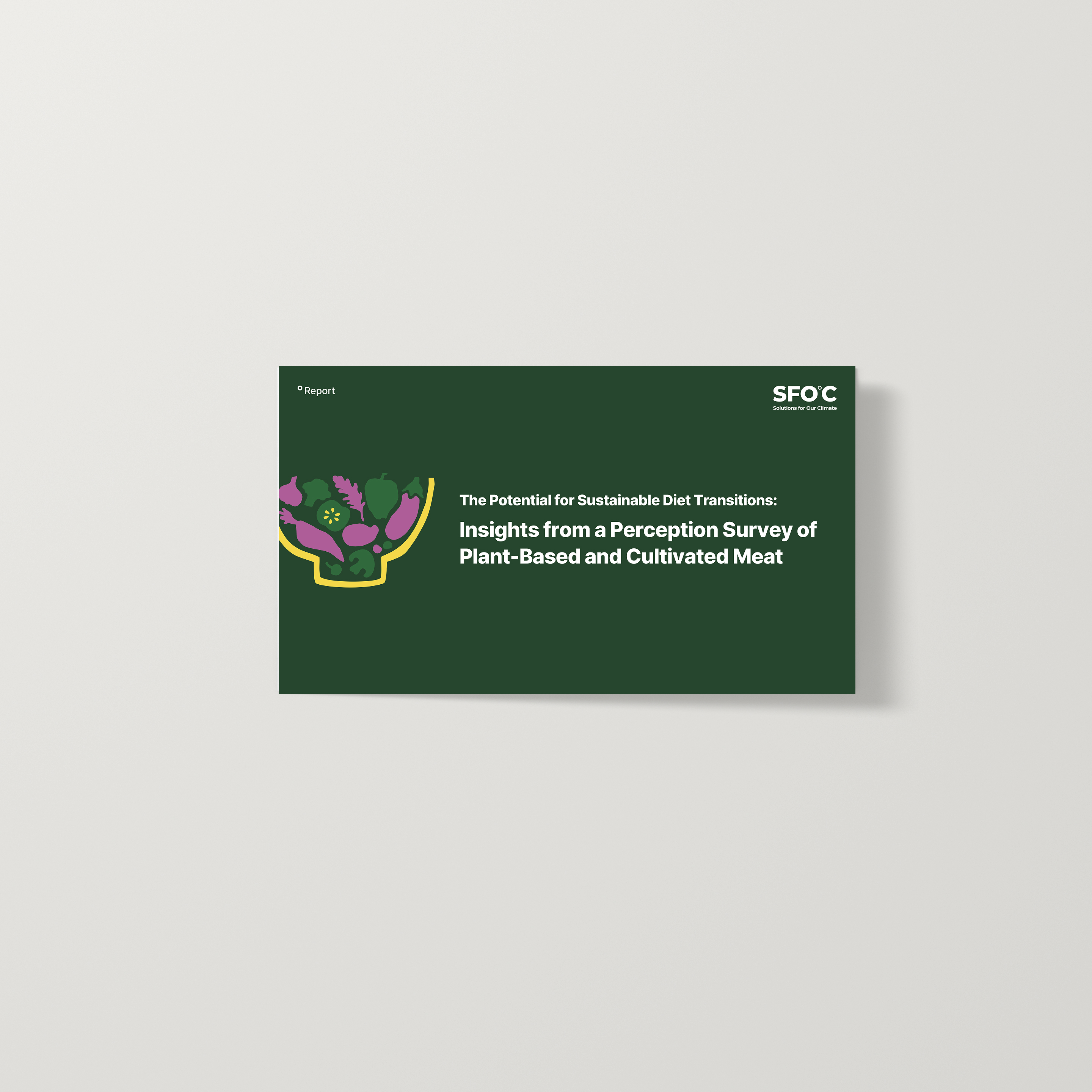
The Potential for Sustainable Diet Transitions: Insights from a Perception Survey of Plant-Based and Cultivated Meat

About
This survey of 1,324 respondents explored consumer perceptions of the relationship between climate change and dietary choices, as well as awareness of and experiences with alternative foods, including plant-based meat and cultivated meat.
Using a consumer typology, Solutions for Our Climate (SFOC) examined how different consumer groups perceive the link between food consumption and climate change.
The survey also analyzed consumption experiences, reasons for non-consumption, future willingness to try alternative foods, and the conditions needed to encourage adoption of plant-based and cultivated meat across consumer segments and age groups.
The findings provide insights into the key barriers to adoption and the factors influencing consumer acceptance of alternative foods. Based on this evidence, the report highlights implications for developing effective policy and communication strategies to support the transition toward a more sustainable food system.
Download report
Executive summary
1. Understanding of the Term “Alternative Foods”
While 64.2% of respondents found the term “alternative foods” easy to understand, around 36% said it was either unfamiliar or difficult to grasp. Understanding and acceptance of the term were particularly low among consumers who showed less interest in climate change and dietary transition.
2. Plant-Based Meat: Consumption and Motivations
90% of respondents had tried plant-based meat. The leading motivations were environmental and climate concerns (54.9%) and animal welfare (45.9%). Motivations varied across age groups, with younger consumers more likely to be driven by environmental and animal welfare considerations, while older consumers were more influenced by health-related benefits.
3. Plant-Based Meat: Barriers and Adoption Enablers
The most frequently cited barriers to consumption were price (35.5%) and taste and texture (32.7%). At the same time, more than 90% of respondents expressed a willingness to consume plant-based meat if factors such as product variety, affordability, and taste were improved, indicating considerable potential for broader adoption.
4. Cultivated Meat: Awareness
82.0% of respondents said they were aware of or had heard of cultivated meat. However, only 30.9% reported being familiar with it, suggesting that while awareness is increasing, consumers’ understanding of the technology remains limited.
5. Cultivated Meat: Willingness to Try and Key Concerns
79.6% of respondents indicated a willingness to try cultivated meat, with environmental benefits and animal welfare emerging as the primary motivations. Among those who were hesitant, the most common concerns were food safety (45.2%) and a lack of information (41.5%). These findings highlight the importance of transparent communication and consumer education in building trust and supporting future adoption.
Related research

Unveiling Invisible Emissions: Collective Advocacy for Sustainable Meat Supply Chains in East Asia
2026-07-27

From Farm to Retail: A Life Cycle Assessment of Meat Consumption in South Korea
2026-05-08
No Budget, No Cuts: Budget and Methane Reduction Impact Analysis for Achieving 78% Low-Methane Feed Supply Target
2025-12-03
Segmentation Survey Report: A Low-Carbon Diet and its Impact on the Climate Crisis
2025-11-19
No Budget, No Cuts: Agriculture’s 2030 NDC Targets at Risk
2025-09-16


