Growing dependence on Indonesian imports exposes South Korea to deforestation, human rights, and governance risks embedded in the supply chain.
July 03, 2026 (SEOUL) – A new report by Solutions for Our Climate (SFOC) finds that South Korea's biofuel policy — particularly its biodiesel blending mandate — is driving growing reliance on Indonesian palm oil despite widespread environmental and human rights risks. As international import standards tighten, South Korea could become a leakage market for unsustainable biofuel feedstocks.
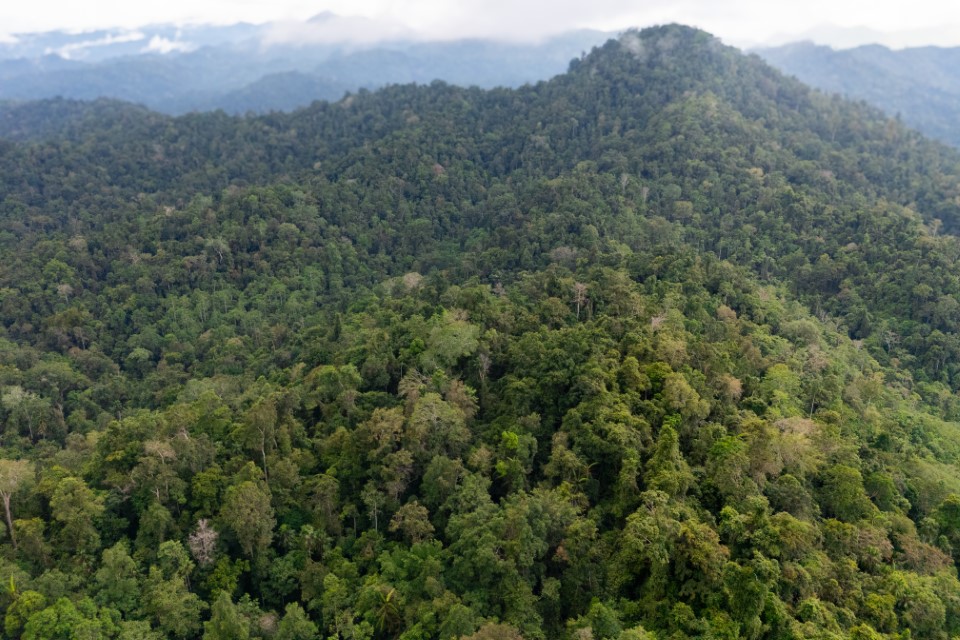
Palm oil and its derivatives accounted for 72% of South Korea's biodiesel feedstocks in 2024, four times the share recorded when the blending mandate began in 2015. Most of these imports originate from Indonesia, where more than 90% of Korea-bound export volumes have been associated with documented cases of deforestation, land conflicts or governance failures. Notably, 23% of South Korea's 2025 palm oil imports came from concessions in areas affected by the Sumatra floods, some of which were later investigated by the Indonesian government and had their permits revoked.
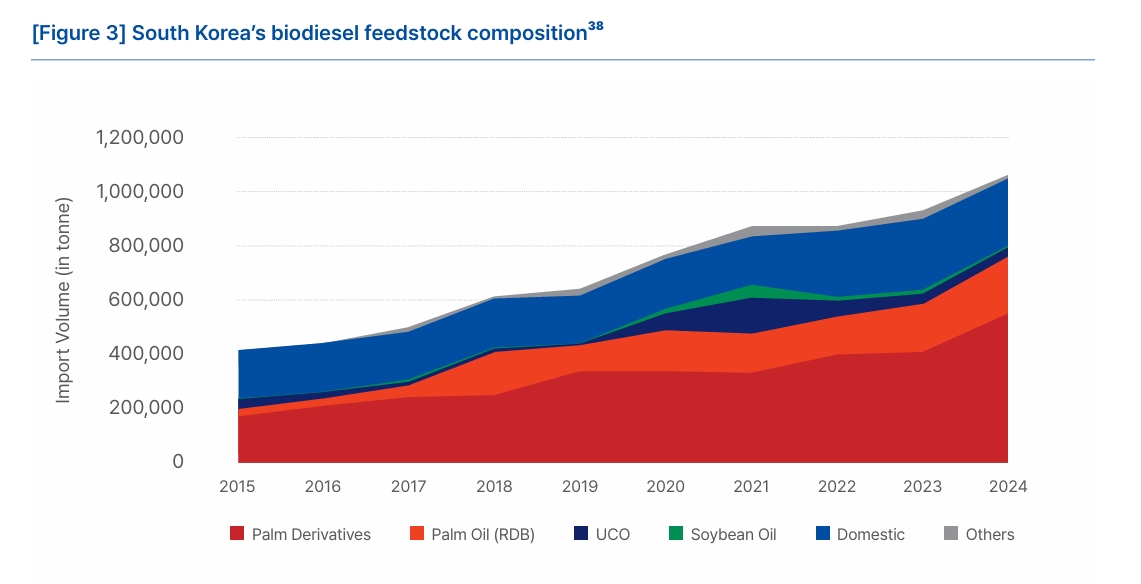
As the EU rolls out the Deforestation-free Products Regulation (EUDR), South Korea risks turning the country into an alternative market for unsustainable biofuel feedstocks. Unlike the EU, Korea's biofuel policy lacks the sustainability safeguards needed to prevent suppliers from redirecting products that no longer meet EU standards.
Korean companies are moving deeper into Indonesia's palm oil industry through upstream investments, increasing their exposure to environmental and governance risks, according to the report. Yet supply chain oversight has failed to keep pace with the growing involvement. None of the companies assessed has adopted a No Deforestation, No Peat, and No Exploitation (NDPE) policy, while several do not publish sustainability reports.
As international markets move to stricter sustainability requirements, pressure is mounting on countries that have yet to introduce comparable safeguards. To prevent South Korea’s biodiesel policy from driving deforestation and human rights abuses overseas, stronger sustainability safeguards, mandatory environmental and human rights due diligence are needed across palm oil supply chains. Meanwhile, companies should adopt deforestation-free sourcing commitments and strengthen transparency over the origins of their palm oil imports.
Eleonora Fasan, Forests & Land Use Program Officer at Solutions for Our Climate (SFOC), said, “South Korea’s biofuel expansion is becoming increasingly dependent on palm-based feedstocks, which this report finds are linked to deforestation, forest degradation, and social conflict across Indonesia. The findings raise serious questions about whether the country’s transition away from fossil fuels is truly sustainable or simply shifting environmental and social costs onto forests and communities elsewhere.”
Marihel Parda Winda, Forests & Land Use Program Officer at Solutions for Our Climate (SFOC), said, “Palm oil biofuel is marketed as a climate solution, but disasters like the Sumatra floods show that supplier-side certifications and pledges alone can't guarantee sustainability. Without clear policy and monitoring from the South Korean government and companies —backed by proper emissions accounting, strong sustainability standards, and deforestation-free supply chains— the country risks shifting its environmental damage elsewhere instead of actually cutting it.”
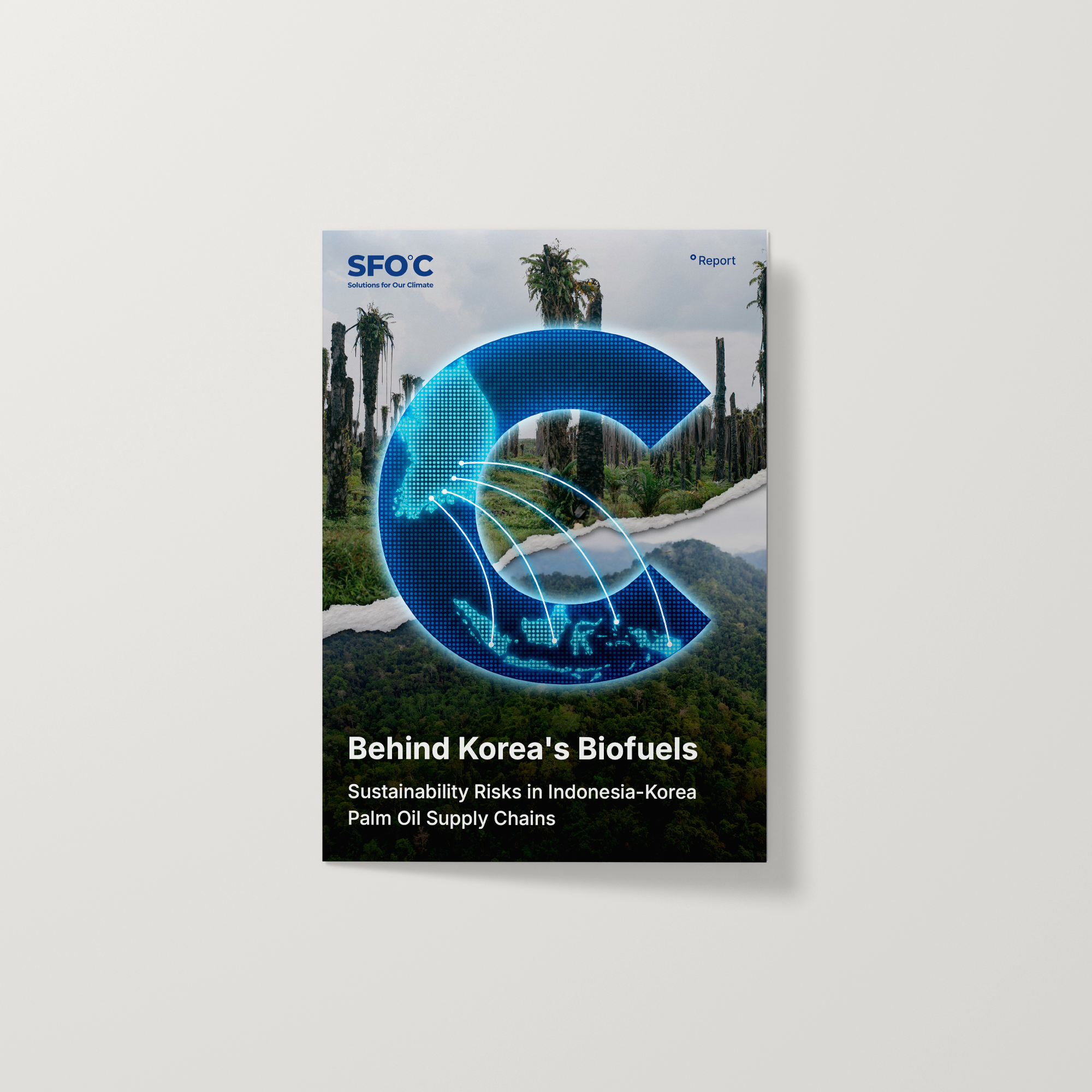
The full report is available here: Behind Korea’s Biofuels: Sustainability Risks in Indonesia–Korea Palm Oil Supply Chains
ENDS.
Solutions for Our Climate (SFOC) is an independent nonprofit organization that works to accelerate global greenhouse gas emissions reduction and energy transition. SFOC leverages research, litigation, community organizing, and strategic communications to deliver practical climate solutions and build movements for change.
For media inquiries, please reach out to:
Yan Liang, International Communications Officer, yan.liang@forourclimate.org
Share this insights


![[Webinar] International webinar on enhancing due diligence of forest risk commodities' supply chains in Asia](https://content.sfoc.tapahalab.com/images/research/sjGudme.jpg)


![[토론회] 한국형 녹색분류체계(K-Taxonomy), 무엇이 녹색경제활동인가](https://content.sfoc.tapahalab.com/images/research/bn8jdme.jpg)

![[Webinar] Palm Oil based Biofuels Policy and Socio-Environmental Impacts in Asia](https://content.sfoc.tapahalab.com/images/research/BOpldme.jpg)


