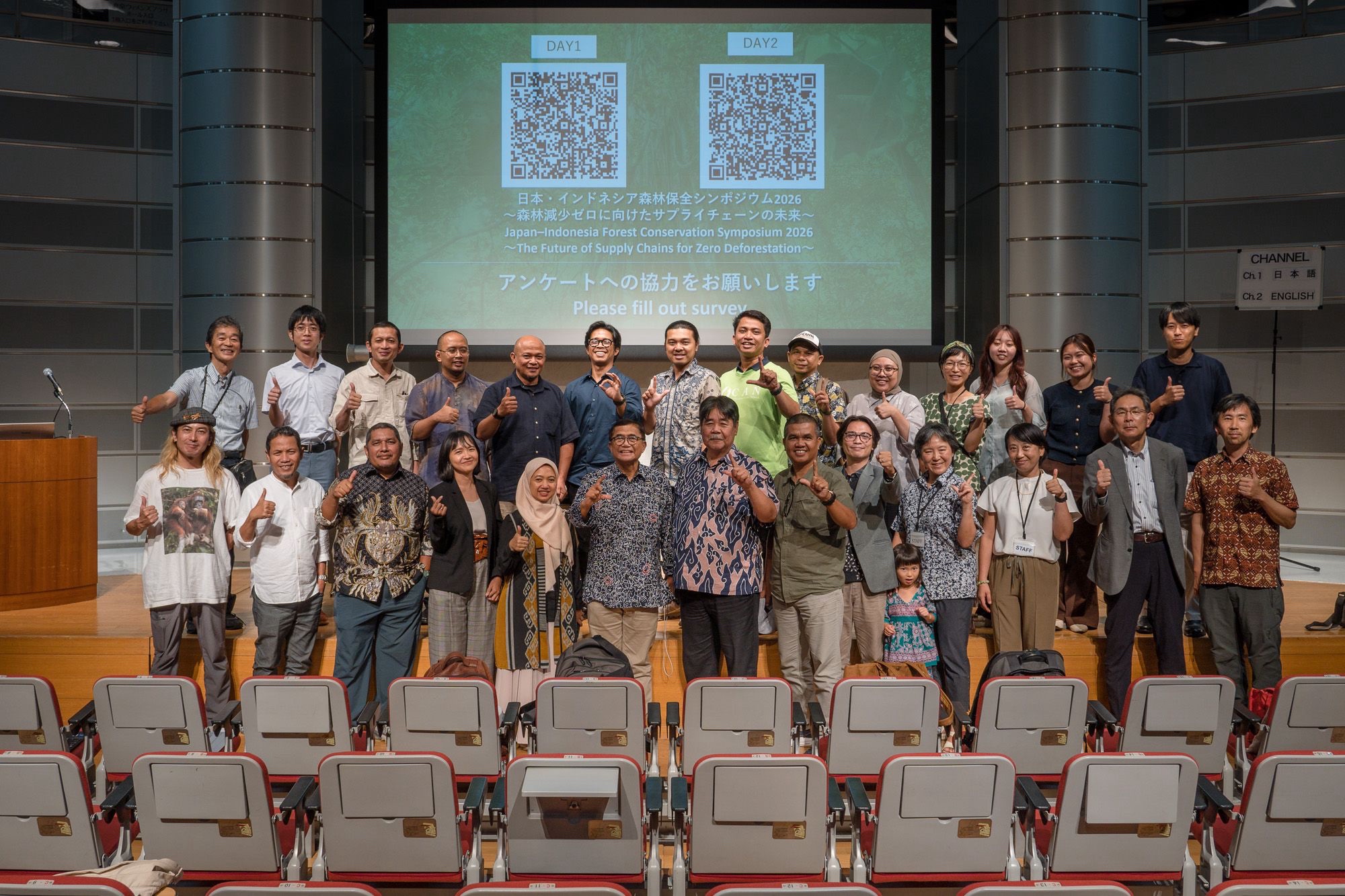
When it comes to forest conservation, everything is connected. In our latest Insights blog, SFOC’s Forests and Land Use Program Officer Leela Yamamoto shares key takeaways from the 2026 Japan-Indonesia Forest Conservation Symposium, unpacking the complex challenge of translating Japan’s biodiversity and climate commitments into traceable, on-the-ground protections for Indonesia’s forests.
The loss of tropical forests in Indonesia can feel completely unrelated to the urban jungle that is Tokyo. Yet, less than a week into joining SFOC's Forests and Land Use team, the Japan-Indonesia Forest Conservation Symposium made it clear to me that tropical deforestation thousands of miles away is heavily governed by a Japanese market of supply and demand.
With Tokyo's tropical summer heat reminding us of that very connection, the symposium proved to be an immersive introduction to the world of forest conservation. Who better to learn from than the experts and people working on the ground?

Forests beyond borders: Why Indonesia’s forests matter in Japan
The symposium’s keynote message was simple but powerful: forest conservation is not an isolated environmental concern; it must be understood in relation to trade, energy policy, corporate sourcing, and the rights of communities who depend on forest landscapes.
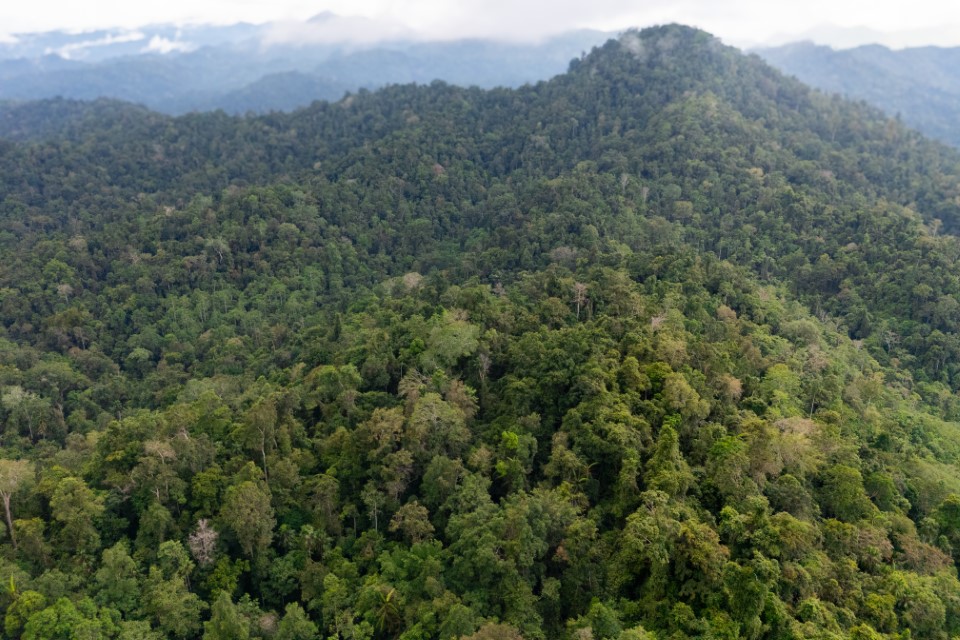
Indonesia has the third-largest tropical rainforest area in the world, and although spread across several islands, its biodiversity rivals that of the Amazon. It hosts an incredible 10% of the world’s known plant species and 12% of our mammal species. These ecologically important forests and the communities depending on them continue to face pressure from logging, habitat fragmentation, and conversion for commercial uses. In fact, Timer Manurung, Director of Indonesian NGO Auriga Nusantara, explained that almost half of Indonesian natural forests are still not protected. Importantly, these threats are not simply a reflection of Indonesia’s domestic policies; as speakers throughout the event emphasized, many are driven by global demand for forest-risk commodities and activities of multinational conglomerates far beyond Indonesia's borders. From pulp and paper to palm oil and biomass, supply chains connecting Indonesia to consumer markets like Japan can either accelerate the pressure on forests or help drive more sustainable practices. Untangling these complex connections was the central objective of the symposium. Protecting forests requires action both in producer and consumer countries, making the Tokyo venue both significant and symbolic.

Where Indonesian forests meet Japanese supply chains
Over two days, presentations and panels covered 4 themes: pulp & paper, palm oil, biomass and conservation, the first three of which are some of the main drivers of deforestation in Indonesia. They have direct links to the Japanese economy, ranging from household products (toilet paper, cosmetics, and food) to energy generation.
Pulp & Paper
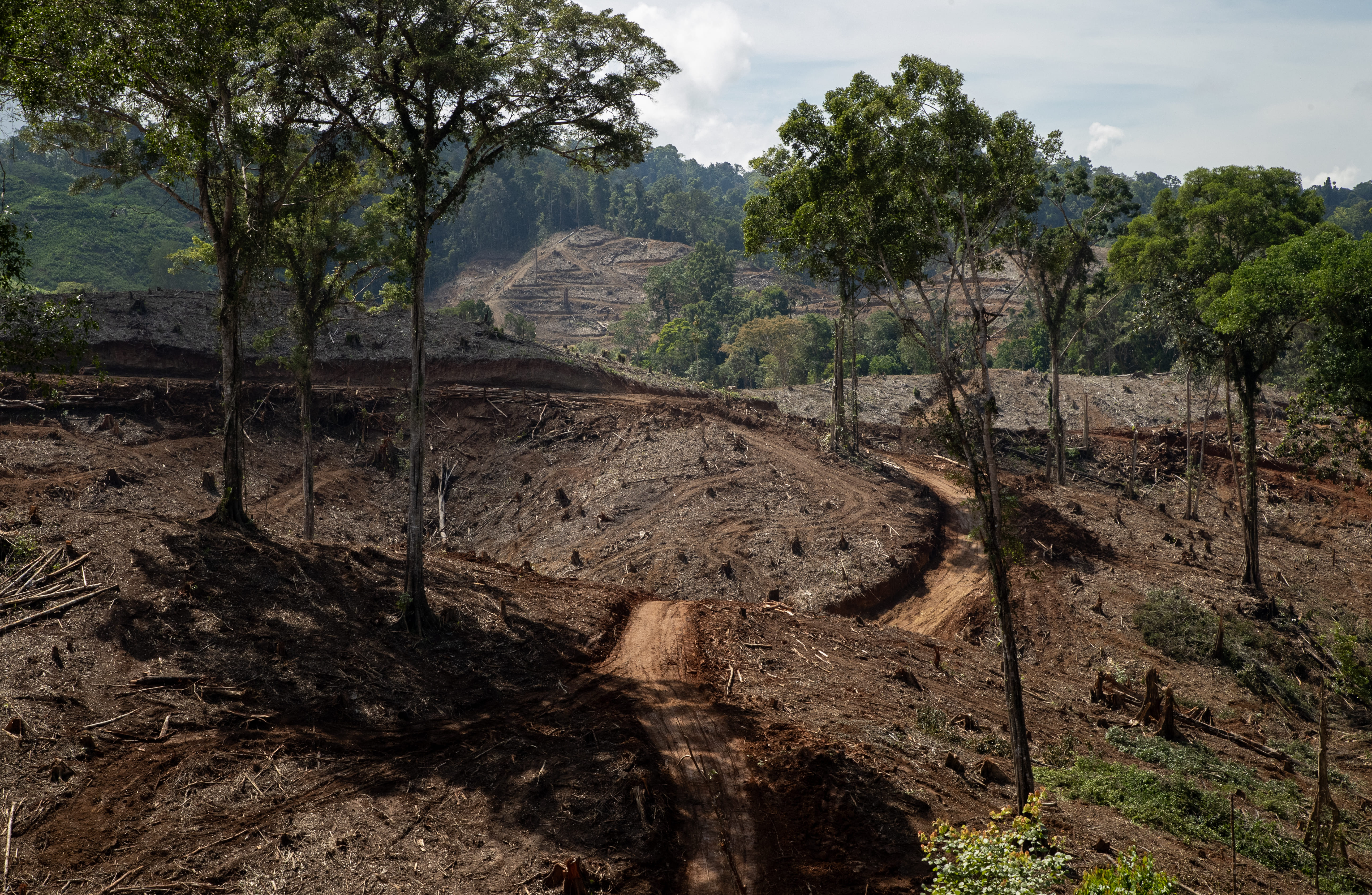
Behind products as ordinary as office paper are complex questions of land rights, forest conversion, and corporate accountability. Speakers and panelists spoke of industry expansion onto Indigenous territories without free, prior and informed consent (FPIC), often with lasting consequences in hotspots like Kalimantan and Sumatra, where disputes have led to physical violence, including the tragic killing of a land defender. Ecosystem impact also follows, with vast acacia and eucalyptus plantations replacing diverse forest landscapes with monocultures of far lower ecological value. The fact that major Indonesian producers maintain a strong presence in the Japanese market served as a reminder that the impacts of these supply chains extend far beyond the forests where they begin.
Palm Oil
The second session focused on palm oil, a commodity found in countless everyday products, including detergents, cosmetics, and biofuels. While deforestation linked to oil palm expansion has generally declined, Global Canopy’s Adelina Chandra noted growing crude palm oil production, linked to an increase in forest loss between 2023 and 2024, continues to pose significant risks. However, as “risk is concentrated, so action can be targeted": specifying regions, mills, exporter groups, peatlands and forest frontiers should be the priority for targeted action. Ristika Putri, Head of Secretariat of Lingkar Temu Kabupaten Lestari (LTKL), highlighted the importance of a landscape approach that recognizes palm oil as a key livelihood for many communities while improving productivity in existing plantations and preventing further expansion into natural forests. Speakers also emphasized the role of finance in rewarding verified progress and supporting credible zero-deforestation commitments, while cautioning against relying solely on certification schemes.
Biomass (Wood Pellets)
Japan's biomass boom, supported through the Feed-in Tariff (FIT) scheme (where utilities are required to purchase renewable electricity at fixed prices with costs going to consumers through electricity bills), has made it one of the world's largest importers of wood pellets. In Indonesia, however, the environmental costs are increasingly visible. Timer Manurung warned Gorontalo has become “an epicenter of the woody biomass industry", as expansion moves eastward into new forest frontiers near Maluku. Meanwhile, Christopel Paino from Gorontalo’s local conservation group JAPESDA highlighted the human cost, citing "recurring floods around concession areas, community livelihood losses, and land conflicts," as well as cases of intimidation and criminalization linked to concession development. This underscored how energy policies in consumer countries promoted under the guise of carbon neutrality can have far-reaching negative impacts on forest landscapes and carbon sinks. The common challenge now is ensuring that natural forests are protected wherever possible and that Indigenous Peoples and local communities have secure rights to their lands.
Implementation Gaps and Complex Realities
All sessions shared a common message: there is a gap between commitment and implementation. From public subsidies for biomass to private finance, investments and safeguards for forests and people, participants at the event reiterated how the apparatus of government and economy continue to place pressure on forests rather than protect them.
The imbalance is stark. According to the UNEP State of Forest Finance report for 2025, for every dollar invested in forests, nearly five dollars continue to fund activities undermining them. As Paulinus Kristianto, Founder of Conservation Action Network (CAN) and member of the Dayak Indigenous People in Borneo noted, whether we like it or not, "finance for deforestation is bigger than finance for conservation." He estimated that only around four dollars per hectare is currently available for conservation. These striking figures echo the financial challenges and gaps for achieving 30 by 30, the goal for nature protection set in the Kunming-Montreal Global Biodiversity Framework (KMGBF). In fact, halfway through the implementation of the KMGBF, the progress report showcases that while record engagement has been seen on nature issues overall, efforts are still lacking to meet the goals and protect nature and biodiversity.
Overcoming the deforestation economy is a priority for finance, but closing enforcement gaps in certification is the primary issue for implementation on the ground. Certifications, from the Forest Stewardship Council (FSC) to SVLK (Indonesia Timber Legality Verification), are far from a silver bullet solution, with challenges both in their standards and their implementation on the ground for all three commodities discussed. This is well illustrated by the example in Gorontalo, where natural forests are logged despite mills having FSC certification on paper.
This is where due diligence and traceability can make a difference. Regulations such as the EU Deforestation Regulation (EUDR) could set up a keystone precedent by requiring companies to demonstrate that products are not linked to deforestation. Potential leakage markets like Japan and Korea, however, will need to exercise the political will to pursue comparable due diligence along their traded supply chains. In any case, these controls cannot rely solely on certification.
Many discussions revealed how complex forest conservation is. Even within environmentalism, things are rarely straightforward. A forest may appear intact while suffering severe biodiversity loss, a phenomenon known as the empty forest syndrome. At the same time, significant gaps remain between conservation needs and legal protection. Forests that receive little public attention, like secondary forests, can provide significant carbon storage, biodiversity, and livelihood benefits would also require protection as their role and importance is gradually being reassessed.

Throughout the symposium, speakers challenged the false dichotomy between protected and unprotected forests, recognizing the interconnected roles of forests, communities, conservation, and industry. To help organize the many issues raised during the symposium, I created a problem tree, which I hope serves as a useful starting point for beginners like me.
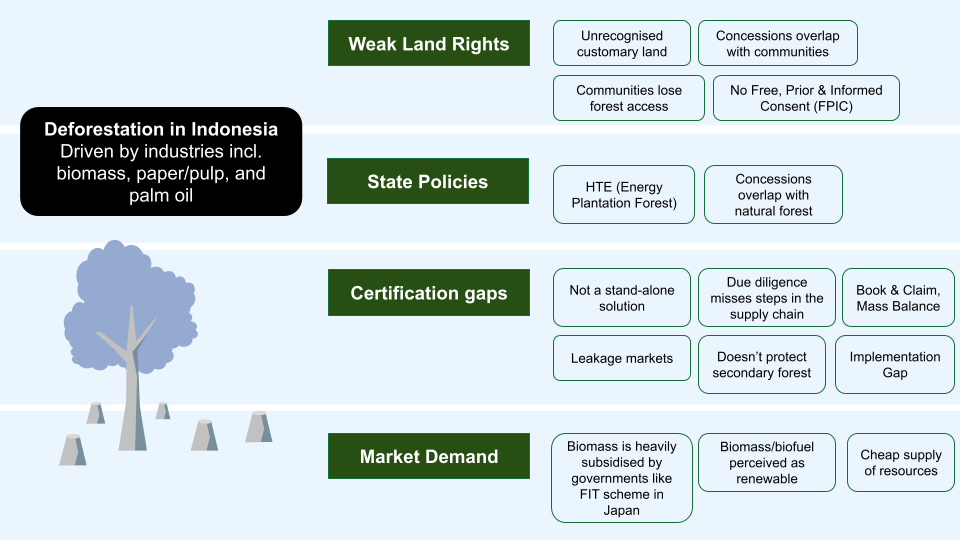
The Complexity of Forest Conservation in Indonesia: The Role of Consumer Countries
My biggest takeaway from the symposium was the repeated emphasis on the landscape approach, which companies in consumer countries like Japan need to step up on. As Christopel Paino shared, "there is no empty space in our forests." Every hectare is functional (i.e. for biodiversity, local communities, or economic production), but by segregating the management of these functions with no consideration, the competing interests of all parties inevitably lead to conflict and biodiversity loss. Although not a perfect answer, the landscape approach is a framework for bringing these competing interests into dialogue and negotiating trade-offs more transparently by recognizing the interconnectedness between people and nature.
Encouragingly, representatives from Japanese corporations involved in the discussed commodities, from retailers to refiners and financiers, showcased how some are taking steps to improve supply chain sustainability. While implementation and traceability challenges remain, these examples demonstrated that businesses could drive change when sustainability commitments are backed by efficient due diligence and on-the-ground engagement with stakeholders.
Beyond the symposium, some of the groups from Indonesia also met with the Japanese Ministry of Economy, Trade and Industry (METI) and a Japanese power generation company using wood pellets from Gorontalo to share their grave concerns over the rapid pace of logging in the region pushed by biomass policies in Japan and Korea, emphasizing the importance of protecting significantly biodiverse secondary forests. While representatives from the generation company were receptive to the concerns raised and appreciated the information provided, discussions highlighted the reality that sustainability teams often have limited influence over corporate decision-making.
The visits to the power generation company and METI and their interest in hearing from stakeholders proved promising. METI also showed growing interest in better addressing forest protection. Regarding the meetings, Terri Repi (lecturer and researcher at Universitas Muhammadiyah Gorontalo) had this to say:
“Japan is committed to achieving carbon neutrality and reducing domestic greenhouse gas emissions, while also supporting green technology and energy transition efforts across Asia. It is this commitment that gives us confidence that our dialogue was not merely a formality but will lead to concrete action following the meetings.”
“What matters most is whether this interest translates into concrete change,” Paino added. "[R]eal accountability will depend on what happens after this meeting: whether due diligence actually reaches down to the concession level, whether the FIT/FIP criteria are strengthened, and whether communities in Gorontalo begin to feel a real difference on the ground.”
The remaining challenge is bridging gaps between Japan’s biodiversity commitments and the implementation of forest safeguards on the ground. "While it takes time for companies to change, in the meantime, tropical forests will continue to disappear, and ecosystems may reach a point of no return," shared Sayoko Iinuma from the Global Environmental Forum. When it comes to forest conservation, commitments must be expedited, and gaps must be urgently closed.

In this spirit, forums like the Japan-Indonesia Forest Conservation Symposium are valuable in their own right. They create space for NGOs, government and businesses, academics, and local communities to come together and handle these challenges collectively.
Overall, I found that speakers approached each topic with a grounded pragmatism, recognizing that governments and companies rely on transparency and compliance to better their operations, and choosing to strengthen and expand on these frameworks rather than dismiss them as imperfect tools. Solutions couched in the vocabulary of due diligence, responsible consumerism, enhanced traceability, and mitigating exposure beyond certification schemes constitute an important path to responding to the gravity of deforestation in Indonesia. Furthermore, consumer and importer countries have a responsibility to minimize the harm caused by their decisions. It is my hope that these voices will resonate with the key actors (especially Japan and Korea-based actors) across major commodity supply chains.
Related insights
Explained: How “Green” Biofuels Put Forests and Economies at Risk
International Day of Forests, March 21
2026-03-20
Certifying the Unsustainable: Debunking the Sustainable Biomass Program (SBP)
“Sustainable” biomass scheme greenlights deforestation, new report finds
2025-07-31

Fake Solutions, Real Consequences: Why We Must Save our Forests
International Day of Forests, March 21
2025-03-21

From Cloud Forests to Conference Rooms
COP16’s struggle to bridge biodiversity finance
2024-11-13

Burning forests, boiling climate: Woody biomass harms global biodiversity
2024-08-06


