Opaque grid-fee system blocks PPA growth despite strong corporate demand
December 2, 2025 (SEOUL) – A new report published by Solutions for Our Climate (SFOC) reveals that South Korean companies are willing to procure renewable energy through Power Purchase Agreements (PPAs) but remain deterred by rigid regulations and an opaque grid-fee setting system.
In Korea, grid fees are dominantly controlled by the Korean Electric Power Corporation (KEPCO), a structure that lacks the transparency seen in countries such as the US and UK, where independent regulatory authorities oversee grid costs.
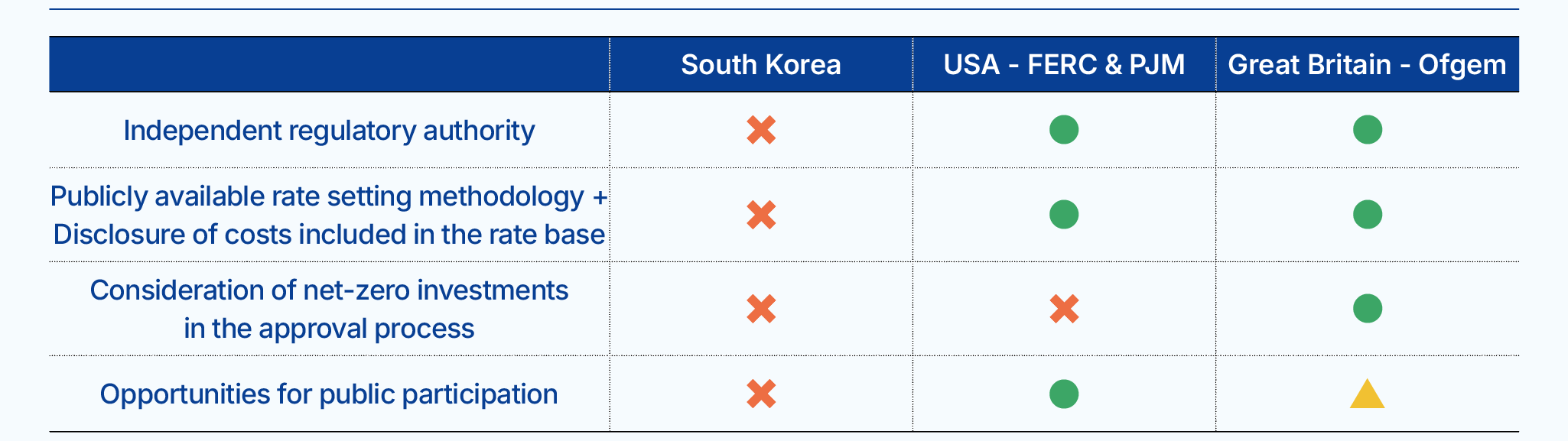
Figure 1. Grid fee regulatory system comparison between US, UK, and South Korea
Globally, grid fee transparency is a major market-fairness concern. As electricity can only be delivered through a single monopoly grid, users have no choice but to pay grid use fees. Yet transparency gaps persist even in advanced markets: a 2018 report by Agora Energiewende and the Regulatory Assistance Project found that Germany’s regulator failed to publish required decisions and released misleading or incomplete information on grid-operator revenues.
While countries such as the US and UK have independent regulatory authorities that oversee grid costs and require methodologies and rate bases to be publicly disclosed, Korea has no equivalent. KEPCO, the owner of the national transmission and distribution grid, sets grid use fee rates internally, creating a clear conflict of interest and little accountability to grid users.
The closest equivalent to an independent regulator in Korea is the Electricity Commission within the Ministry of Climate, Energy and Environment (MCEE). While the Commission is tasked with reviewing grid use fees, it is not independent of the government and lacks the adequate resources needed to thoroughly assess KEPCO’s fee structures. SFOC’s report finds that it is unclear whether all grid users are charged the same rate based on the electricity type, as grid fee rates are disclosed publicly only for non-KEPCO users and not for its own customers.
These transparency gaps have direct consequences for Korea’s PPA market, where grid-use fees make up a significant share of total electricity costs for corporate buyers.
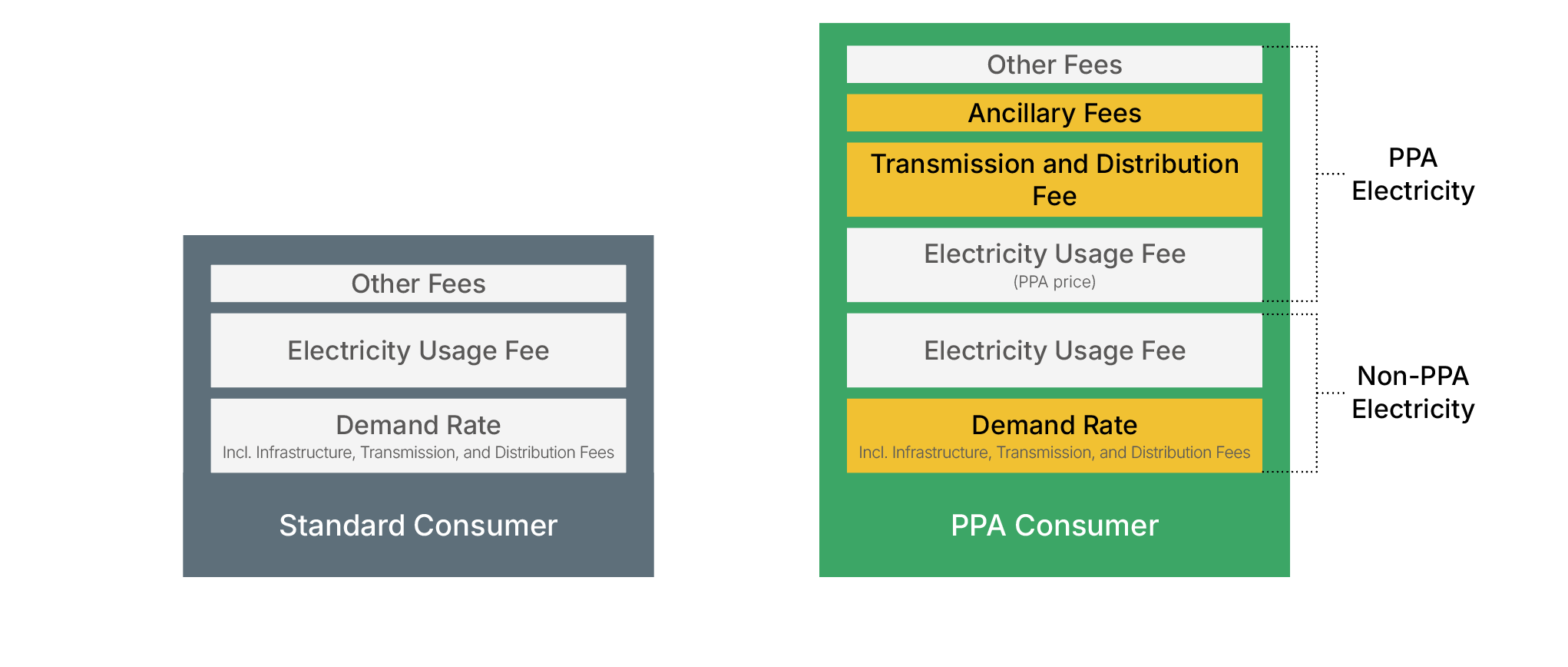
Figure 2. Electricity fee structure for regular users and direct PPA users in South Korea
PPAs are long-term electricity supply agreements between a power producer and a customer. Although Korea introduced its PPA system in 2021 to help companies procure renewable energy and improve project bankability, KEPCO continues to exert monopolistic control over the market. While PPAs provide predictable electricity pricing, companies are billed separately for grid services whose costs are determined behind closed doors. With KEPCO facing financial exposure tied to fossil-fuel assets, the lack of transparency combined with its continued market dominance has left companies uncertain whether PPA-based procurement is financially viable.
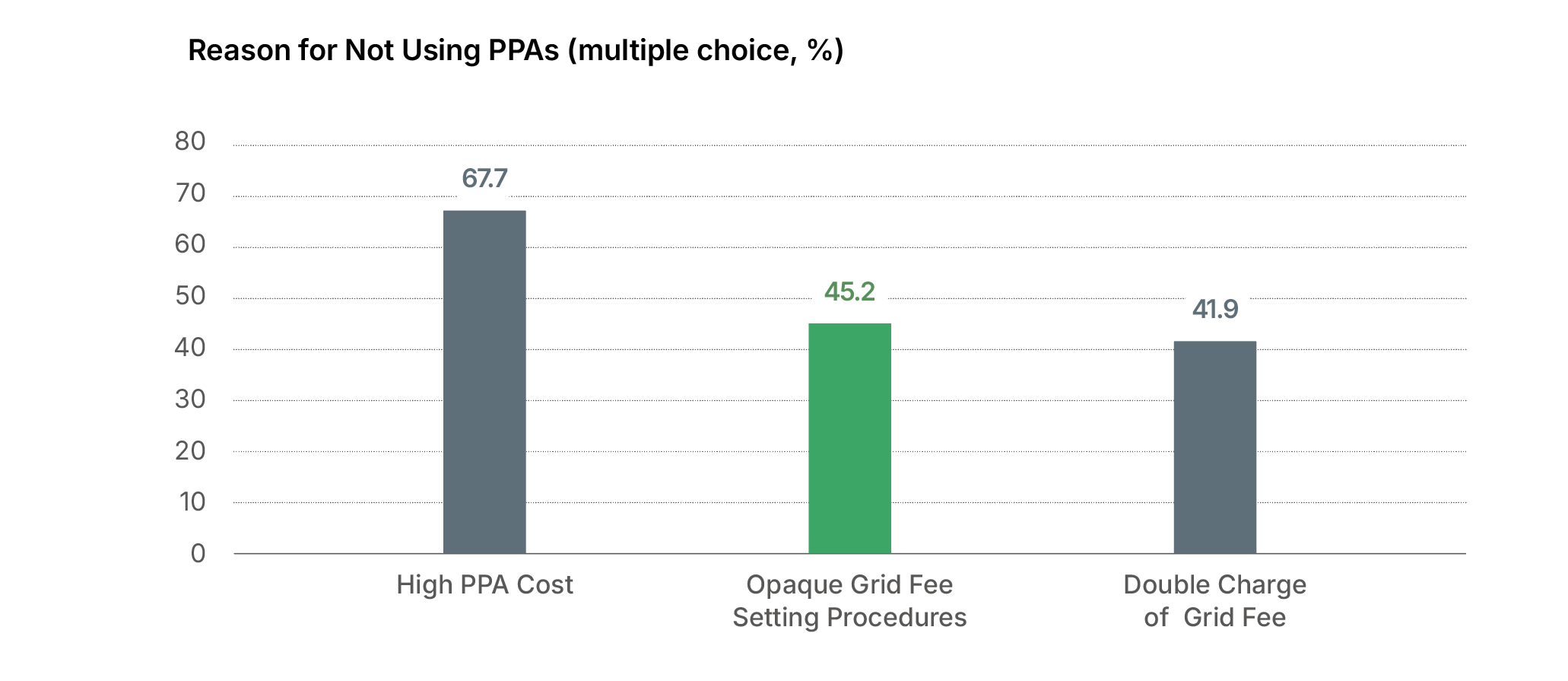
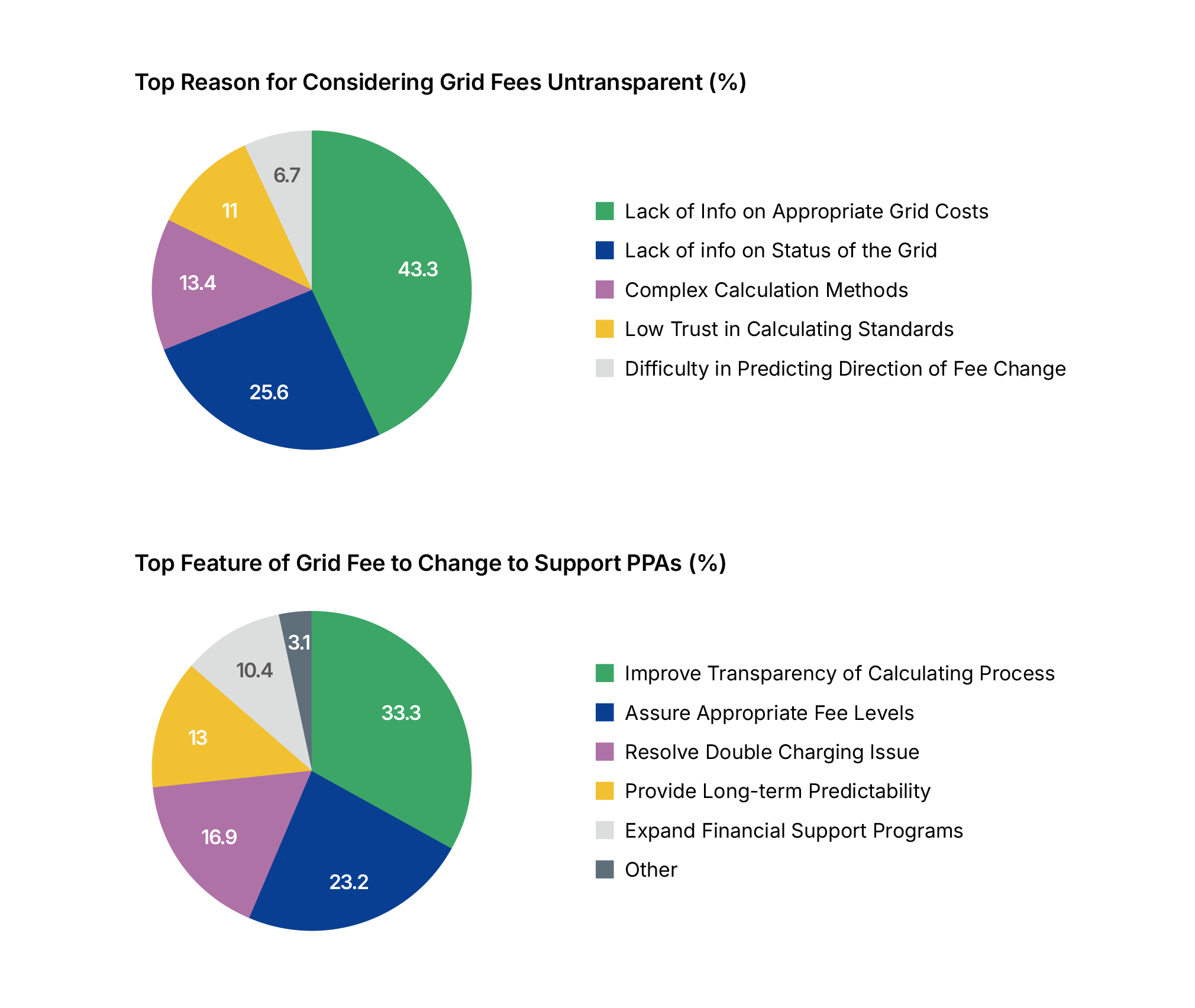
Figure 3. Survey results by corporations on grid fees
The report includes survey findings indicating that companies willing to expand renewable energy through PPAs consider the opaque grid fee setting system to be a decisive factor in holding back their participation. Together with the lack of competition in the transmission and distribution sector, the findings underscore the need for a transparent and accountable grid fee system, as grid costs make up a substantial portion of a PPA’s long-term price.
Brooke Savoy, author of the report and researcher on the Power Markets & Grid Team at SFOC said, “PPAs are a proven and effective way for both companies and citizens to support the renewable energy transition. In an industry like electricity transmission and distribution—where competition is naturally absent—it is critical that grid fees are set in a transparent and accountable manner. This will ensure predictability and help revitalize the adoption of renewable PPAs.”
SFOC urges the Korean government to adopt internationally recognized best practices by:
Introduce an independent regulatory body that oversees power grid planning and fee approval
Publish power grid use fee calculating methodologies
Allow open access to regulatory committee meetings and allow public feedback
Publicly disclose all costs which make up the rate base of power grid use fees and how the rate base is used to calculate the fees
Include requirements for planning and investments in grid enhancements for net-zero
ENDS.
Solutions for Our Climate (SFOC) is an independent nonprofit organization that works to accelerate global greenhouse gas emissions reduction and energy transition. SFOC leverages research, litigation, community organizing, and strategic communications to deliver practical climate solutions and build movements for change.
For media inquiries, please reach out to Yi Hyun Kim, Communications Officer, yihyun.kim@forourclimate.org.
Share this insights


