The Risky Bet of Large-Scale Capacity Expansion in an Era of Overcapacity and Production Reduction: An Analysis on the Socioeconomic Risks of New Petrochemical Facilities

About
This issue brief examines how the expansion of domestic commodity petrochemical production through S-Oil’s Shaheen project is a challenge to ongoing restructuring and capacity reduction plans from the government and other companies. It also analyzes how capacity expansion projects like Shaheen will have minimal socio-economic benefits due to large-scale overseas capacity expansion in certain major export markets (e.g. China, Middle East) along with the introduction of plastic policies in others (e.g. European Union) both contributing to a decreased demand for commodity petrochemical exports from South Korea. In addition, new facilities are not guaranteed to create stable employment as they will contribute to existing economic pressures and potentially lead to additional restructuring and capacity reduction.
Executive summary
1. Persistent Oversupply and Low Operating Rates
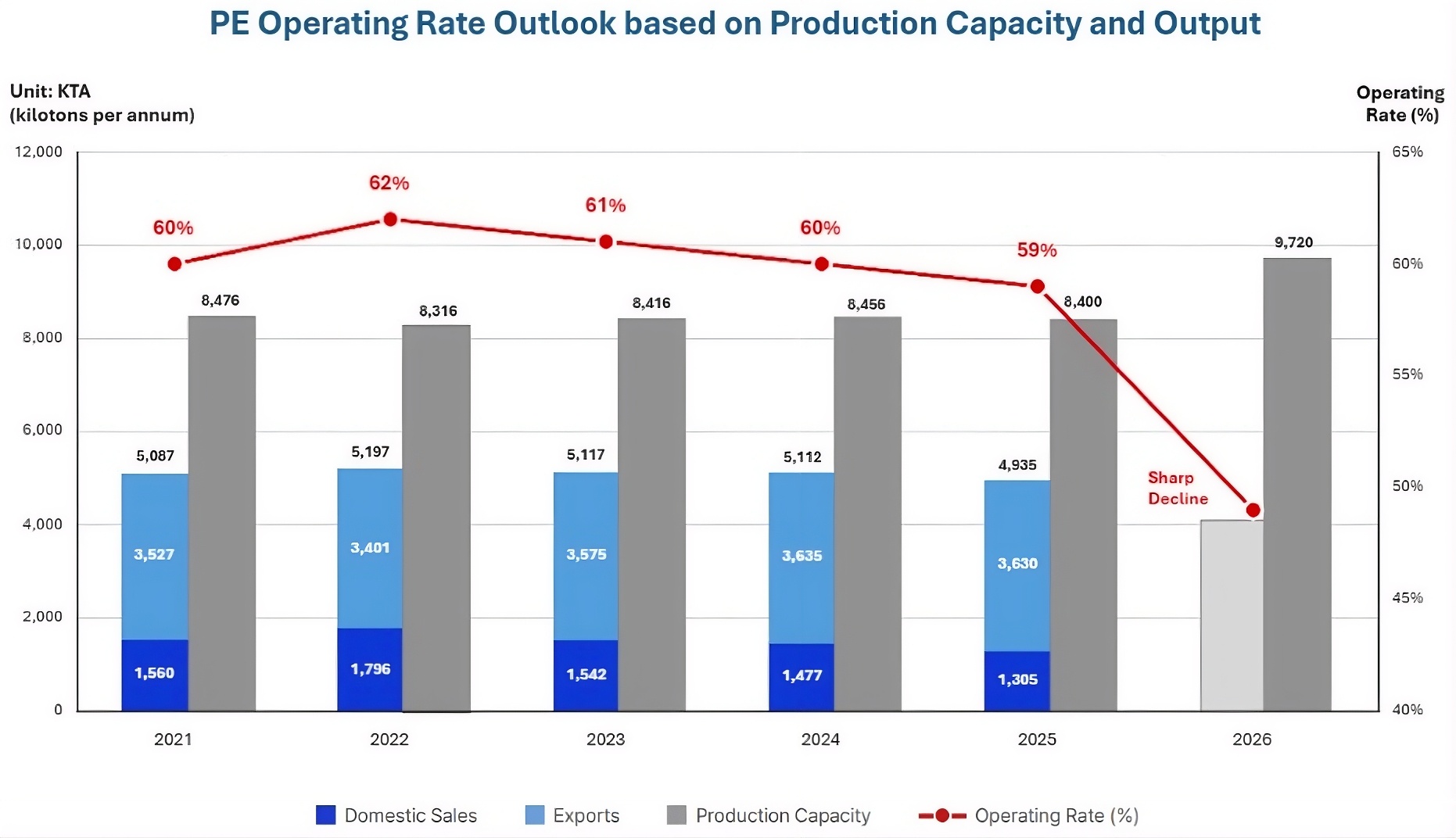
The Korean petrochemical industry has entered a phase of restructuring driven by factors such as global oversupply, declining profitability, and shrinking demand. Notably, current polyethylene (PE) production capacity already exceeds domestic market demand, and overall operating rates across the industry remain consistently below historical averages.
2. Potential Conflict with Restructuring Efforts
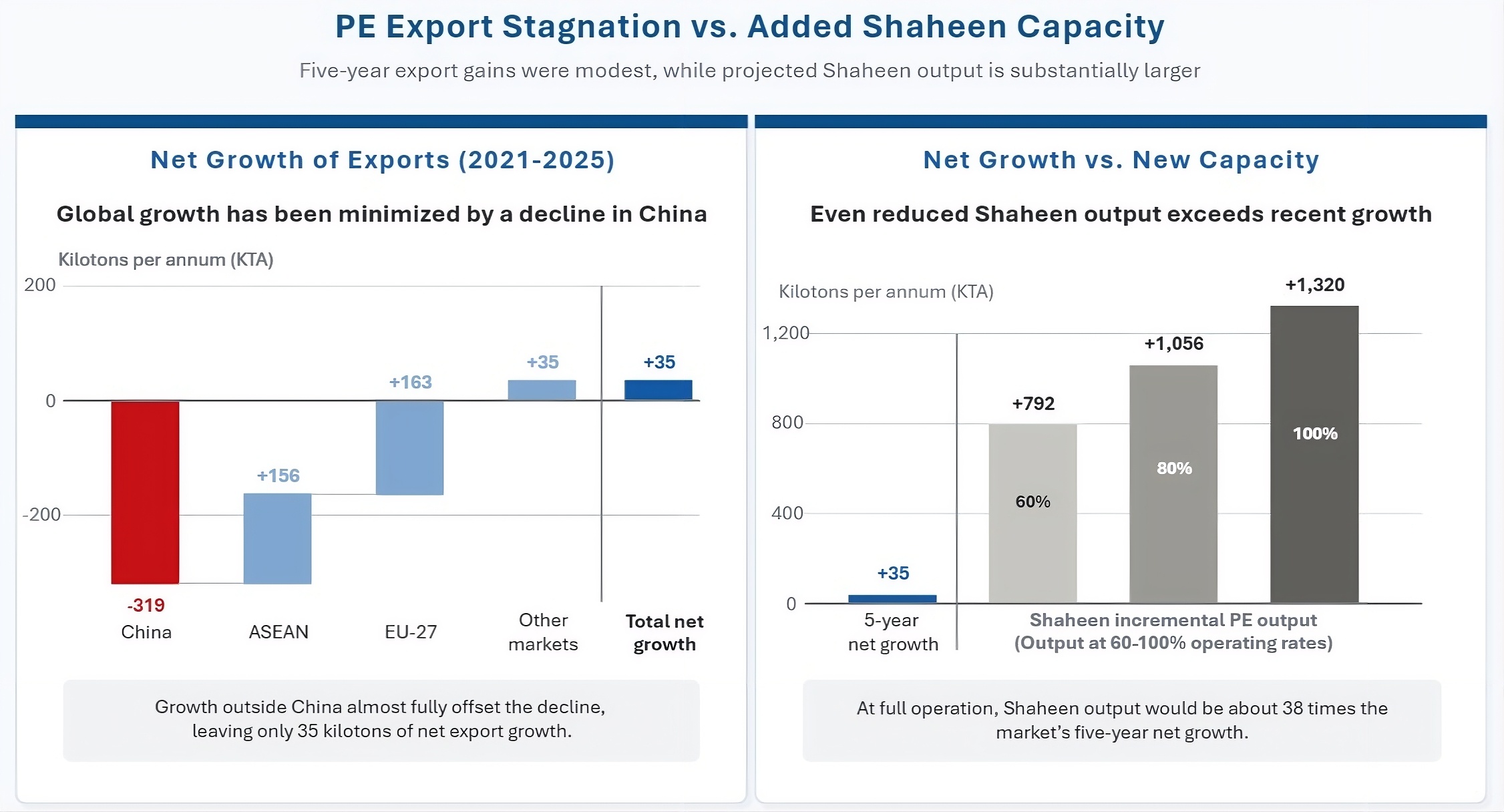
The Shaheen Project, scheduled to begin commercial operation in 2027, is expected to significantly boost the industry's ethylene and polyethylene production capacity. This expansion could conflict with ongoing efforts by the government and the industry to alleviate overcapacity and shift toward high-value-added products.
3. Limited Export Market Growth Prospects
The demand from traditional export markets is gradually diminishing as China, the U.S., the Middle East, and Southeast Asia continue to expand their own petrochemical production capacities. Simultaneously, tightening environmental regulations in regions such as Europe are also expected to constrain demand for new (virgin) plastics.
4. Uncertainty Regarding Job Creation
While the construction and operation of new facilities may generate temporary employment, it is difficult to anticipate sustainable job growth based solely on expanded commodity production capacity. If oversupply persists, mounting pressure for industrial restructuring could lead to job losses across both existing and new facilities.
5. The Need to Shift Focus Toward Specialty Products
Rather than expanding the production of commodity plastics, priority should be placed on transitioning existing facilities to focus on high-value specialty chemicals, advanced materials, and circular economy solutions. Examples from countries such as Japan, Singapore, and Saudi Arabia demonstrate that a strategy centered on specialty chemicals yields greater long-term competitiveness and employment stability; conversely, they suggest that if Korea continues to focus on expanding commodity product output, it risks falling behind in global competition.
6. Conclusion
Further investment in large-scale commodity plastic production capacity entails significant risks across industrial, economic, and employment dimensions. In contrast, a shift toward specialty chemicals aligns better with market trends and government policy objectives, offering a more effective strategy for strengthening the long-term competitiveness of Korea’s petrochemical industry.