政策リサーチと提言
気候、エネルギー、産業、経済政策を深く分析し、実現可能な政策代替案を提示することで、実際の政策変革を後押しします。
🌍⚖️141 countries. One message: climate action is a legal obligation. Yesterday, 141 countries, including South Korea, endorsed a UN General Assembly resolution backing the International Court of Justice (ICJ)’s Advisory Opinion on States’ obligations in the climate crisis. This sends a clear signal: climate action is not only a political commitment, but a legal responsibility. While the final resolution reflects compromise, it still calls for a just and orderly transition away from fossil fuels and the phase-out of inefficient subsidies. This serves as an urgent call to action for major financiers like Korea and Japan. The message is clear 👉 the era of voluntary pledges is giving way to accountability. Now, we look ahead to COP31, the focus must shift from endorsement to implementation. 🔗 Read SFOC's statement here: https://lnkd.in/ginZqh_r #ClimateAction #InternationalLaw #UNGA #SFOC #EnergyTransition
LinkedIn
X We're #hiring a new Operations Team_Inhouse Legal Counsel in Seoul, Seoul. Apply today or share this post with your network.
LinkedIn
LinkedIn
X
X 🐢 Institutional investor stewardship codes around the world are responding to the climate crisis. 🇰🇷 South Korea is falling behind. As climate and financial risks converge amid the growing threat of climate change, stewardship codes – guidelines applied to institutional investors overseeing entrusted assets like pension schemes and sovereign wealth funds – are evolving accordingly. Yet, despite mounting evidence linking code revisions to changes in investor behaviour, Korea remains one of just two among 15 countries surveyed yet to integrate climate and ESG factors into their stewardship codes, further exposing participating investors. 📉 Experts predict expected losses for Korean banks and insurance companies could reach KRW 45.7 trillion (USD 30.5 billion) in the absence of climate action, almost twice the potential losses under a 1.5°C scenario. 🔙 KOREA NATIONAL PENSION SERVICE (NPS), the largest institutional investor signed on to the Korea Stewardship Code, is itself moving backwards, with no climate-related criteria in its voting guidelines and companies engaged on climate risk management falling from 29 to 13 between 2024 and 2025. The absence of climate provisions in the Korea Stewardship Code means there is little incentive for meaningful implementation. Latest report by Solutions for Our Climate (SFOC) highlights these gaps, contrasting global trends in climate stewardship code reform with the current state of the NPS. It proposes five principles for revision: 🔸 Formally recognize climate and ESG as core elements of fiduciary responsibility 🔸 Make climate factors mandatory from the policy-setting stage 🔸 Establish climate risk as an official item for review and engagement 🔸 Introduce climate-related voting criteria 🔸 Establish a climate accountability structure subject to external verification 🔎 Read the full report here: https://lnkd.in/ghXjtVCk #AssetManagement #ClimateRisks #ESG #Governance #StewardshipCode #SFOC
LinkedIn
LinkedIn
X
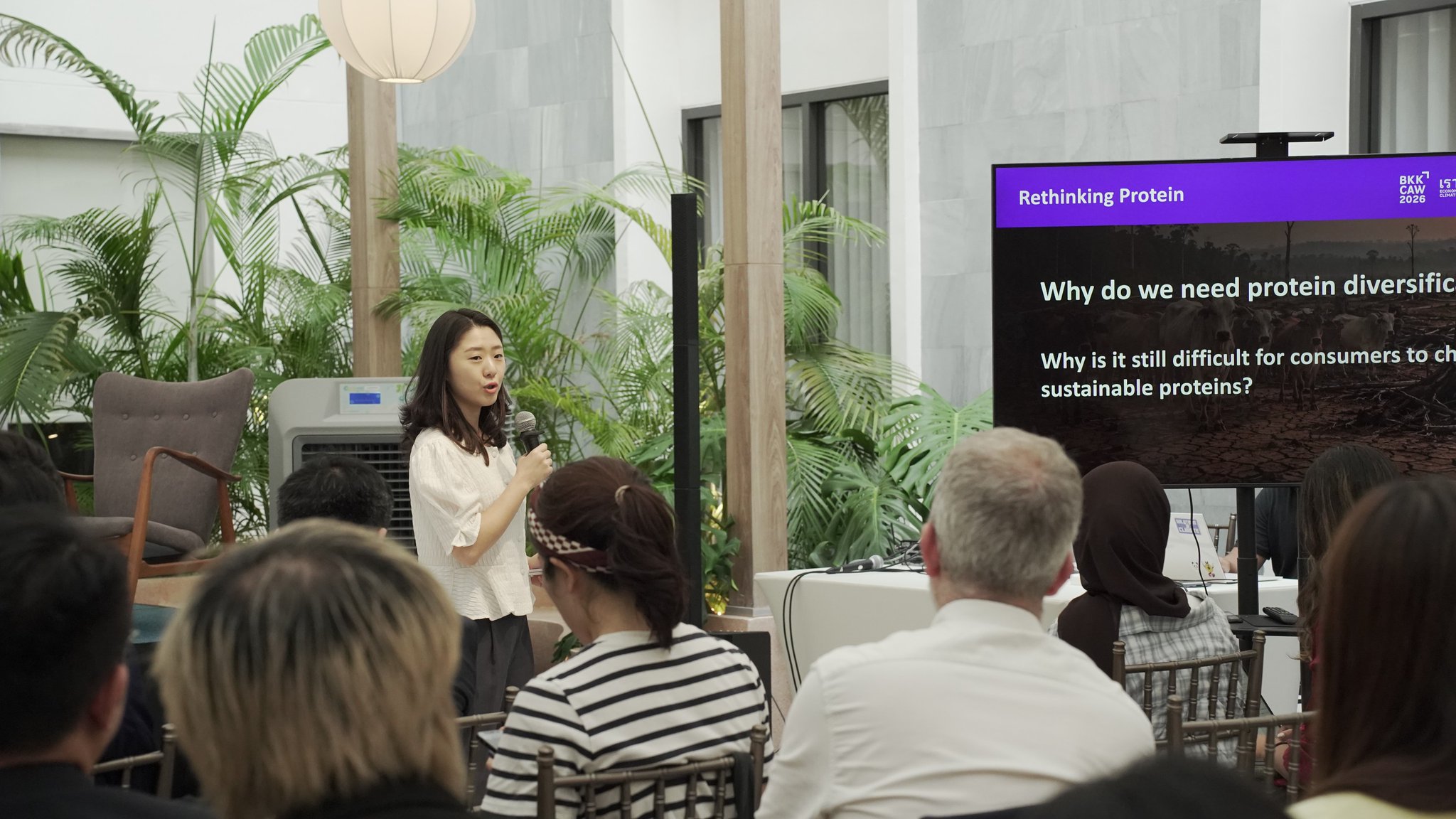
YouTube 🥩➡️✈️ #DidYouKnow? Eating 61.4 kg of meat per year in South Korea = the emissions of 21 Jeju flights. SFOC’s new study reveals the hidden carbon footprint of beef, pork, and chicken - showing how everyday choices add up to climate impact and revealing the need for greater supply chain data transparency to empower consumers to make fully informed choices. 🗝️ Key Findings 🥩 In South Korea, beef's carbon footprint is 4.4x more than pork, 10x more than chicken based on cradle-to-retail LCA (Life Cycle Assessment). 🐮 South Korea’s annual per capita beef consumption (15 kg) is significantly higher than its neighbors - ~2.5x higher than Japan and 3.8x higher than China in 2024. 🌍 60% of South Korea’s beef is imported, with the bulk of imports coming from the U.S. & Australia. That means emissions are global, but responsibility is local. But consumer choices alone aren’t enough - South Korea needs stronger policy design to close data gaps and align agriculture with climate goals. Currently, consumers in Korea are not being provided with sufficient information regarding the carbon emissions of meat products, highlighting a critical gap that must be addressed to empower change. 🗝️ Key Policy Recommendations 🔸 Expand carbon data infrastructure to cover the full supply chain for livestock meat products, beyond farm-level emissions. 🔸 Apply global LCA benchmarks such as Australia’s AusLCI4, which provides detailed unit process data from feed cultivation to retail distribution. 🔸 Address data gaps for publicly available LCA data on livestock product emissions in South Korea to expand databases across all stages of the value chain. 🔸 Empower consumers by transforming producer-oriented GHG data into consumer-accessible information, such as displaying environmental indicators alongside price and origin. 👉 Read SFOC's latest report, 'From Farm to Retail: A Life Cycle Assessment of Meat Consumption in South Korea', to learn more: https://lnkd.in/gym9X_VP #Agriculture #ClimateAction #FoodSystems #LCA #Methane #SFOC
LinkedIn
気候、エネルギー、産業、経済政策を深く分析し、実現可能な政策代替案を提示することで、実際の政策変革を後押しします。

気候対策を先延ばしにする企業や政府の責任を追及し、訴訟を含む多様な法的戦略を用いて政策改善を促します。

私たちは、世界を変える力は「人」にあると信じています。心に響くメッセージと多様なコミュニケーションチャネルを通じて、気候危機に対する社会の認識を高め、一丸となって行動を起こすためのインスピレーションを提供します。

気候変動に国境はありません。私たちは世界各地の環境団体とのネットワーク構築や連携を通じて、国際的なレベルでの変革を推進します。